
Trump Administration Plans Historic Visa Revocation Targeting 200,000 Asylum Seekers
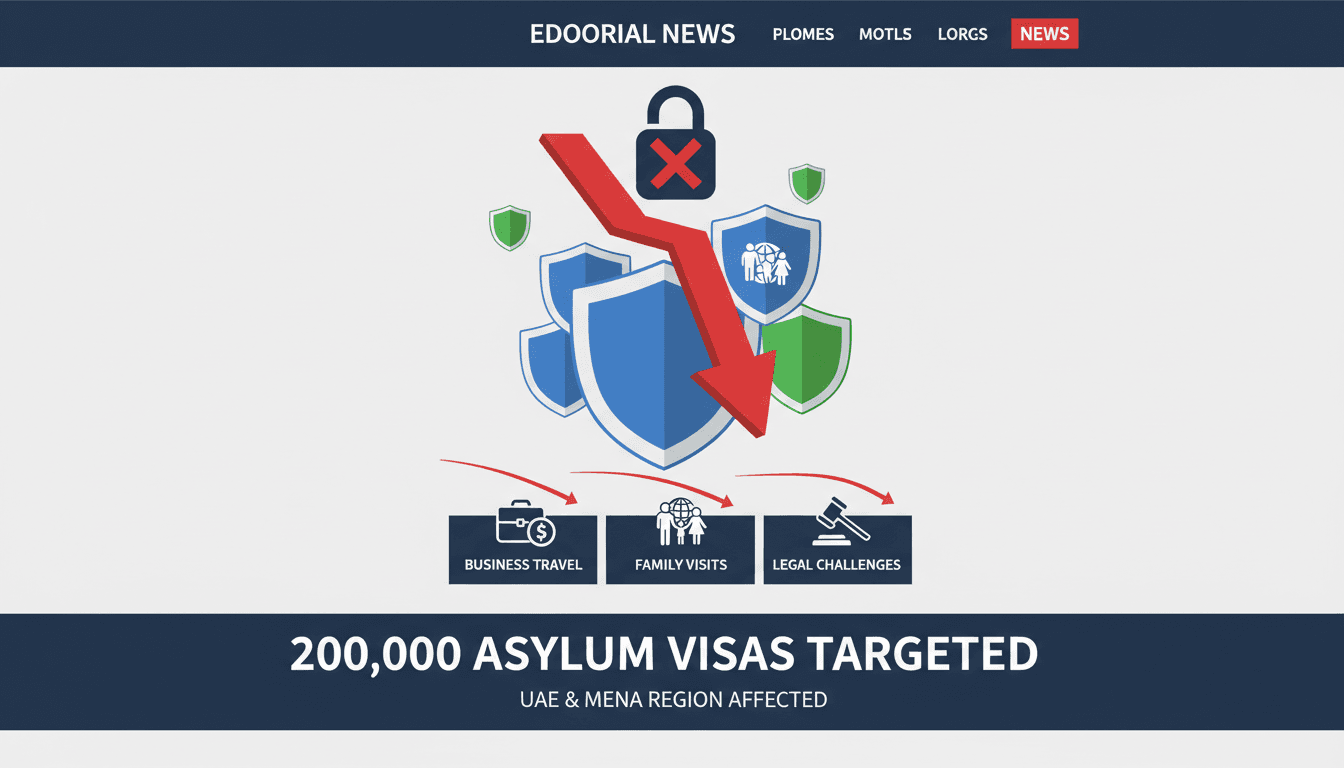
Here's what it means for you.
If you hold a U.S. B-1/B-2 visa and have applied for asylum, your travel plans could be at risk.
Why it matters
This unprecedented visa revocation could reshape the landscape of U.S. immigration and impact thousands of individuals seeking refuge.
What happened (in 30 seconds)
- On August 25, 2026, the Trump administration announced plans to revoke up to 200,000 B-1 and B-2 visas held by asylum seekers.
- The Department of State and Department of Homeland Security are coordinating this operation to close perceived immigration loopholes.
- A new regulation proposes a permanent fee of over $100,000 for new H-1B skilled worker visas, complicating the employment landscape for foreign workers.
The context you actually need
- Aggressive immigration enforcement has been a hallmark of the Trump administration since his return to the presidency in 2025, including social media vetting and financial guarantees for visa applicants.
- In the past 18 months, approximately 175,000 visas have already been revoked for various reasons, including criminal convictions and public criticism of U.S. policies.
- The current initiative aims to deter the misuse of temporary visas for permanent asylum claims, emphasizing that asylum should not be a workaround for immigration law.
What's really happening
The Trump administration's announcement on August 25, 2026, marks a significant escalation in its immigration enforcement strategy. By targeting B-1 and B-2 visa holders who have applied for asylum, the administration aims to deter what it perceives as abuse of the U.S. immigration system. This operation is not merely a punitive measure; it reflects a broader ideological commitment to tighten immigration controls and reinforce the notion that temporary visas should not serve as a pathway to permanent residency.
The Department of State, in coordination with the Department of Homeland Security, plans to execute this revocation on a rolling basis. This means that individuals may not face immediate deportation but will have their visa status revoked, complicating their ability to travel or remain in the U.S. The administration's spokesperson, Tommy Pigott, has emphasized that this measure is necessary to prevent the misuse of the asylum system, which they argue has been exploited by individuals entering the country on temporary visas.
In tandem with the visa revocation, the proposed regulation to impose a permanent fee of $103,265 for new H-1B visas represents a significant shift in the landscape for skilled foreign workers. This fee, which reverses previous court blocks, could deter many potential applicants, thereby impacting industries reliant on foreign talent. The administration's approach signals a tightening of the labor market for skilled positions, which could lead to increased costs for employers and a potential slowdown in innovation and growth in sectors that depend on H-1B workers.
The implications of these policies extend beyond immediate visa holders. Business groups, including the U.S. Chamber of Commerce, have already expressed intentions to challenge the H-1B fee regulation in court, indicating a potential legal battle ahead. Human rights organizations have criticized the visa revocations as violations of due process and free speech, suggesting that the administration's actions may face significant pushback from various sectors of society.
Overall, the combination of visa revocations and increased fees for skilled worker visas reflects a strategic pivot in U.S. immigration policy, one that prioritizes enforcement and deterrence over inclusivity and support for those seeking refuge or employment in the country.
Who feels it first (and how)
- Asylum seekers: Individuals holding B-1/B-2 visas who have applied for asylum will face immediate uncertainty regarding their status.
- Business travelers: Those planning trips to the U.S. for work or family visits may find their travel plans disrupted.
- Employers: Companies reliant on H-1B workers may experience increased costs and challenges in hiring skilled labor.
What to watch next
- Legal challenges: Watch for court cases from business groups and human rights organizations that could delay or alter the implementation of these policies.
- Market reactions: Monitor how industries reliant on foreign talent respond to the increased H-1B fees and potential labor shortages.
- Public sentiment: Keep an eye on public opinion regarding immigration policies, as shifts could influence future elections and policy directions.
The Trump administration is preparing to revoke up to 200,000 B-1/B-2 visas.
Legal challenges will arise from business groups and human rights organizations.
The long-term impact on U.S. immigration policy and labor markets remains uncertain.
Frequently Asked Questions
- Why it matters?
- This unprecedented visa revocation could reshape the landscape of U.S. immigration and impact thousands of individuals seeking refuge.
- What happened (in 30 seconds)?
- On August 25, 2026, the Trump administration announced plans to revoke up to 200,000 B-1 and B-2 visas held by asylum seekers. The Department of State and Department of Homeland Security are coordinating this operation to close perceived immigration loopholes. A new regulation proposes a permanent fee of over $100,000 for new H-1B skilled worker visas, complicating the employment landscape for foreign workers.
- What's really happening?
- The Trump administration's announcement on August 25, 2026, marks a significant escalation in its immigration enforcement strategy. By targeting B-1 and B-2 visa holders who have applied for asylum, the administration aims to deter what it perceives as abuse of the U.S. immigration system. This operation is not merely a punitive measure; it reflects a broader ideological commitment to tighten immigration controls and reinforce the notion that temporary visas should not serve as a pathway to perm
- Who feels it first (and how)?
- Asylum seekers: Individuals holding B-1/B-2 visas who have applied for asylum will face immediate uncertainty regarding their status. Business travelers: Those planning trips to the U.S. for work or family visits may find their travel plans disrupted. Employers: Companies reliant on H-1B workers may experience increased costs and challenges in hiring skilled labor.
- What to watch next?
- Legal challenges: Watch for court cases from business groups and human rights organizations that could delay or alter the implementation of these policies. Market reactions: Monitor how industries reliant on foreign talent respond to the increased H-1B fees and potential labor shortages. Public sentiment: Keep an eye on public opinion regarding immigration policies, as shifts could influence future elections and policy directions.
Pan-Arab news coverage spanning politics, business, sports, and regional affairs.
"Asharq Al-Awsat reflects a broad Arab editorial perspective with strong attention to regional geopolitics."
— A47 Editor
إدارة ترمب تستعد لأكبر عملية إلغاء تأشيرات في التاريخ الأميركي
The Trump administration is preparing to revoke work and tourist visas for approximately 200,000 foreigners who have applied for asylum or are currently seeking it, alongside imposing a $100,000 fee for work visas. This marks a significant shift in U...
RT is a Russian state-funded network covering global events from a Russian perspective.
"RT is widely criticized for promoting pro-Kremlin narratives and is considered by many to be a state propaganda outlet."
— A47 Editor
Trump set for largest visa revocation ever – media
The Trump administration is reportedly preparing to revoke the business and tourism visas of up to 200,000 asylum seekers, marking a potential historic mass visa revocation in the United States. This action is part of ongoing efforts to tighten immig...
Global business headlines with AI angles.
"General business outlet that frequently covers AI."
— A47 Editor
Trump Administration Wants To Revoke 200,000 Visas From Asylum Seekers. It Would Be The Largest In History.
The Trump Administration is seeking to revoke 200,000 B1 and B2 visas from asylum seekers, marking a potential historic shift in immigration policy. This move is part of a broader effort to tighten immigration controls and could significantly impact ...
Global news coverage with extensive reporting on Middle Eastern conflicts and geopolitics.
"Al Jazeera is a Qatar-based broadcaster known for wide regional coverage and alternative perspectives."
— A47 Editor
Trump plans largest mass visa cancellation in history: Who will it affect?
The Trump administration is planning to revoke B1 and B2 visas for approximately 200,000 asylum seekers, marking what could be the largest mass visa cancellation in U.S. history. This decision is part of ongoing efforts to tighten immigration policie...
Comprehensive coverage of Middle Eastern and global issues.
"Al Jazeera is a prominent voice from the Global South, especially the Middle East, with an emphasis on underreported stories."
— A47 Editor
Trump plans largest mass visa cancellation in history: Who will it affect?
The Trump administration is planning to revoke B1 and B2 visas for approximately 200,000 asylum seekers, marking what could be the largest mass visa cancellation in U.S. history. This decision is part of ongoing efforts to tighten immigration policie...
News from the United States including domestic politics, society, and culture.
"Global News is a mainstream Canadian media outlet generally considered to have a centrist editorial stance, covering news with a focus on factual reporting and national interest."
— A47 Editor
U.S. preparing for largest mass visa revocation in history, officials say
The Trump administration is preparing to revoke the business and tourism visas of up to 200,000 foreigners who have applied for or are currently seeking asylum in the United States, marking the largest mass visa revocation in U.S. history. This actio...