
Tom Barrack Calls SDF Integration into Syrian State Institutions Historic Development
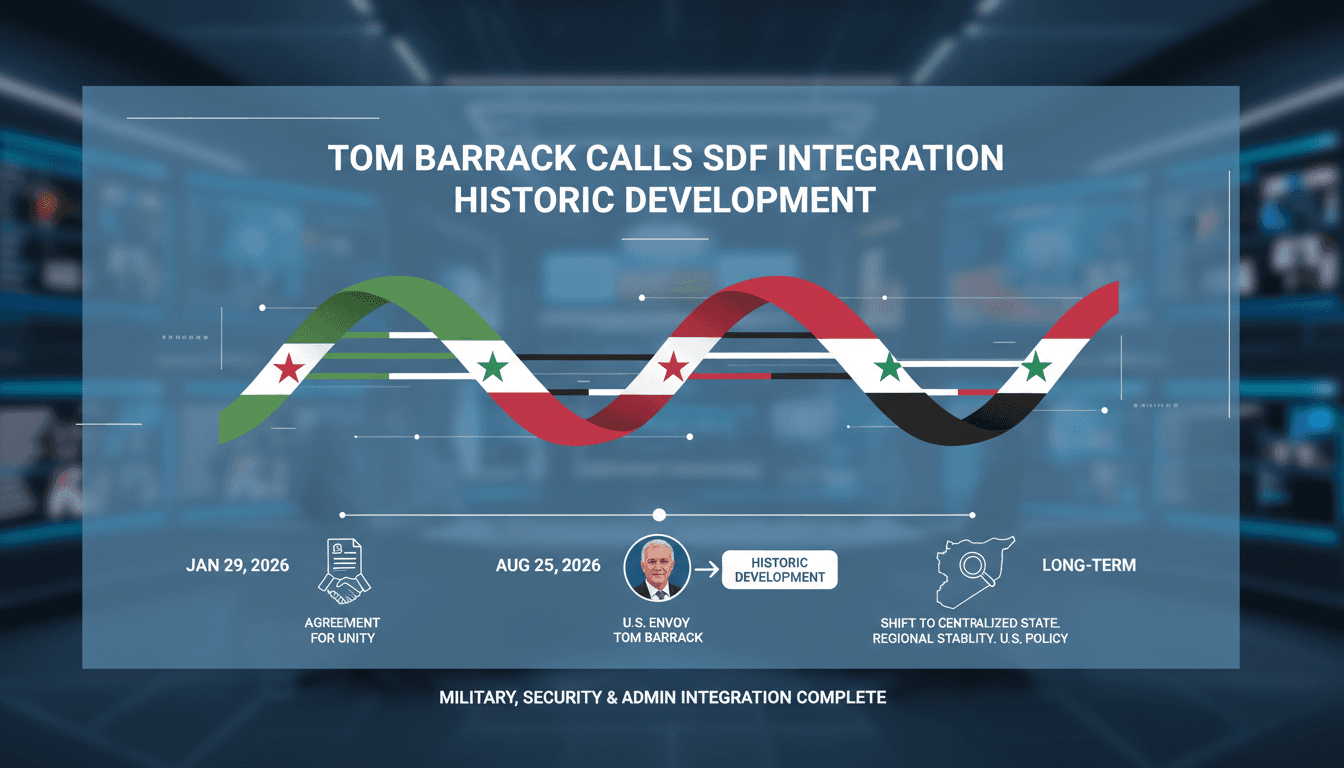
Here's what it means for you.
This development could reshape regional stability and investment opportunities in the Middle East.
Why it matters
The integration of the Syrian Democratic Forces (SDF) into state institutions signals a significant shift in Syria's political landscape, impacting international relations and investment flows.
What happened (in 30 seconds)
- Tom Barrack, U.S. Special Envoy, called the SDF's integration into Syrian state institutions a historic event on August 25, 2026.
- Mazloum Abdi, SDF commander, announced the completion of military, security, and administrative integration, marking the end of the SDF as an independent force.
- The Syrian transitional government, led by President Ahmed al-Sharaa, is now working towards a unified state under a January 2026 agreement.
The context you actually need
- Post-Assad Transition: Following the collapse of the Assad regime in late 2024, Syria entered a transitional phase, necessitating new governance structures.
- Integration Framework: A January 29, 2026 agreement outlined the integration of SDF forces into Syrian state structures, including military and civilian institutions.
- U.S. Policy Shift: The U.S. has adjusted its stance, now supporting a unified Syrian state and counter-ISIS cooperation, rendering previous partnerships with the SDF less relevant.
What's really happening
The integration of the SDF into Syrian state institutions represents a pivotal moment in Syria's ongoing transition. This move is rooted in the January 29, 2026 agreement, which aimed to unify the fragmented governance structures that emerged after the Assad regime's collapse. The SDF, once a key player in the fight against ISIS and a U.S. ally, has now been absorbed into the Syrian state, effectively dissolving its independent military and administrative capabilities.
This shift is not merely a bureaucratic change; it reflects deeper geopolitical dynamics. The U.S. has recalibrated its approach to Syria, recognizing the necessity of a unified state to combat ISIS effectively. By endorsing this integration, the U.S. is signaling its support for the Syrian transitional government under President Ahmed al-Sharaa, which has taken steps to stabilize the country post-Assad. This includes the recognition of Kurdish language in education and the inclusion of Kurdish leaders like Abdi and Ilham Ahmed in government roles, which could foster a more inclusive political environment.
The implications of this integration extend beyond Syria's borders. For investors and businesses in the Gulf region, a more stable Syria could open new avenues for investment and economic cooperation. However, the transition is fraught with challenges, including the need for constitutional protections for Kurdish rights and the full implementation of political elements outlined in the integration agreement. The removal of SDF symbols in Hasaka and the closure of related files by the Syrian government indicate a decisive move towards consolidating power, but the success of this integration will depend on the government's ability to manage diverse regional interests and maintain security.
As the integration progresses, the focus will shift to the political and educational aspects of this merger, which are still ongoing. The international community will be watching closely to see how these developments unfold and whether they lead to a more stable and unified Syria or if they exacerbate existing tensions.
Who feels it first (and how)
- Local Syrian populations: They may experience changes in governance and security dynamics.
- Kurdish communities: Their political representation and rights will be directly impacted by the integration.
- Investors in the Gulf region: They will assess the stability of Syria for potential investment opportunities.
- International NGOs: They will need to adapt their operations in response to the new political landscape.
What to watch next
- Implementation of Political Protections: Watch for developments regarding constitutional protections for Kurds, as this will indicate the government's commitment to inclusivity.
- Economic Cooperation Initiatives: Monitor any new economic agreements or investments flowing into Syria, which could signal increased stability.
- Regional Security Developments: Keep an eye on how this integration affects the security landscape in the region, particularly concerning ISIS and other militant groups.
The SDF has been integrated into Syrian state institutions, marking the end of its independent status.
The Syrian government will continue to pursue a unified state approach, impacting regional dynamics.
The long-term effects on Kurdish rights and regional stability remain uncertain.
Frequently Asked Questions
- Why it matters?
- The integration of the Syrian Democratic Forces (SDF) into state institutions signals a significant shift in Syria's political landscape, impacting international relations and investment flows.
- What happened (in 30 seconds)?
- Tom Barrack, U.S. Special Envoy, called the SDF's integration into Syrian state institutions a historic event on August 25, 2026. Mazloum Abdi, SDF commander, announced the completion of military, security, and administrative integration, marking the end of the SDF as an independent force. The Syrian transitional government, led by President Ahmed al-Sharaa, is now working towards a unified state under a January 2026 agreement.
- What's really happening?
- The integration of the SDF into Syrian state institutions represents a pivotal moment in Syria's ongoing transition. This move is rooted in the January 29, 2026 agreement, which aimed to unify the fragmented governance structures that emerged after the Assad regime's collapse. The SDF, once a key player in the fight against ISIS and a U.S. ally, has now been absorbed into the Syrian state, effectively dissolving its independent military and administrative capabilities. This shift is not merely
- Who feels it first (and how)?
- Local Syrian populations: They may experience changes in governance and security dynamics. Kurdish communities: Their political representation and rights will be directly impacted by the integration. Investors in the Gulf region: They will assess the stability of Syria for potential investment opportunities. International NGOs: They will need to adapt their operations in response to the new political landscape.
- What to watch next?
- Implementation of Political Protections: Watch for developments regarding constitutional protections for Kurds, as this will indicate the government's commitment to inclusivity. Economic Cooperation Initiatives: Monitor any new economic agreements or investments flowing into Syria, which could signal increased stability. Regional Security Developments: Keep an eye on how this integration affects the security landscape in the region, particularly concerning ISIS and other militant groups.
Arabic-language coverage of international news and geopolitics.
"RT Arabic is a Russian state-funded outlet often criticized for promoting Kremlin-aligned narratives."
— A47 Editor
توم باراك: دمج "قسد" في مؤسسات الدولة السورية حدث تاريخي
Tom Barrack, the U.S. Ambassador to Turkey and Special Envoy to Syria and Iraq, described the integration of the Syrian Democratic Forces (SDF) into the Syrian state institutions as a 'historic event by all standards.' This statement highlights a sig...
Pan-Arab news coverage spanning politics, business, sports, and regional affairs.
"Asharq Al-Awsat reflects a broad Arab editorial perspective with strong attention to regional geopolitics."
— A47 Editor
توم باراك يعتبر قرار حل قوات سوريا الديموقراطية «تاريخياً بامتياز»
Tom Barrack, the U.S. special envoy to Syria and ambassador to Turkey, described the decision to dissolve the Syrian Democratic Forces as a 'historically significant' move. This statement was made on Tuesday, highlighting the importance of this devel...
Pan-Arab political news and analysis.
"Al-Quds Al-Arabi is a London-based Arabic newspaper known for political coverage."
— A47 Editor
باراك عن حلّ “قسد” واندماجه بمؤسسات الدولة السورية: حدث تاريخي
Thomas Barak, the U.S. envoy to Syria, described the dissolution of the Syrian Democratic Forces (SDF) and their full integration into Syrian state institutions as a historic event. This statement followed the announcement by SDF leader Mazloum Abdi ...