
IRGC Announces Agreement with Oman on Strait of Hormuz Water Shares
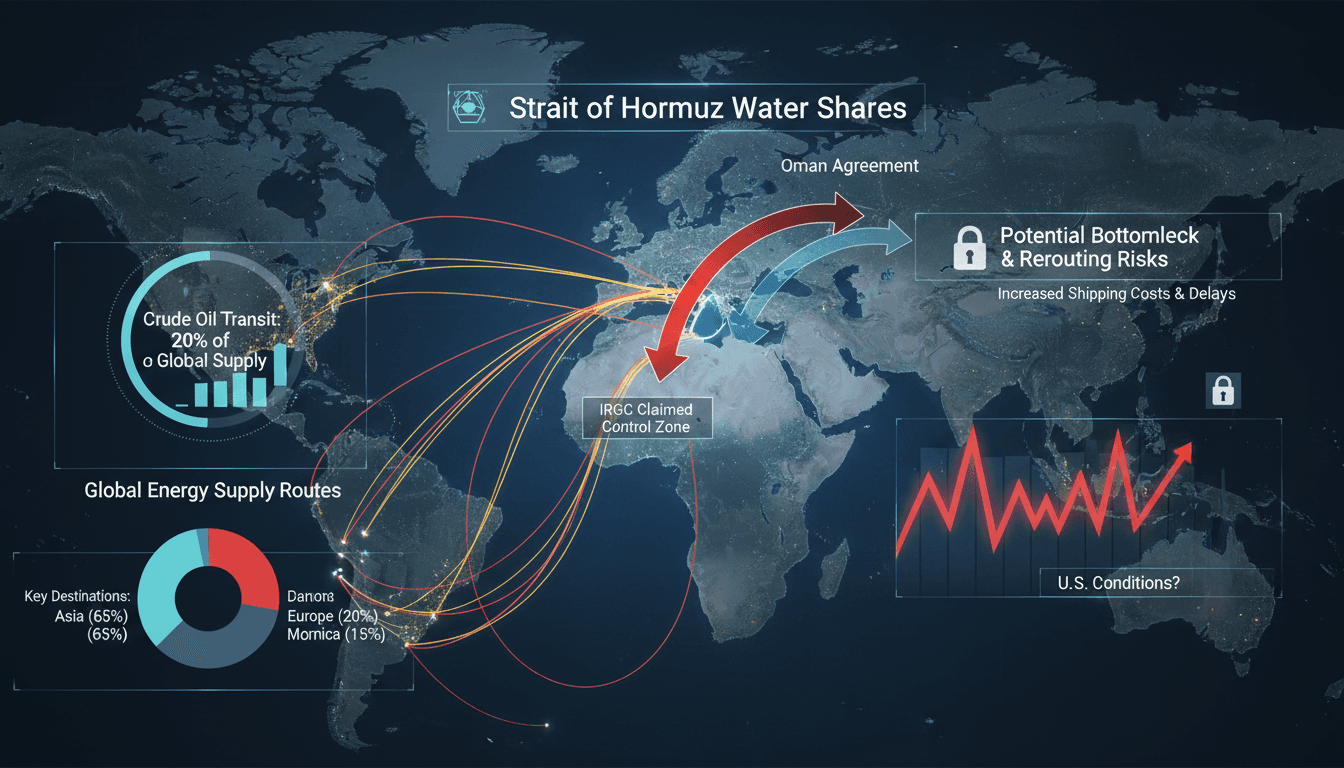
Here's what it means for you.
If you rely on global energy markets, this agreement could impact fuel prices and shipping costs.
Why it matters
The Strait of Hormuz is a critical chokepoint for approximately 20% of the world's energy supplies, making any changes in its governance significant for global markets.
What happened (in 30 seconds)
- IRGC announcement: On August 26, 2026, Iran's Islamic Revolutionary Guard Corps claimed an agreement with Oman regarding shares of the Strait of Hormuz waters and associated revenues.
- Conditional reopening: The IRGC linked the reopening of commercial traffic to U.S. acceptance of specific conditions, asserting full Iranian control over the strait.
- Omani response: Omani officials have not confirmed the specifics of the revenue-sharing agreement, leaving the situation ambiguous.
The context you actually need
- Strategic importance: The Strait of Hormuz is a vital maritime route for oil and gas shipments, with around 20% of global energy supplies passing through it.
- Regional tensions: Ongoing conflicts and U.S. involvement in the region have heightened the stakes for navigation and control over this waterway.
- Negotiation history: Prior discussions between Iran and Oman included temporary navigation corridors and mine-clearing efforts, indicating a complex diplomatic landscape.
What's really happening
The announcement by the IRGC on August 26, 2026, follows a series of high-level discussions between Iranian and Omani officials aimed at establishing a framework for safe navigation through the Strait of Hormuz. The IRGC's claim of an agreement on water shares and revenue division is significant, as it underscores Iran's assertion of operational control over this strategic waterway. The IRGC spokesman, Hossein Mohebbi, emphasized that the corridor near Oman remains under full Iranian control and that any reopening of commercial traffic is contingent upon the U.S. returning to a memorandum of understanding without obstructions.
This situation is further complicated by the lack of independent confirmation from Omani officials regarding the specifics of the agreement. While Iranian state media have amplified the IRGC's statements, the absence of a formal acknowledgment from Oman raises questions about the legitimacy and enforceability of the claimed agreement. The IRGC's insistence on U.S. compliance as a prerequisite for reopening the strait indicates a broader geopolitical strategy, where Iran seeks to leverage its control over this critical maritime route to influence international energy markets.
The Strait of Hormuz has long been a flashpoint for tensions between Iran and Western nations, particularly the U.S. The IRGC's announcement comes amid ongoing regional conflicts and heightened military presence in the Gulf, which have historically led to fluctuations in oil prices. The potential for renewed tensions could disrupt shipping routes and impact global energy supplies, making this agreement a focal point for market analysts and policymakers alike.
As negotiations continue, the implications of this agreement extend beyond Iran and Oman, affecting global energy markets and regional stability. The IRGC's claim of control and the conditional nature of the reopening could lead to increased volatility in fuel prices and shipping costs, particularly for countries reliant on energy imports from the Gulf region.
Who feels it first (and how)
- Energy companies: Fluctuations in oil prices could impact profitability and operational costs.
- Shipping industries: Changes in navigation routes or fees could affect shipping logistics and costs.
- Consumers: Increased fuel prices may lead to higher costs for goods and services.
- Governments: Countries dependent on energy imports may face economic pressures and diplomatic challenges.
What to watch next
- U.S. response: Monitor how the U.S. government reacts to the IRGC's claims and whether it will engage in negotiations regarding the memorandum of understanding.
- Market reactions: Watch for fluctuations in oil prices and shipping costs in response to developments in the Strait of Hormuz.
- Omani confirmation: Keep an eye on any official statements from Oman regarding the agreement and its implications for regional stability.
The Strait of Hormuz is crucial for global energy transit, with 20% of supplies passing through.
Increased volatility in fuel prices and shipping costs as a result of the agreement and regional tensions.
The final terms of the agreement and its enforceability without Omani confirmation.
Frequently Asked Questions
- Why it matters?
- The Strait of Hormuz is a critical chokepoint for approximately 20% of the world's energy supplies, making any changes in its governance significant for global markets.
- What happened (in 30 seconds)?
- IRGC announcement: On August 26, 2026, Iran's Islamic Revolutionary Guard Corps claimed an agreement with Oman regarding shares of the Strait of Hormuz waters and associated revenues. Conditional reopening: The IRGC linked the reopening of commercial traffic to U.S. acceptance of specific conditions, asserting full Iranian control over the strait. Omani response: Omani officials have not confirmed the specifics of the revenue-sharing agreement, leaving the situation ambiguous.
- What's really happening?
- The announcement by the IRGC on August 26, 2026, follows a series of high-level discussions between Iranian and Omani officials aimed at establishing a framework for safe navigation through the Strait of Hormuz. The IRGC's claim of an agreement on water shares and revenue division is significant, as it underscores Iran's assertion of operational control over this strategic waterway. The IRGC spokesman, Hossein Mohebbi, emphasized that the corridor near Oman remains under full Iranian control and
- Who feels it first (and how)?
- Energy companies: Fluctuations in oil prices could impact profitability and operational costs. Shipping industries: Changes in navigation routes or fees could affect shipping logistics and costs. Consumers: Increased fuel prices may lead to higher costs for goods and services. Governments: Countries dependent on energy imports may face economic pressures and diplomatic challenges.
- What to watch next?
- U.S. response: Monitor how the U.S. government reacts to the IRGC's claims and whether it will engage in negotiations regarding the memorandum of understanding. Market reactions: Watch for fluctuations in oil prices and shipping costs in response to developments in the Strait of Hormuz. Omani confirmation: Keep an eye on any official statements from Oman regarding the agreement and its implications for regional stability.
Jordanian news and regional updates.
"Roya News is a Jordanian outlet focused on breaking news and local affairs."
— A47 Editor
الحرس الثوري: اتفقنا مع عُمان بشأن حصة كل منا من مياه مضيق هرمز
The Iranian Revolutionary Guard announced an agreement with Oman regarding the allocation of water shares from the Strait of Hormuz. This development indicates a collaborative approach between the two nations concerning a critical maritime route.
Pan-Arab political news and analysis.
"Al-Quds Al-Arabi is a London-based Arabic newspaper known for political coverage."
— A47 Editor
الحرس الثوري يعلن التوصل لاتفاقات بشأن تقاسم إيران وعمان إيرادات مضيق هرمز
The Iranian Revolutionary Guard announced that Iran and Oman have reached agreements regarding the sharing of revenues from the Strait of Hormuz. The statement, reported by Tasnim news agency, indicated that U.S. interference has delayed negotiations...
Arabic-language coverage of international news and geopolitics.
"RT Arabic is a Russian state-funded outlet often criticized for promoting Kremlin-aligned narratives."
— A47 Editor
الحرس الثوري يؤكد سيطرته على هرمز ويعلن عن اتفاق مع عمان لتقاسم مياه المضيق
The Iranian Revolutionary Guard announced an agreement with Oman to share the waters of the Strait of Hormuz, detailing the revenue shares for both parties. This agreement highlights the strategic cooperation between Iran and Oman in managing a vital...