
Iran and Oman Reach Agreements on Strait of Hormuz Water and Revenue Sharing
Here's what it means for you.
If you rely on energy imports or shipping logistics in the Gulf region, prepare for potential cost increases.
Why it matters
The agreements between Iran and Oman could reshape energy transit dynamics, impacting global oil prices and shipping routes.
What happened (in 30 seconds)
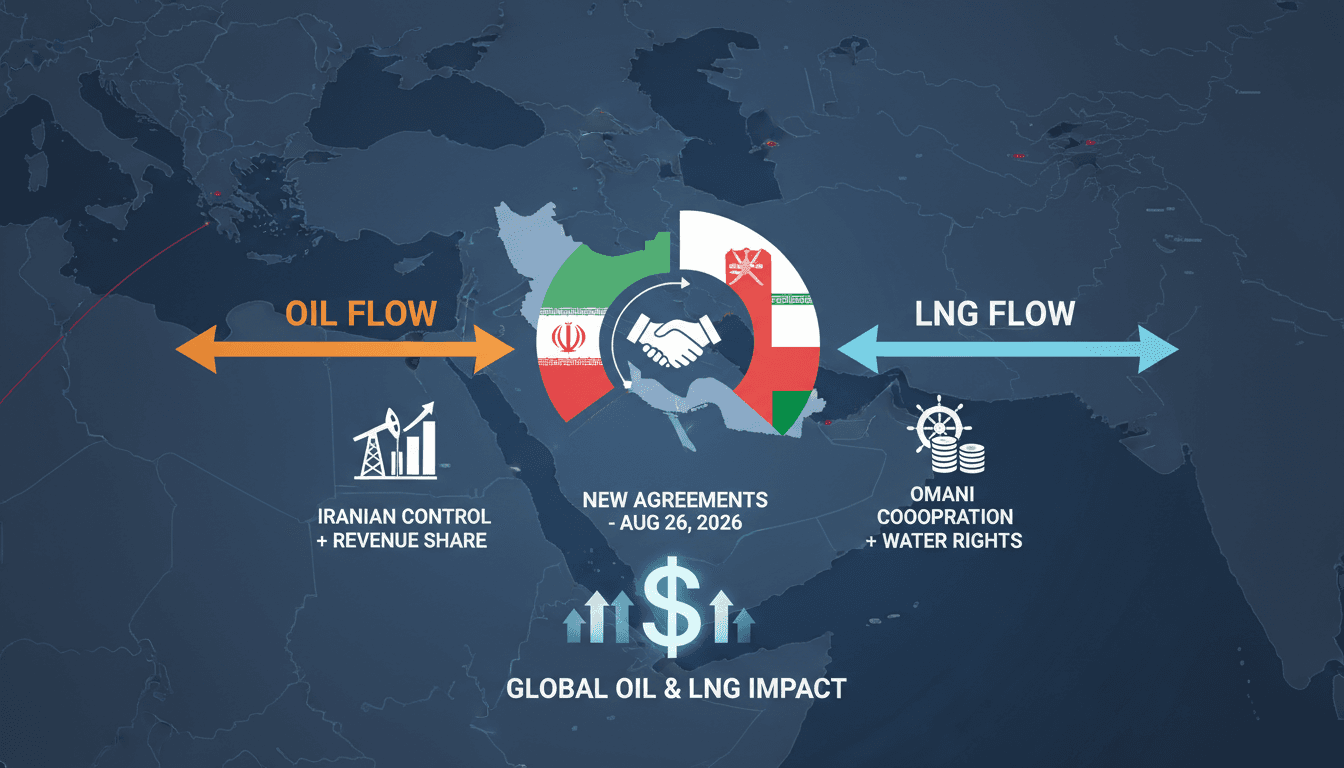
- On August 26, 2026, Iran's Islamic Revolutionary Guard Corps (IRGC) announced agreements with Oman on sharing the waters and revenues of the Strait of Hormuz.
- The agreements come amid ongoing tensions and negotiations following a U.S.-Israel conflict that has disrupted navigation in the strait.
- U.S. officials have rejected Iranian claims of control, emphasizing the importance of free passage under international law.
The context you actually need
- The Strait of Hormuz is a critical chokepoint for global oil and LNG shipments, with approximately 20% of the world's energy trade passing through it.
- Regional tensions have escalated since early 2026, leading to restrictions that have affected shipping and energy prices worldwide.
- Iran and Oman have been negotiating since mid-2026 to manage navigation and revenue sharing, with Iran asserting its control through military presence.
What's really happening
The recent agreements between Iran and Oman regarding the Strait of Hormuz represent a significant shift in regional maritime governance and economic strategy. The IRGC's announcement highlights Iran's intent to solidify its influence over this vital waterway, which is crucial for global energy supplies. The Strait of Hormuz has been a focal point of geopolitical tension, particularly following the U.S.-Israel conflict with Iran that erupted in February 2026. This conflict led to the effective closure of the strait, disrupting about 20% of global oil and LNG shipments.
The agreements reached between Iran and Oman are not merely about sharing water and revenues; they signify a broader strategy by Iran to assert its control over maritime routes and enhance its economic leverage. The IRGC's spokesperson accused the U.S. of obstructing progress, framing the agreements as a response to external pressures. This narrative serves to bolster Iran's domestic legitimacy while positioning Oman as a cooperative partner in navigating the complexities of regional politics.
The negotiations have included discussions on establishing a temporary joint navigational corridor, which would allow for inbound routes near Iranian waters and outbound routes near Omani waters. This arrangement could facilitate smoother transit for vessels while providing Iran with a mechanism to collect fees or tolls, despite U.S. opposition to such measures. The potential for revenue generation from shipping activities could significantly impact Iran's economy, which has faced sanctions and economic challenges.
For Oman, the agreements may enhance its role as a mediator in regional conflicts, allowing it to maintain its historical stance of advocating for toll-free transit while engaging in bilateral talks with Iran. However, the implications for global energy markets are profound. As tensions persist, energy prices may experience volatility, affecting consumers and businesses reliant on stable fuel costs.
The IRGC's announcement aligns with Iran's broader strategy of asserting control over its territorial waters and maximizing revenue from security and environmental services. This could lead to increased scrutiny from international bodies and neighboring Gulf states, who may view these developments as a challenge to established maritime norms.
Who feels it first (and how)
- Energy companies: Increased costs and potential disruptions in shipping routes could affect operational budgets.
- Consumers in the UAE: Higher fuel prices may lead to increased living costs.
- Shipping industries: Changes in navigation fees and routes could impact logistics and supply chain efficiency.
- Regional governments: Increased geopolitical tensions may require diplomatic responses or adjustments in energy policy.
What to watch next
- Energy price fluctuations: Monitor how global oil prices react to the implementation of these agreements, as they could signal broader market trends.
- International responses: Watch for reactions from other Gulf states and international bodies regarding Iran's claims and the implications for maritime law.
- Further negotiations: Keep an eye on ongoing talks between Iran and Oman, as any changes could impact shipping logistics and regional stability.
The agreements between Iran and Oman have been officially announced.
Energy prices will experience volatility as markets react to these developments.
The long-term impact on international shipping routes and regional stability remains uncertain.
Frequently Asked Questions
- Why it matters?
- The agreements between Iran and Oman could reshape energy transit dynamics, impacting global oil prices and shipping routes.
- What happened (in 30 seconds)?
- On August 26, 2026, Iran's Islamic Revolutionary Guard Corps (IRGC) announced agreements with Oman on sharing the waters and revenues of the Strait of Hormuz. The agreements come amid ongoing tensions and negotiations following a U.S.-Israel conflict that has disrupted navigation in the strait. U.S. officials have rejected Iranian claims of control, emphasizing the importance of free passage under international law.
- What's really happening?
- The recent agreements between Iran and Oman regarding the Strait of Hormuz represent a significant shift in regional maritime governance and economic strategy. The IRGC's announcement highlights Iran's intent to solidify its influence over this vital waterway, which is crucial for global energy supplies. The Strait of Hormuz has been a focal point of geopolitical tension, particularly following the U.S.-Israel conflict with Iran that erupted in February 2026. This conflict led to the effective c
- Who feels it first (and how)?
- Energy companies: Increased costs and potential disruptions in shipping routes could affect operational budgets. Consumers in the UAE: Higher fuel prices may lead to increased living costs. Shipping industries: Changes in navigation fees and routes could impact logistics and supply chain efficiency. Regional governments: Increased geopolitical tensions may require diplomatic responses or adjustments in energy policy.
- What to watch next?
- Energy price fluctuations: Monitor how global oil prices react to the implementation of these agreements, as they could signal broader market trends. International responses: Watch for reactions from other Gulf states and international bodies regarding Iran's claims and the implications for maritime law. Further negotiations: Keep an eye on ongoing talks between Iran and Oman, as any changes could impact shipping logistics and regional stability.
Pan-Arab political news and analysis.
"Al-Quds Al-Arabi is a London-based Arabic newspaper known for political coverage."
— A47 Editor
الحرس الثوري يعلن التوصل لاتفاقات بشأن تقاسم إيران وعمان إيرادات مضيق هرمز
The Iranian Revolutionary Guard announced that Iran and Oman have reached agreements regarding the sharing of revenues from the Strait of Hormuz. The statement, reported by Tasnim news agency, indicated that U.S. interference has delayed negotiations...
Arabic-language coverage of international news and geopolitics.
"RT Arabic is a Russian state-funded outlet often criticized for promoting Kremlin-aligned narratives."
— A47 Editor
الحرس الثوري يؤكد سيطرته على هرمز ويعلن عن اتفاق مع عمان لتقاسم مياه المضيق
The Iranian Revolutionary Guard announced an agreement with Oman to share the waters of the Strait of Hormuz, detailing the revenue shares for both parties. This agreement highlights the strategic cooperation between Iran and Oman in managing a vital...
Pan-Arab political news and analysis.
"Al-Quds Al-Arabi is a London-based Arabic newspaper known for political coverage."
— A47 Editor
عاجل.. الحرس الثوري: أمريكا تعرقل عملية التفاوض بين سلطنة عمان وإيران مما أدى إلى تأخيرها
The Islamic Revolutionary Guard Corps (IRGC) has accused the United States of obstructing negotiations between Oman and Iran, leading to delays in the diplomatic process. This claim highlights ongoing tensions in the region and the complexities of in...