
IRGC Demands US Compliance for Strait of Hormuz Reopening
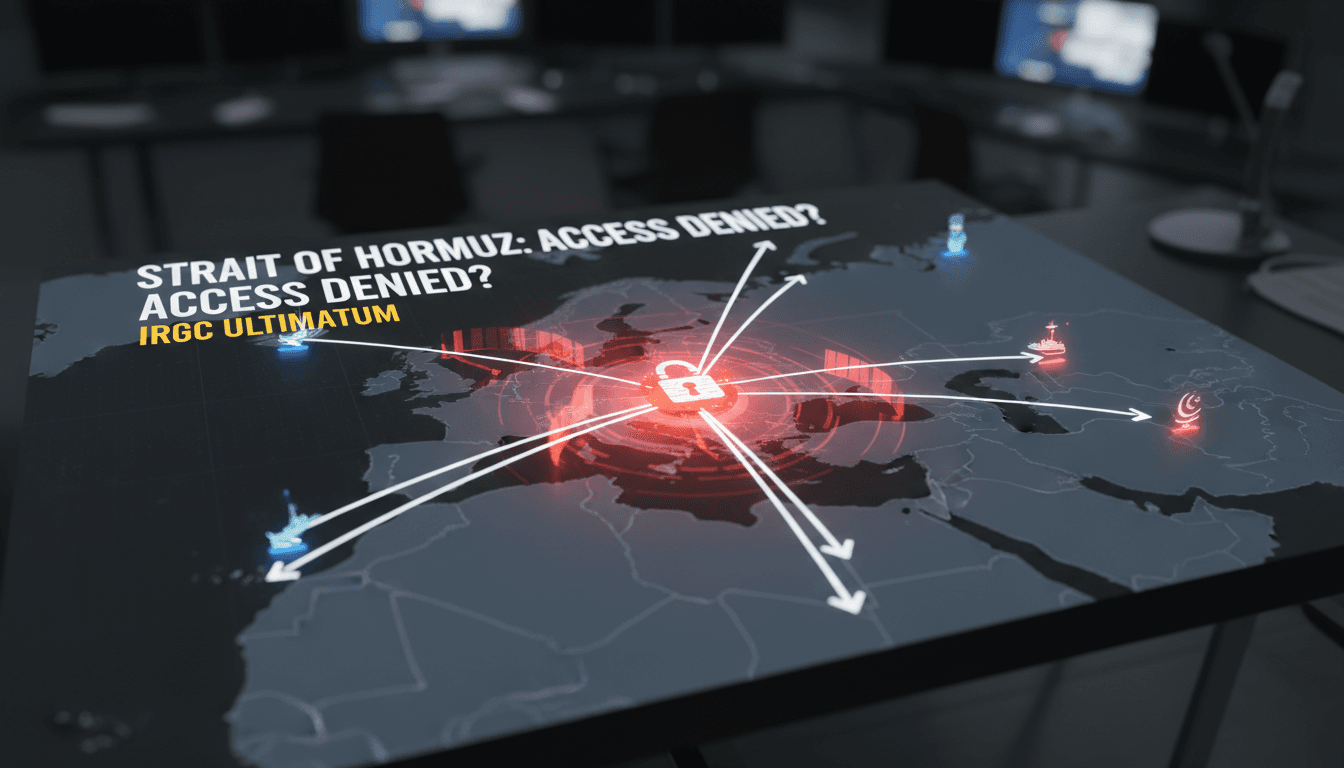
Here's what it means for you.
Increased shipping costs and supply chain disruptions could impact global markets, especially in energy sectors.
Why it matters
The Strait of Hormuz is a critical chokepoint for global oil shipments, making its accessibility vital for energy security.
What happened (in 30 seconds)
- On August 26, 2026, the IRGC announced that reopening the Strait of Hormuz hinges on U.S. acceptance of Iranian terms.
- Hossein Mohebbi, IRGC spokesman, stated that without U.S. compliance, the strait would remain closed indefinitely.
- Iran and Oman have reached agreements on shared control and revenue from the strait, amid ongoing tensions with the U.S.
The context you actually need
- The Strait of Hormuz is responsible for approximately 20% of the world's oil trade, making its control a significant geopolitical issue.
- U.S.-Iran relations have been strained, with military posturing and sanctions complicating negotiations over maritime security.
- Oman’s role as a mediator highlights its strategic importance in regional diplomacy, particularly in balancing Iranian and U.S. interests.
What's really happening
The IRGC's recent declaration marks a significant escalation in the ongoing U.S.-Iran tensions, particularly concerning the Strait of Hormuz. By conditioning the reopening of this vital waterway on U.S. compliance with Iranian terms, the IRGC is asserting its control over a region that is crucial for global oil transportation. The IRGC's spokesman, Hossein Mohebbi, emphasized that all enemy warships must remain at least 400 km away from the strait, indicating a strong military posture aimed at deterring U.S. naval presence.
This ultimatum follows a June 2026 memorandum of understanding (MoU) that established a 60-day negotiation window for safe passage through the strait. However, the breakdown of these negotiations over issues such as control, tolls, and sanctions has led to the current standoff. The IRGC's insistence on U.S. abandonment of interference and adherence to the prior MoU reflects a broader strategy to leverage regional partnerships, particularly with Oman, to enhance its bargaining power.
Iran's recent agreements with Oman regarding shared control and revenue from the strait signal a shift in regional dynamics, where Iran seeks to consolidate its influence while minimizing U.S. intervention. The IRGC's claim of full control over the strait and adjacent Omani routes underscores its commitment to maintaining a stronghold in this strategic maritime corridor.
The implications of this situation extend beyond regional politics; they have the potential to disrupt global oil markets significantly. A prolonged closure or conditional access to the Strait of Hormuz would likely lead to increased shipping costs and insurance premiums, affecting not only oil prices but also the broader logistics and energy trading landscape. For Dubai, a key logistics hub, this could mean longer transit times and heightened supply chain volatility for Gulf exports.
As the IRGC continues to assert its demands, the U.S. has reiterated its commitment to counter Iranian threats and maintain pressure through sanctions. This ongoing tension creates a precarious environment for energy markets, with volatility in energy futures already evident amid uncertainty over passage guarantees.
Who feels it first (and how)
- Energy companies: Increased operational costs and supply chain disruptions could impact profitability.
- Shipping and logistics firms: Higher insurance premiums and transit times may lead to increased shipping costs.
- Consumers: Potential rise in oil prices could translate to higher fuel costs and inflation in energy-dependent sectors.
- Regional governments: Countries reliant on oil exports may face economic instability due to fluctuating prices and access issues.
What to watch next
- U.S. military movements: Increased naval presence in the region could escalate tensions or lead to negotiations.
- Iran-Oman diplomatic engagements: Continued discussions may either stabilize the situation or further entrench divisions.
- Global oil prices: Fluctuations in oil prices will indicate market reactions to the ongoing geopolitical situation.
The IRGC's control over the Strait of Hormuz is a critical factor in regional security.
Increased shipping costs and volatility in energy markets as a result of the IRGC's ultimatum.
The potential for U.S.-Iran negotiations to resume or escalate into military confrontations.
Frequently Asked Questions
- Why it matters?
- The Strait of Hormuz is a critical chokepoint for global oil shipments, making its accessibility vital for energy security.
- What happened (in 30 seconds)?
- On August 26, 2026, the IRGC announced that reopening the Strait of Hormuz hinges on U.S. acceptance of Iranian terms. Hossein Mohebbi, IRGC spokesman, stated that without U.S. compliance, the strait would remain closed indefinitely. Iran and Oman have reached agreements on shared control and revenue from the strait, amid ongoing tensions with the U.S.
- What's really happening?
- The IRGC's recent declaration marks a significant escalation in the ongoing U.S.-Iran tensions, particularly concerning the Strait of Hormuz. By conditioning the reopening of this vital waterway on U.S. compliance with Iranian terms, the IRGC is asserting its control over a region that is crucial for global oil transportation. The IRGC's spokesman, Hossein Mohebbi, emphasized that all enemy warships must remain at least 400 km away from the strait, indicating a strong military posture aimed at d
- Who feels it first (and how)?
- Energy companies: Increased operational costs and supply chain disruptions could impact profitability. Shipping and logistics firms: Higher insurance premiums and transit times may lead to increased shipping costs. Consumers: Potential rise in oil prices could translate to higher fuel costs and inflation in energy-dependent sectors. Regional governments: Countries reliant on oil exports may face economic instability due to fluctuating prices and access issues.
- What to watch next?
- U.S. military movements: Increased naval presence in the region could escalate tensions or lead to negotiations. Iran-Oman diplomatic engagements: Continued discussions may either stabilize the situation or further entrench divisions. Global oil prices: Fluctuations in oil prices will indicate market reactions to the ongoing geopolitical situation.
Arabic-language coverage of international news and geopolitics.
"RT Arabic is a Russian state-funded outlet often criticized for promoting Kremlin-aligned narratives."
— A47 Editor
الحرس الثوري الإيراني يحدد شرطين لفتح مضيق هرمز
Iranian Revolutionary Guard spokesperson Hossein Mohri stated that the Strait of Hormuz will not be opened unless the United States accepts Iranian conditions. This statement highlights ongoing tensions between Iran and the U.S. regarding maritime se...
Pan-Arab news coverage spanning politics, business, sports, and regional affairs.
"Asharq Al-Awsat reflects a broad Arab editorial perspective with strong attention to regional geopolitics."
— A47 Editor
«الحرس الثوري»: لا فتح لـ«هرمز» من دون شروطنا
Iranian Revolutionary Guard spokesperson Hossein Mohbi stated that Iran will not reopen the Strait of Hormuz unless the United States accepts Tehran's conditions and returns to the memorandum of understanding.
Pan-Arab political news and analysis.
"Al-Quds Al-Arabi is a London-based Arabic newspaper known for political coverage."
— A47 Editor
عاجل.. الحرس الثوري الإيراني: المضيق لن يفتح إذا لم تقبل أمريكا بشروطنا
The Iranian Revolutionary Guard has stated that the Strait will not be opened unless the United States accepts its conditions. This declaration highlights ongoing tensions between Iran and the U.S., particularly regarding maritime access and regional...