
Iranian Foreign Minister Criticizes Lebanese President Amid Rising Tensions
Here's what it means for you.
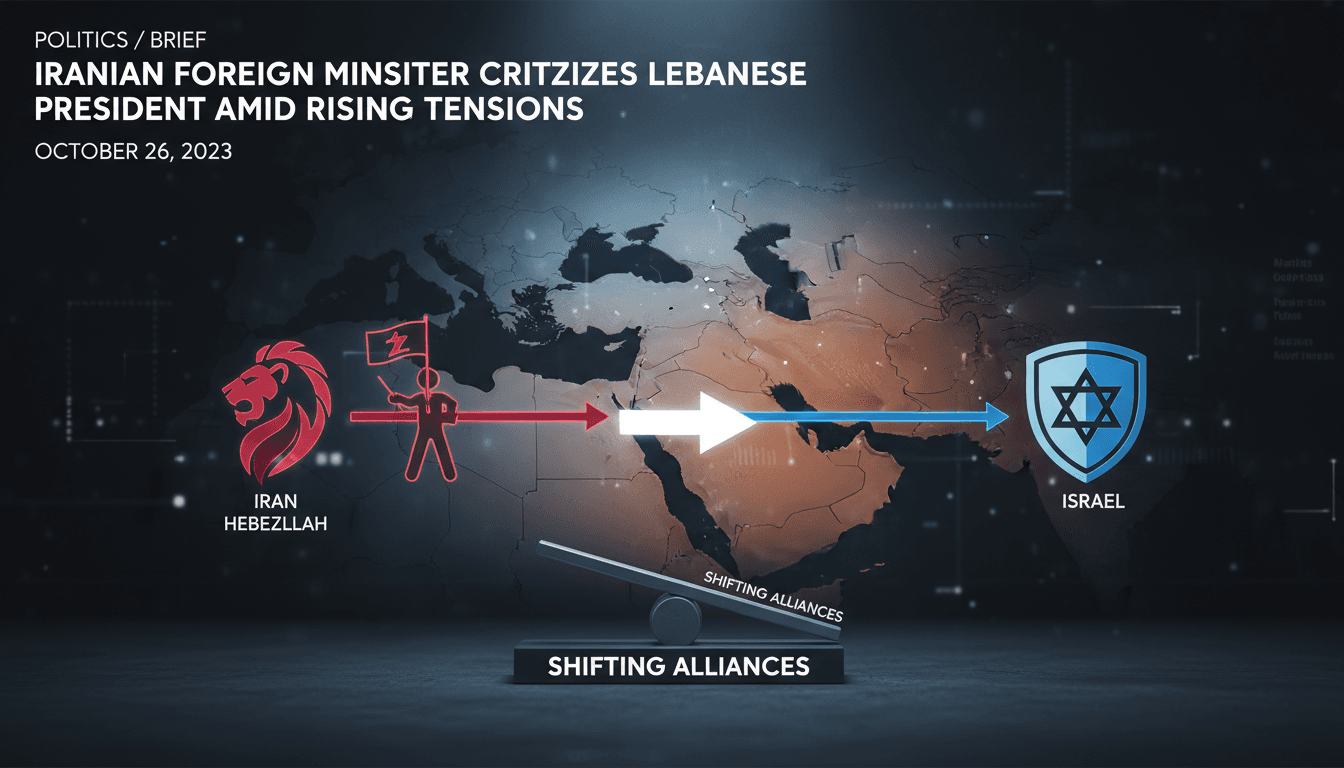
The recent exchange between Iranian Foreign Minister Abbas Araqchi and Lebanese President Joseph Aoun highlights a significant shift in regional dynamics. As Lebanon grapples with its internal politics and external influences, the call for a reevaluation of adversaries could reshape alliances. This confrontation may lead to increased scrutiny of Iran's role in Lebanon and the broader Middle East. The implications of this diplomatic rift extend beyond rhetoric, potentially affecting negotiations and regional stability. Stakeholders in Lebanon and Iran will need to navigate these tensions carefully to avoid further escalation.
What happened
Iranian Foreign Minister Abbas Araqchi sharply criticized Lebanese President Joseph Aoun's unprecedented remarks regarding Iran and Hezbollah. Araqchi urged Aoun to redirect his focus towards Israel, which he described as Lebanon's true enemy. This exchange occurred on June 6, 2026, following Aoun's call for Lebanon to recognize Israel as its primary adversary.
Araqchi emphasized that if Lebanon were merely a bargaining chip for Tehran, an agreement would have been reached long ago. His comments reflect Iran's commitment to maintaining its regional alliances while countering perceived threats.
The Context
The exchange between Araqchi and Aoun underscores rising tensions between Lebanon and Iran amid ongoing regional conflicts. Aoun's remarks signal a growing sentiment within Lebanon regarding the influence of Iran and Hezbollah, which has been a contentious issue in Lebanese politics.
This confrontation is set against the backdrop of complex geopolitical dynamics in the Middle East, particularly concerning the Israeli-Palestinian conflict. As Lebanon navigates its foreign relations, the implications of this dialogue could have lasting effects on its alliances and stability.
Takeaway
The diplomatic rift between Lebanon and Iran may have significant implications for future negotiations and alliances in the region. Observers will be closely monitoring potential responses from Lebanese political factions regarding Araqchi's statements.
As tensions escalate, the relationship between Lebanon and Iran could face further strain, impacting regional stability. The evolving political landscape in Lebanon will be crucial to watch as it determines its approach to foreign relations moving forward.
Pan-Arab news coverage spanning politics, business, sports, and regional affairs.
"Asharq Al-Awsat reflects a broad Arab editorial perspective with strong attention to regional geopolitics."
— A47 Editor
تنديد لبناني بردّ عراقجي على عون... ودعم لمسار المفاوضات
Lebanese politicians have condemned Iranian Foreign Minister Abbas Araqchi's remarks urging the Lebanese president to 'save' Lebanon from its 'real enemy,' Israel. This statement has sparked significant backlash within Lebanon, highlighting the sensi...
Arabic-language coverage of international news and geopolitics.
"RT Arabic is a Russian state-funded outlet often criticized for promoting Kremlin-aligned narratives."
— A47 Editor
عراقجي يرد بعنف على هجوم عون غير المسبوق على إيران و"حزب الله"
Iranian Foreign Minister Abbas Araqchi responded strongly to unprecedented remarks made by Lebanese President Joseph Aoun, who criticized Iran and Hezbollah, urging Aoun to save Lebanon from its true occupying enemy that displaces its people.
Jordanian news and regional updates.
"Roya News is a Jordanian outlet focused on breaking news and local affairs."
— A47 Editor
عراقجي ردا على جوزيف عون: لو كان لبنان ورقة مساومة لطهران لتم الاتفاق منذ زمن بعيد
Iranian Foreign Minister Abbas Araqchi directly responded to Joseph Aoun's statement, asserting that if Lebanon were a bargaining chip for Tehran, an agreement would have been reached long ago. This remark highlights the complexities of Lebanon's geo...