
White House Confirms No Negotiations with Iran Amid Ongoing Economic Pressure
Here's what it means for you.
If you’re in the energy sector or rely on global supply chains, the U.S.-Iran tensions could impact your operations.
Why it matters
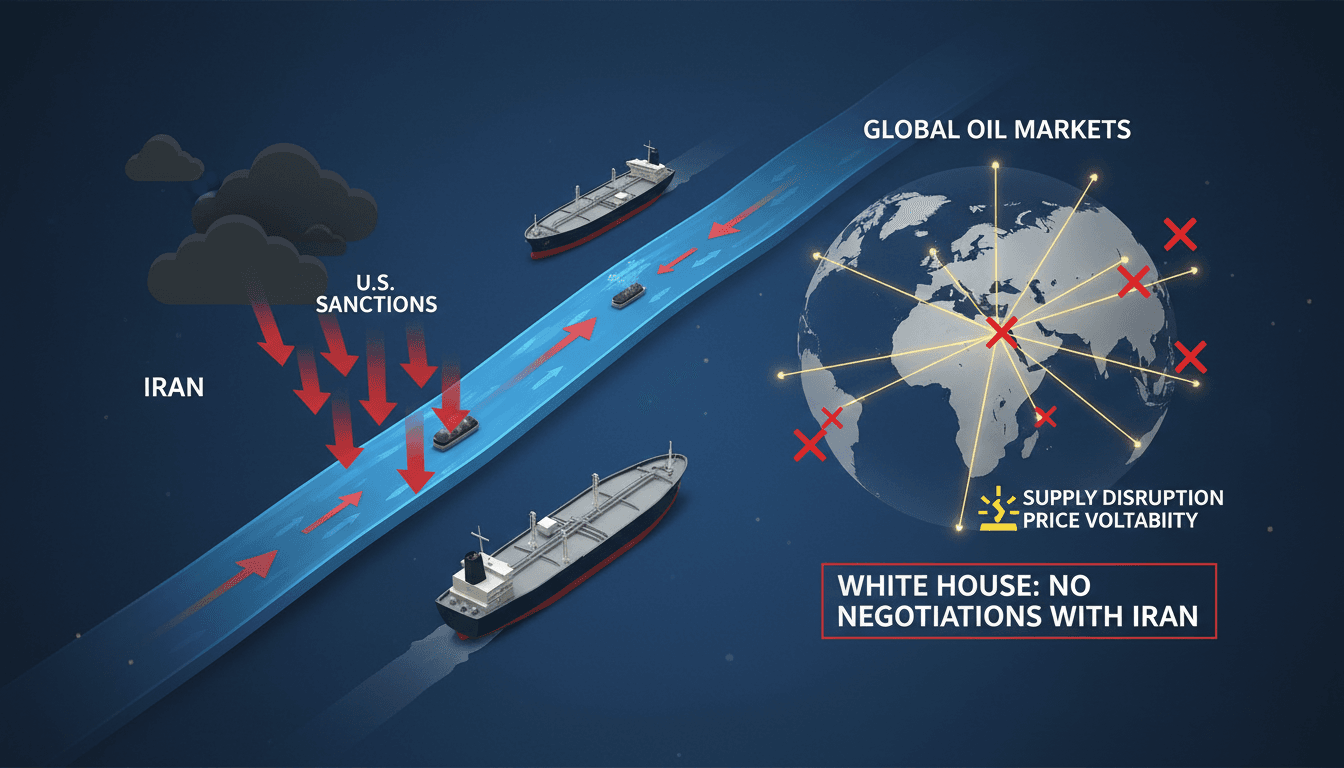
The ongoing U.S. economic pressure on Iran could lead to fluctuations in global oil prices and disrupt shipping routes critical for energy exports.
What happened (in 30 seconds)
- White House Statement: On August 27, 2026, Press Secretary Karoline Leavitt confirmed there are no negotiations with Iran, emphasizing a shift to economic pressure.
- Economic Strategy: The U.S. is implementing "Operation Economic Outcast" to cripple Iran's economy while maintaining a naval blockade.
- Regional Reactions: Iranian officials condemned U.S. actions as an "all-out economic war," while Qatar seeks to mediate dialogue.
The context you actually need
- Stalled Diplomacy: Diplomatic efforts mediated by Qatar and Pakistan have failed to progress, particularly over nuclear inspections and the Strait of Hormuz.
- Military Operations: The U.S. has conducted military strikes against Iranian capabilities, transitioning focus to economic measures after talks faltered.
- Secondary Sanctions Warning: Treasury Secretary Scott Bessent has indicated potential secondary sanctions on countries maintaining ties with Iran, heightening global economic stakes.
What's really happening
The U.S. has shifted its strategy regarding Iran from military engagement to economic isolation, primarily to prevent Tehran from acquiring nuclear weapons. This transition follows six months of escalating hostilities, including military strikes aimed at Iranian military capabilities. The U.S. government, under President Donald Trump, has made it clear that it will not engage in negotiations unless Iran shows a willingness to participate in meaningful talks.
The current economic pressure campaign, dubbed "Operation Economic Outcast," aims to dismantle Iran's economy by targeting its financial networks and trade relationships. The naval blockade remains a critical component of this strategy, serving as a deterrent against Iranian aggression in the Strait of Hormuz, a vital chokepoint for global oil shipments. The U.S. is prepared to enforce secondary sanctions on countries that continue to engage economically with Iran, which could further isolate Tehran and exacerbate its economic struggles.
This approach reflects a broader U.S. strategy to leverage economic tools in international relations, particularly in regions where military options have proven costly and ineffective. The White House's stance indicates a commitment to maintaining pressure on Iran until it demonstrates a genuine commitment to nuclear disarmament and regional stability. The implications of this strategy extend beyond Iran, affecting global oil markets and regional economies, particularly in the Gulf states.
As tensions rise, the potential for miscalculations increases, which could lead to unintended escalations. The U.S. is balancing its hardline stance with the need to avoid a full-scale military conflict, which could have dire consequences for global stability. The ongoing situation is fluid, and the lack of negotiations suggests that both sides are entrenched in their positions, making a diplomatic resolution increasingly challenging.
Who feels it first (and how)
- Energy Sector: Companies reliant on oil exports may face price volatility and supply chain disruptions.
- Shipping Industries: Increased naval presence and potential blockades could affect shipping routes through the Strait of Hormuz.
- Regional Economies: Countries in the Gulf region may experience economic strain due to heightened geopolitical tensions and reduced trade with Iran.
What to watch next
- Oil Price Fluctuations: Monitor changes in global oil prices as U.S. sanctions and military actions unfold, impacting energy markets.
- Iran's Economic Response: Watch for Iran's economic strategies in response to U.S. pressure, including potential alliances with other nations.
- Diplomatic Efforts: Keep an eye on any renewed diplomatic initiatives from countries like Qatar, which may attempt to mediate between the U.S. and Iran.
The U.S. is not currently negotiating with Iran and is focused on economic pressure.
Continued volatility in global oil markets as tensions persist.
The long-term effectiveness of economic sanctions in achieving U.S. objectives regarding Iran's nuclear program.
Frequently Asked Questions
- Why it matters?
- The ongoing U.S. economic pressure on Iran could lead to fluctuations in global oil prices and disrupt shipping routes critical for energy exports.
- What happened (in 30 seconds)?
- White House Statement: On August 27, 2026, Press Secretary Karoline Leavitt confirmed there are no negotiations with Iran, emphasizing a shift to economic pressure. Economic Strategy: The U.S. is implementing "Operation Economic Outcast" to cripple Iran's economy while maintaining a naval blockade. Regional Reactions: Iranian officials condemned U.S. actions as an "all-out economic war," while Qatar seeks to mediate dialogue.
- What's really happening?
- The U.S. has shifted its strategy regarding Iran from military engagement to economic isolation, primarily to prevent Tehran from acquiring nuclear weapons. This transition follows six months of escalating hostilities, including military strikes aimed at Iranian military capabilities. The U.S. government, under President Donald Trump, has made it clear that it will not engage in negotiations unless Iran shows a willingness to participate in meaningful talks. The current economic pressure campai
- Who feels it first (and how)?
- Energy Sector: Companies reliant on oil exports may face price volatility and supply chain disruptions. Shipping Industries: Increased naval presence and potential blockades could affect shipping routes through the Strait of Hormuz. Regional Economies: Countries in the Gulf region may experience economic strain due to heightened geopolitical tensions and reduced trade with Iran.
- What to watch next?
- Oil Price Fluctuations: Monitor changes in global oil prices as U.S. sanctions and military actions unfold, impacting energy markets. Iran's Economic Response: Watch for Iran's economic strategies in response to U.S. pressure, including potential alliances with other nations. Diplomatic Efforts: Keep an eye on any renewed diplomatic initiatives from countries like Qatar, which may attempt to mediate between the U.S. and Iran.
Pan-Arab news coverage spanning politics, business, sports, and regional affairs.
"Asharq Al-Awsat reflects a broad Arab editorial perspective with strong attention to regional geopolitics."
— A47 Editor
البيت الأبيض: لا مفاوضات حالياً مع إيران وكل الخيارات مطروحة
White House spokesperson Karine Jean-Pierre stated that the United States and Iran are not currently engaged in negotiations to end the ongoing conflict, emphasizing that Washington is focused on intensifying economic pressure.
Jordanian news and regional updates.
"Roya News is a Jordanian outlet focused on breaking news and local affairs."
— A47 Editor
البيت الأبيض: لا مفاوضات حاليا مع إيران والخيارات كافة مطروحة
On Thursday, White House spokesperson Caroline Levitt stated that there are currently no negotiations taking place with Iran, emphasizing that all options remain on the table. This statement reflects the ongoing tensions between the United States and...
Arabic-language coverage of international news and geopolitics.
"RT Arabic is a Russian state-funded outlet often criticized for promoting Kremlin-aligned narratives."
— A47 Editor
البيت الأبيض: لا مفاوضات مع إيران حاليا وجميع الخيارات مطروحة
The White House announced that there are currently no negotiations taking place between Washington and Tehran, reaffirming the continuation of the U.S. maritime blockade on Iranian ports without any changes.