
U.S. Justice Department Disrupts Chinese State-Sponsored Hacking Platforms Targeting NASA and Federal Agencies
Here's what it means for you.
If you work in tech or government, this disruption could signal increased scrutiny and security measures in your sector.
Why it matters
This operation underscores the escalating cyber tensions between the U.S. and China, impacting global cybersecurity protocols.
What happened (in 30 seconds)
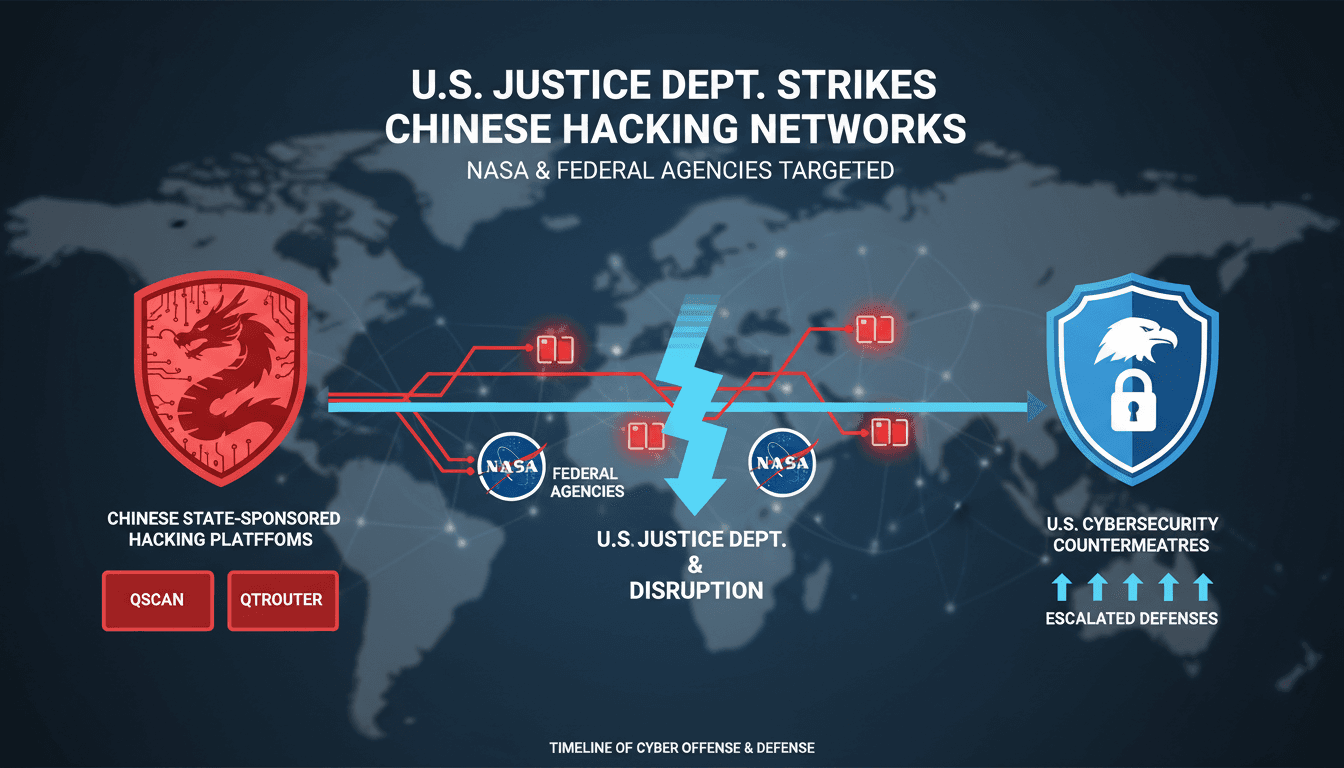
- On August 26, 2026, the U.S. Department of Justice and FBI seized domains linked to Chinese hacking platforms QScan and QTRouter.
- These platforms targeted sensitive U.S. networks, including NASA and federal agencies, with intrusions dating back to 2018.
- The action is part of ongoing U.S. efforts to counter cyber espionage linked to the People's Republic of China (PRC).
The context you actually need
- U.S.-China tensions over cyber operations have been escalating, with accusations of intellectual property theft and critical infrastructure targeting.
- Previous U.S. actions include the removal of malware linked to Chinese hacking groups, indicating a pattern of proactive cybersecurity measures.
- China's response has been to deny state sponsorship of cyberattacks while accusing the U.S. of politicizing cybersecurity issues.
What's really happening
The recent seizure of domains associated with QScan and QTRouter marks a significant escalation in the U.S. government's efforts to combat state-sponsored cyber threats. These platforms, operated by Nanjing Xinjiuwei Network Technology Company, were integral to a sophisticated cyber espionage operation targeting critical U.S. infrastructure. The operation's timeline reveals that intrusions attributed to the QTFY hacking group began as early as 2018, with notable attempts to breach NASA networks in 2019.
The tools employed by these hackers were designed for reconnaissance and infection of Internet of Things (IoT) devices, allowing them to mask their origins effectively. On one of its busiest days in 2024, QScan executed up to 2 million scans and break-in attempts, utilizing around 200 exploits to identify vulnerabilities. This level of activity highlights the scale and sophistication of the threats posed by state-sponsored actors.
The U.S. response, which included obtaining court authorization to seize the domains, effectively rendered these platforms inoperable. FBI Director Kash Patel emphasized that these tools were crucial in concealing the origins of PRC cyber operations, indicating a strategic move to disrupt the infrastructure that supports such espionage activities.
This operation is not an isolated incident but part of a broader strategy to dismantle PRC-sponsored cyber operations. The U.S. government has made it clear that it will continue to pursue and prosecute those involved in cyber espionage. The implications of this action extend beyond immediate cybersecurity concerns; they reflect a growing recognition of the need for robust defenses against state-sponsored threats.
As the U.S. ramps up its cybersecurity measures, organizations across various sectors may need to reassess their own security protocols and prepare for potential retaliatory actions from state-sponsored actors. The ongoing investigations and potential legal actions against those involved in these hacking operations will likely shape the future landscape of cybersecurity and international relations.
Who feels it first (and how)
- Government agencies: Increased scrutiny and security measures will be implemented to protect sensitive information.
- Tech companies: Heightened awareness of cybersecurity risks may lead to more stringent security protocols and investments.
- IoT device manufacturers: Potential regulatory changes could impact product design and security standards.
What to watch next
- Future domain seizures: Monitoring for additional actions against other hacking platforms could indicate the U.S. government's ongoing commitment to cybersecurity.
- International responses: Watch for reactions from China and other nations regarding this operation, which may influence global cybersecurity policies.
- Legislative changes: Potential new laws aimed at enhancing cybersecurity measures could emerge in response to these threats.
The U.S. has successfully disrupted QScan and QTRouter, impacting their operations.
Increased cybersecurity measures will be adopted across various sectors in response to these threats.
The full extent of retaliatory actions from China and their impact on U.S.-China relations remains uncertain.
Frequently Asked Questions
- Why it matters?
- This operation underscores the escalating cyber tensions between the U.S. and China, impacting global cybersecurity protocols.
- What happened (in 30 seconds)?
- On August 26, 2026, the U.S. Department of Justice and FBI seized domains linked to Chinese hacking platforms QScan and QTRouter. These platforms targeted sensitive U.S. networks, including NASA and federal agencies, with intrusions dating back to 2018. The action is part of ongoing U.S. efforts to counter cyber espionage linked to the People's Republic of China (PRC).
- What's really happening?
- The recent seizure of domains associated with QScan and QTRouter marks a significant escalation in the U.S. government's efforts to combat state-sponsored cyber threats. These platforms, operated by Nanjing Xinjiuwei Network Technology Company, were integral to a sophisticated cyber espionage operation targeting critical U.S. infrastructure. The operation's timeline reveals that intrusions attributed to the QTFY hacking group began as early as 2018, with notable attempts to breach NASA networks
- Who feels it first (and how)?
- Government agencies: Increased scrutiny and security measures will be implemented to protect sensitive information. Tech companies: Heightened awareness of cybersecurity risks may lead to more stringent security protocols and investments. IoT device manufacturers: Potential regulatory changes could impact product design and security standards.
- What to watch next?
- Future domain seizures: Monitoring for additional actions against other hacking platforms could indicate the U.S. government's ongoing commitment to cybersecurity. International responses: Watch for reactions from China and other nations regarding this operation, which may influence global cybersecurity policies. Legislative changes: Potential new laws aimed at enhancing cybersecurity measures could emerge in response to these threats.
Technology industry news and policy coverage.
"Fox News is a highly influential conservative news outlet known for right-leaning political commentary and coverage."
— A47 Editor
Chinese hackers target NASA and key US agencies, DOJ alleges
The U.S. Department of Justice has announced the seizure of domains linked to two hacking platforms, QScan and QTRouter, which are allegedly used by China-linked hackers to breach sensitive U.S. agencies, including NASA and the Justice Department. Th...
Conservative-leaning coverage of current events.
"Fox News is a highly influential conservative news outlet known for right-leaning political commentary and coverage."
— A47 Editor
Chinese hackers target NASA and key US agencies, DOJ alleges
The U.S. Department of Justice has announced the seizure of domains linked to two hacking platforms, QScan and QTRouter, which are allegedly used by China-linked hackers to breach sensitive U.S. agencies, including NASA and the Justice Department. Th...
Consumer tech news, reviews, and buying guides for gadgets and electronics.
"TechRadar is known for comprehensive buying advice, hardware reviews, and consumer tech news targeted at mainstream audiences."
— A47 Editor
US says Chinese hackers broke into Justice Department, NASA, Federal Reserve, Senate, and more
Chinese state-sponsored hackers have successfully breached several key U.S. agencies, including the Justice Department, NASA, and the Federal Reserve, utilizing a botnet to mask their cyber activities. This incident highlights the ongoing vulnerabili...
Arabic-language coverage of political affairs and current events.
"Okaz political coverage typically follows mainstream Saudi framing on national and regional affairs."
— A47 Editor
واشنطن تعلن إحباط حملة قرصنة صينية استهدفت مؤسسات حكومية أمريكية حساسة
The United States has announced the thwarting of a significant cyber-espionage campaign attributed to Chinese entities, targeting sensitive government institutions including the Department of Justice, NASA, and the Federal Reserve. The Justice Depart...
Global business headlines with AI angles.
"General business outlet that frequently covers AI."
— A47 Editor
Fed and NASA Among Victims of China-Linked Hackers, FBI And DOJ Say
The Justice Department and FBI have announced the seizure of three internet domains linked to Chinese hackers who targeted U.S. critical infrastructure, including NASA and the Federal Reserve. This operation aimed to disrupt two hacking platforms use...