
Khamenei Directs Against Public Discussion of Iran's Weaknesses
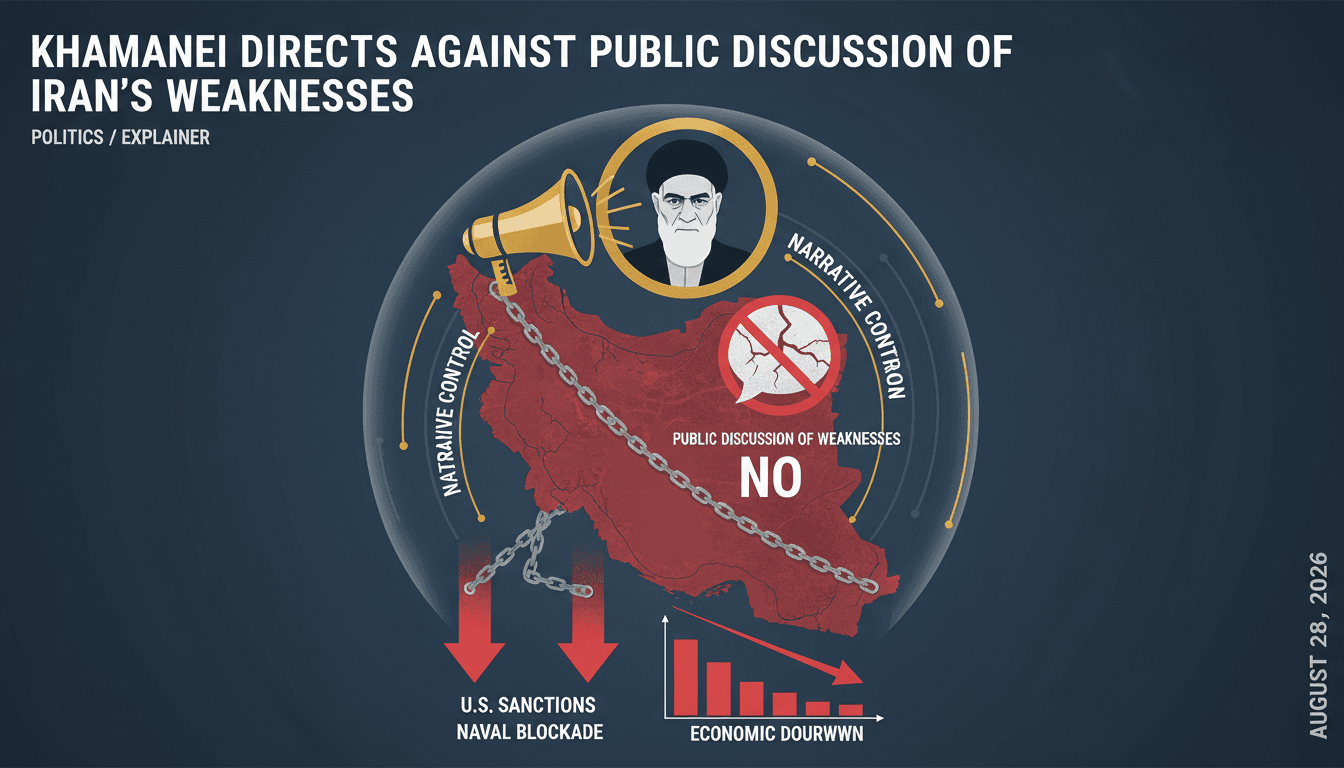
Here's what it means for you.
The Iranian leadership's narrative control could impact regional stability and economic conditions, affecting global markets.
Why it matters
The directive reflects Iran's struggle to maintain internal cohesion amid external pressures, which could influence geopolitical dynamics.
What happened (in 30 seconds)
- On August 28, 2026, Supreme Leader Mojtaba Khamenei warned against public discussions of Iran's weaknesses, framing them as aiding adversaries.
- This directive follows recent admissions by Iranian officials about the detrimental effects of U.S. sanctions on the economy, particularly oil exports.
- Government officials, including President Pezeshkian, publicly endorsed the directive, emphasizing unity and resilience in the face of external challenges.
The context you actually need
- Khamenei's leadership began in March 2026 after the death of his predecessor, Ali Khamenei, amid escalating U.S.-Israeli tensions.
- Iran is currently facing severe economic challenges, including inflation and unemployment, exacerbated by a naval blockade affecting oil sales.
- The directive aims to control the narrative around Iran's economic struggles, promoting a focus on internal strengths and gradual de-dollarization.
What's really happening
Mojtaba Khamenei's directive is a strategic move aimed at reinforcing national unity and resilience in the face of mounting external pressures. Following the death of Ali Khamenei, the new Supreme Leader is keenly aware of the need to stabilize the nation amidst a backdrop of economic turmoil and geopolitical strife. The U.S. sanctions and naval blockade have severely impacted Iran's oil exports, a critical revenue source, leading to inflation and rising unemployment.
By discouraging public discourse on national weaknesses, Khamenei seeks to prevent any erosion of public morale that could embolden adversaries. This directive is not merely a rhetorical flourish; it reflects a calculated approach to governance where narrative control is paramount. The leadership's emphasis on focusing on strengths and internal solutions is intended to foster a sense of resilience among the populace, countering the despair that could arise from acknowledging the country's vulnerabilities.
The directive also aligns with broader economic policies aimed at reducing dependency on the U.S. dollar, promoting a "resistant economy" that can withstand external shocks. This approach is indicative of a shift in Iran's economic strategy, where officials are encouraged to highlight successes and potential rather than shortcomings. The call for avoiding divisive rhetoric, such as the false dichotomy of war versus negotiation, suggests a desire to unify the political landscape and present a cohesive front to both domestic and international audiences.
Moreover, the endorsement of this directive by key figures like President Pezeshkian and Parliament Speaker Ghalibaf underscores a collective commitment to this narrative strategy. Their public alignment with Khamenei's message indicates a concerted effort to project stability and resolve, even as the country grapples with significant challenges. The Iranian Foreign Ministry's condemnation of U.S. sanctions as "crimes against humanity" further illustrates the regime's attempt to frame external pressures as unjust aggressions, rallying public support against perceived threats.
In essence, Khamenei's directive is a multifaceted response to both internal and external pressures, aiming to cultivate a resilient national identity while navigating the complexities of a hostile geopolitical environment.
Who feels it first (and how)
- Government officials: They must align their messaging with Khamenei's directive, impacting their public communications and policy focus.
- Economists and analysts: They will need to navigate a narrative that may downplay economic weaknesses, affecting their assessments and forecasts.
- Business sectors: Companies reliant on oil exports may face increased scrutiny and pressure to conform to the narrative of resilience.
- General public: Citizens may experience a shift in discourse around economic challenges, potentially affecting public sentiment and morale.
What to watch next
- Public sentiment: Monitor how the Iranian populace responds to the directive and whether it fosters unity or dissent.
- Economic indicators: Watch for changes in inflation rates and employment figures as the government implements its narrative strategy.
- International relations: Observe any shifts in U.S.-Iran relations, particularly regarding sanctions and diplomatic engagements, as these could influence Iran's internal narrative.
Khamenei's directive aims to control the narrative around Iran's weaknesses.
The Iranian government will continue to emphasize internal strengths and unity in public discourse.
The long-term effectiveness of this narrative strategy in stabilizing the economy and public morale remains uncertain.
Frequently Asked Questions
- Why it matters?
- The directive reflects Iran's struggle to maintain internal cohesion amid external pressures, which could influence geopolitical dynamics.
- What happened (in 30 seconds)?
- On August 28, 2026, Supreme Leader Mojtaba Khamenei warned against public discussions of Iran's weaknesses, framing them as aiding adversaries. This directive follows recent admissions by Iranian officials about the detrimental effects of U.S. sanctions on the economy, particularly oil exports. Government officials, including President Pezeshkian, publicly endorsed the directive, emphasizing unity and resilience in the face of external challenges.
- What's really happening?
- Mojtaba Khamenei's directive is a strategic move aimed at reinforcing national unity and resilience in the face of mounting external pressures. Following the death of Ali Khamenei, the new Supreme Leader is keenly aware of the need to stabilize the nation amidst a backdrop of economic turmoil and geopolitical strife. The U.S. sanctions and naval blockade have severely impacted Iran's oil exports, a critical revenue source, leading to inflation and rising unemployment. By discouraging public di
- Who feels it first (and how)?
- Government officials: They must align their messaging with Khamenei's directive, impacting their public communications and policy focus. Economists and analysts: They will need to navigate a narrative that may downplay economic weaknesses, affecting their assessments and forecasts. Business sectors: Companies reliant on oil exports may face increased scrutiny and pressure to conform to the narrative of resilience. General public: Citizens may experience a shift in discourse around economic chall
- What to watch next?
- Public sentiment: Monitor how the Iranian populace responds to the directive and whether it fosters unity or dissent. Economic indicators: Watch for changes in inflation rates and employment figures as the government implements its narrative strategy. International relations: Observe any shifts in U.S.-Iran relations, particularly regarding sanctions and diplomatic engagements, as these could influence Iran's internal narrative.
Pan-Arab news coverage spanning politics, business, sports, and regional affairs.
"Asharq Al-Awsat reflects a broad Arab editorial perspective with strong attention to regional geopolitics."
— A47 Editor
خامنئي يعتبر كشف «نقاط الضعف» مساعدة للعدو
Iranian Supreme Leader Mojtaba Khamenei has warned officials that publicly discussing the country's weaknesses could significantly aid the enemy, urging them to avoid any rhetoric that promotes despair.
Jordanian news and regional updates.
"Roya News is a Jordanian outlet focused on breaking news and local affairs."
— A47 Editor
مجتبى خامنئي: أي عمل يضر بالتماسك الاجتماعي ممنوع قطعا
Iranian Supreme Leader Mojtaba Khamenei has firmly rejected any actions or statements that could harm social cohesion in the country. This declaration emphasizes the government's stance on maintaining unity and stability within Iranian society amidst...
Arabic-language coverage of international news and geopolitics.
"RT Arabic is a Russian state-funded outlet often criticized for promoting Kremlin-aligned narratives."
— A47 Editor
المرشد الإيراني مجتبى خامنئي يعلن "بشكل قاطع": ارتكاب أي عمل يضر بالتماسك الاجتماعي ممنوع
Iranian leader Mojtaba Khamenei announced firmly that any actions detrimental to social cohesion are prohibited. This statement was made during a public address on Friday evening, emphasizing the importance of maintaining unity within society.
Jordanian news and regional updates.
"Roya News is a Jordanian outlet focused on breaking news and local affairs."
— A47 Editor
غياب مجتبى خامنئي.. إثارة التساؤلات حول قيادة إيران في ظل الشكوك والتحديات
The absence of Mojtaba Khamenei has raised questions about Iran's leadership amid ongoing doubts and challenges. Reports suggest that Khamenei's health may be deteriorating, contributing to concerns regarding the stability of the Iranian regime.