
Federal Judge Rules Against Trump Administration's Deportation of Students Criticizing Israel
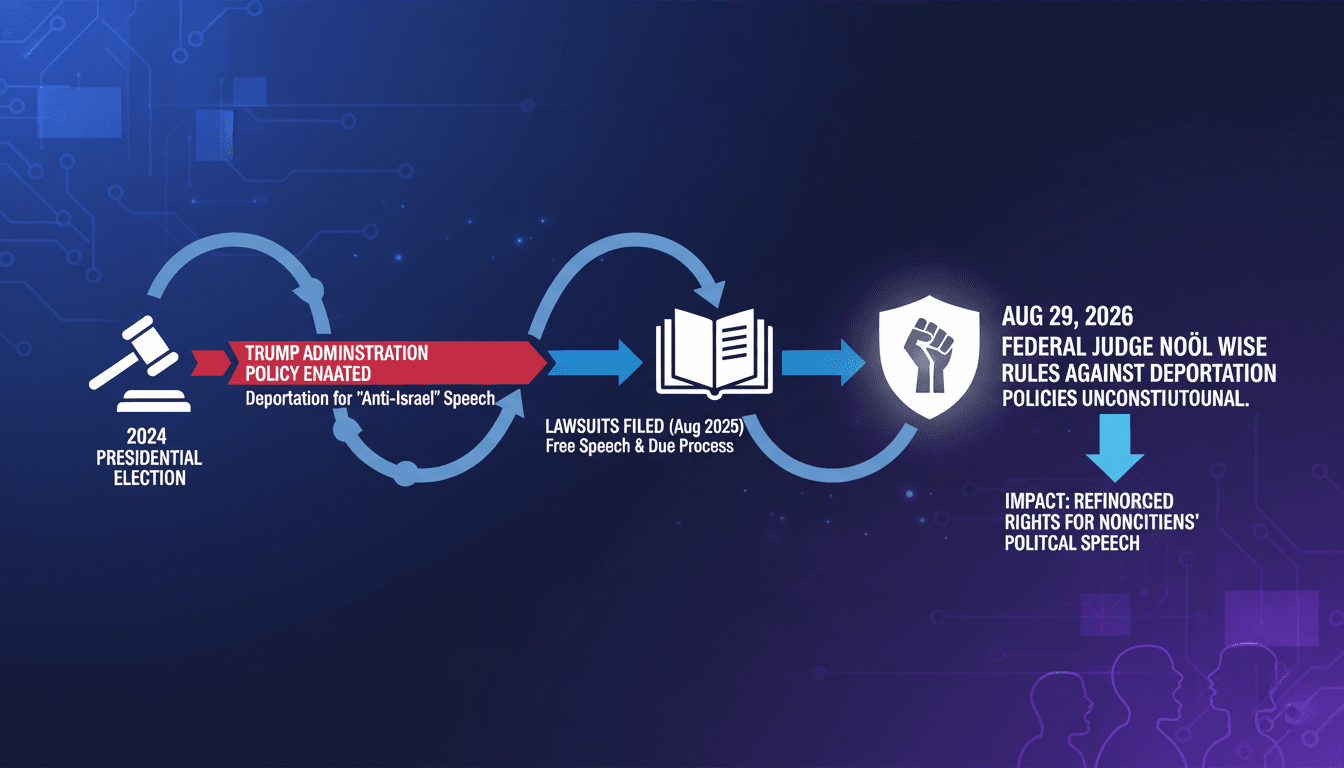
Here's what it means for you.
This ruling could reshape the landscape of free speech protections for international students in the U.S.
Why it matters
This decision underscores the importance of safeguarding free speech rights, particularly for marginalized voices in academic settings.
What happened (in 30 seconds)
- On August 29, 2026, U.S. District Judge Noël Wise ruled that the Trump administration's deportation efforts targeting international students were unconstitutional.
- The ruling invalidated key immigration provisions, citing violations of the First and Fifth Amendments, and emphasized that free speech protections extend to noncitizens.
- The Stanford Daily filed the lawsuit on behalf of international student journalists fearing self-censorship due to threats of deportation.
The context you actually need
- Following the 2024 election, the Trump administration implemented policies aimed at revoking visas for students protesting against Israel's actions in Gaza.
- A prior ruling from a Boston federal judge had already deemed similar targeting unconstitutional, setting a legal precedent.
- The Stanford Daily's lawsuit highlighted the chilling effect these policies had on free speech among international students, particularly in politically sensitive discussions.
What's really happening
The ruling by Judge Noël Wise is a significant legal victory for advocates of free speech, particularly in the context of international students in the U.S. The Trump administration's policies, enacted in March 2025, sought to leverage immigration law to silence dissenting voices on college campuses. This approach raised serious constitutional questions, particularly regarding the First Amendment's protection of free speech and the Fifth Amendment's guarantee of due process.
The Stanford Daily's lawsuit was pivotal, as it represented the collective concerns of international students who feared that expressing their views on contentious issues could lead to deportation. The chilling effect of such policies was evident, as many students self-censored to avoid potential repercussions. Judge Wise's ruling, which spanned 90 pages, meticulously detailed how the administration's actions constituted viewpoint discrimination, a violation of the core principles of free speech.
The ruling not only invalidated specific provisions of immigration law but also reinforced the notion that free speech protections apply to noncitizens. This is particularly relevant in an era where political discourse is increasingly polarized, and dissenting opinions are often met with hostility. The decision serves as a reminder that the government cannot retaliate against individuals for expressing unpopular viewpoints, a principle that is foundational to democratic societies.
Moreover, this ruling aligns with a broader trend of judicial pushback against policies perceived as infringing on civil liberties. The earlier Boston ruling set a precedent that Judge Wise built upon, indicating a potential shift in how courts may handle cases involving free speech and immigration. As these legal battles unfold, they could have lasting implications for how universities manage free speech on campus and how international students navigate their rights in the U.S.
Who feels it first (and how)
- International students: They will experience a renewed sense of security in expressing their views without fear of deportation.
- University administrations: They may need to reassess their policies regarding free speech and student activism.
- Activists and advocacy groups: They will likely leverage this ruling to challenge similar policies and advocate for broader protections.
What to watch next
- Potential appeals: Watch for any response from the Trump administration or related agencies, as they may seek to challenge the ruling.
- Impact on ongoing deportation cases: The ruling could influence other cases involving pro-Palestinian activists and international students facing deportation.
- Changes in university policies: Monitor how universities adapt their policies in light of this ruling to better protect free speech on campus.
The ruling invalidated specific immigration provisions and reinforced free speech protections for noncitizens.
The decision may lead to further legal challenges against similar deportation efforts.
The long-term impact on the Trump administration's immigration policies and how they will respond to this ruling.
Frequently Asked Questions
- Why it matters?
- This decision underscores the importance of safeguarding free speech rights, particularly for marginalized voices in academic settings.
- What happened (in 30 seconds)?
- On August 29, 2026, U.S. District Judge Noël Wise ruled that the Trump administration's deportation efforts targeting international students were unconstitutional. The ruling invalidated key immigration provisions, citing violations of the First and Fifth Amendments, and emphasized that free speech protections extend to noncitizens. The Stanford Daily filed the lawsuit on behalf of international student journalists fearing self-censorship due to threats of deportation.
- What's really happening?
- The ruling by Judge Noël Wise is a significant legal victory for advocates of free speech, particularly in the context of international students in the U.S. The Trump administration's policies, enacted in March 2025, sought to leverage immigration law to silence dissenting voices on college campuses. This approach raised serious constitutional questions, particularly regarding the First Amendment's protection of free speech and the Fifth Amendment's guarantee of due process. The Stanford Daily'
- Who feels it first (and how)?
- International students: They will experience a renewed sense of security in expressing their views without fear of deportation. University administrations: They may need to reassess their policies regarding free speech and student activism. Activists and advocacy groups: They will likely leverage this ruling to challenge similar policies and advocate for broader protections.
- What to watch next?
- Potential appeals: Watch for any response from the Trump administration or related agencies, as they may seek to challenge the ruling. Impact on ongoing deportation cases: The ruling could influence other cases involving pro-Palestinian activists and international students facing deportation. Changes in university policies: Monitor how universities adapt their policies in light of this ruling to better protect free speech on campus.
Pan-Arab news coverage spanning politics, business, sports, and regional affairs.
"Asharq Al-Awsat reflects a broad Arab editorial perspective with strong attention to regional geopolitics."
— A47 Editor
قاضية تحكم بعدم جواز ترحيل ترمب لطلاب بسبب انتقاد إسرائيل
A U.S. judge has ruled that the Trump administration's actions to deport students for criticizing Israel are unconstitutional, highlighting concerns over free speech and governmental overreach in the context of the ongoing conflict in Gaza and other ...
Arabic-language coverage of Saudi, regional, and international affairs.
"Al Bilad offers mainstream Saudi newspaper coverage across domestic and broader Arab topics."
— A47 Editor
حكم قضائي يعرقل مساعي ترامب لترحيل طلاب مؤيدين لفلسطين
A federal judge in California ruled that the Trump administration's use of certain laws to revoke the visas of non-American college students who support Palestine and criticize Israel is unconstitutional. Judge Noelle C. Collins, in a strong statemen...
Pan-Arab political news and analysis.
"Al-Quds Al-Arabi is a London-based Arabic newspaper known for political coverage."
— A47 Editor
حكم قضائي يعرقل مساعي ترامب لترحيل طلاب مؤيدين للفلسطينيين
A U.S. federal judge ruled that the Trump administration's use of certain laws to revoke visas of non-American college students supporting Palestinians and criticizing Israel is unconstitutional. Judge Noelle Weiss, in a strong statement, criticized ...