
AfD Set to Achieve Historic First Far-Right State Government in Post-WWII Germany
Here's what it means for you.
As populist sentiments rise, professionals must navigate a shifting political landscape that could impact economic stability and workplace dynamics.
The Vibe
Germany's political landscape is on the brink of a significant shift, with the far-right AfD party poised to secure its first state-level government in Saxony-Anhalt.
What it signals
This development signals a growing discontent with traditional political structures and a potential redefinition of national identity. The rise of the AfD reflects a broader trend of populism across Europe, where economic anxieties and cultural fears are reshaping voter priorities. As the party gains traction, it could influence corporate policies and labor relations, particularly in sectors sensitive to immigration and economic reform.
Why it's happening now
1. Economic Discontent: Rising inflation and economic instability have left many voters feeling disenfranchised, pushing them towards parties that promise radical change.
2. Immigration Concerns: A surge in immigration has fueled fears about cultural dilution and resource allocation, making the AfD's anti-immigration stance appealing to a significant portion of the electorate.
3. Political Fragmentation: The inability of traditional parties to form effective coalitions has created a vacuum that the AfD is eager to fill, capitalizing on public frustration with the status quo.
Who it's for (and who it leaves out)
The core beneficiaries of this shift are voters seeking a voice against perceived threats to their economic and cultural stability. Conversely, this movement largely excludes progressive and moderate voters who prioritize inclusivity and global cooperation.
What to watch next
1. Coalition Dynamics: Monitor how traditional parties respond to the AfD's rise, particularly whether they maintain a "firewall" against coalition-building with the far-right.
2. Economic Policies: Keep an eye on proposed economic reforms from the AfD and their potential impact on labor markets and corporate governance in Saxony-Anhalt and beyond.
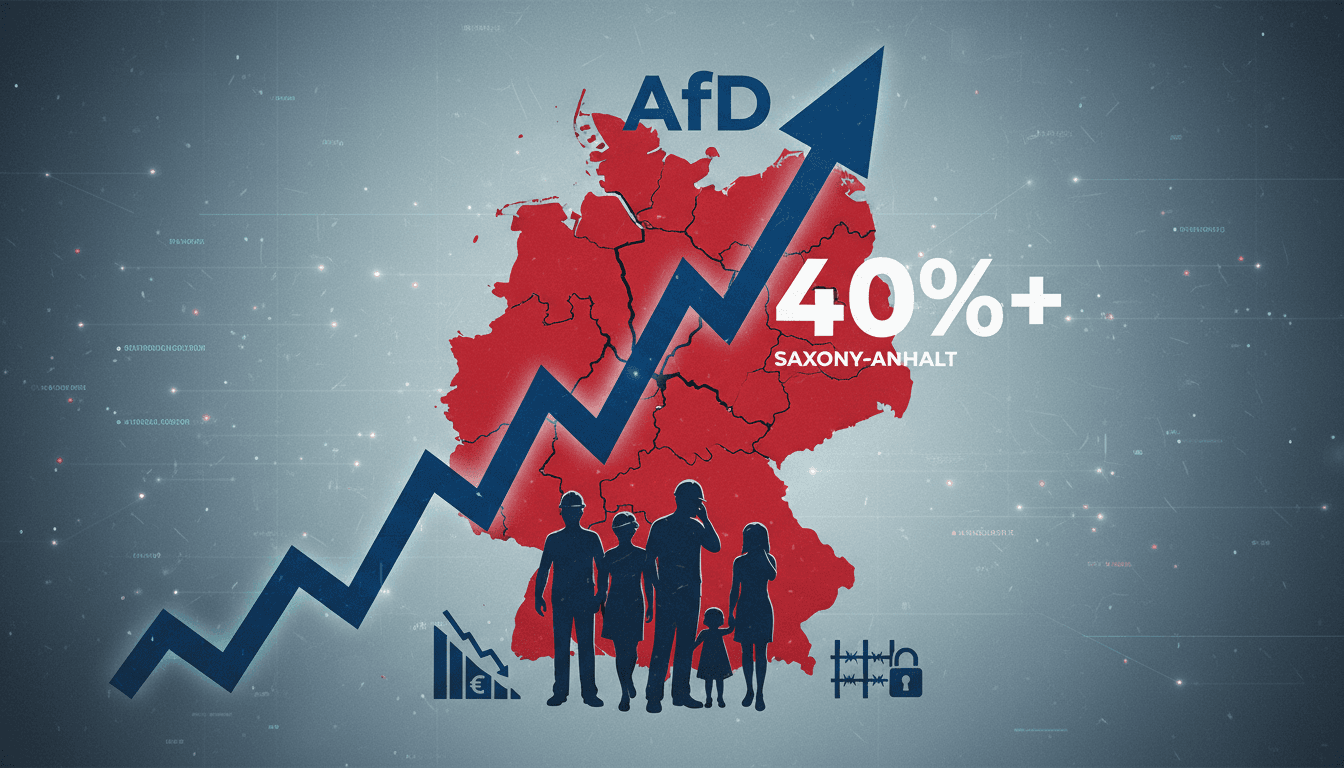
Visual Directive: A bold graphic illustrating the rise of the AfD in Saxony-Anhalt, highlighting key voter demographics and economic concerns.
The AfD is leading polls with over 40% support in Saxony-Anhalt.
If elected, the AfD could influence local economic policies and labor relations.
The long-term implications for Germany's democratic norms and international relations remain uncertain.
International stories from NPR’s global desk.
"NPR is an American public media organization known for thoughtful reporting and a slightly left-leaning editorial tone."
— A47 Editor
Germany's far-right AfD party is poised for power in a state election
Germany's far-right Alternative for Germany (AfD) party is gaining traction in Saxony-Anhalt, raising concerns that it could secure its first governorship since World War II. The party's rise has been fueled by social media platforms like TikTok, whi...
European current affairs, EU politics, and regional developments.
"France 24 is viewed as a globally focused outlet with balanced coverage and a European perspective."
— A47 Editor
German far right's breakout moment? AfD party eyes outright win in regional election
In a significant electoral moment, the far-right Alternative for Germany (AfD) party is poised to potentially secure its first outright majority in a regional election in Saxony-Anhalt, a historic first since World War II. The party's campaign is led...
Top international stories selected by The Guardian editors.
"The Guardian is known for its progressive editorial stance and in-depth analysis."
— A47 Editor
‘This could just be the beginning’: minorities fear first far-right win in German state election
The far-right Alternative for Germany (AfD) party is on the verge of a significant electoral victory in Saxony-Anhalt, raising fears among minorities about potential deportations and increased discrimination. As the state election approaches, individ...