
Five EU Countries Establish External Migrant Return Hubs with 2027 Target
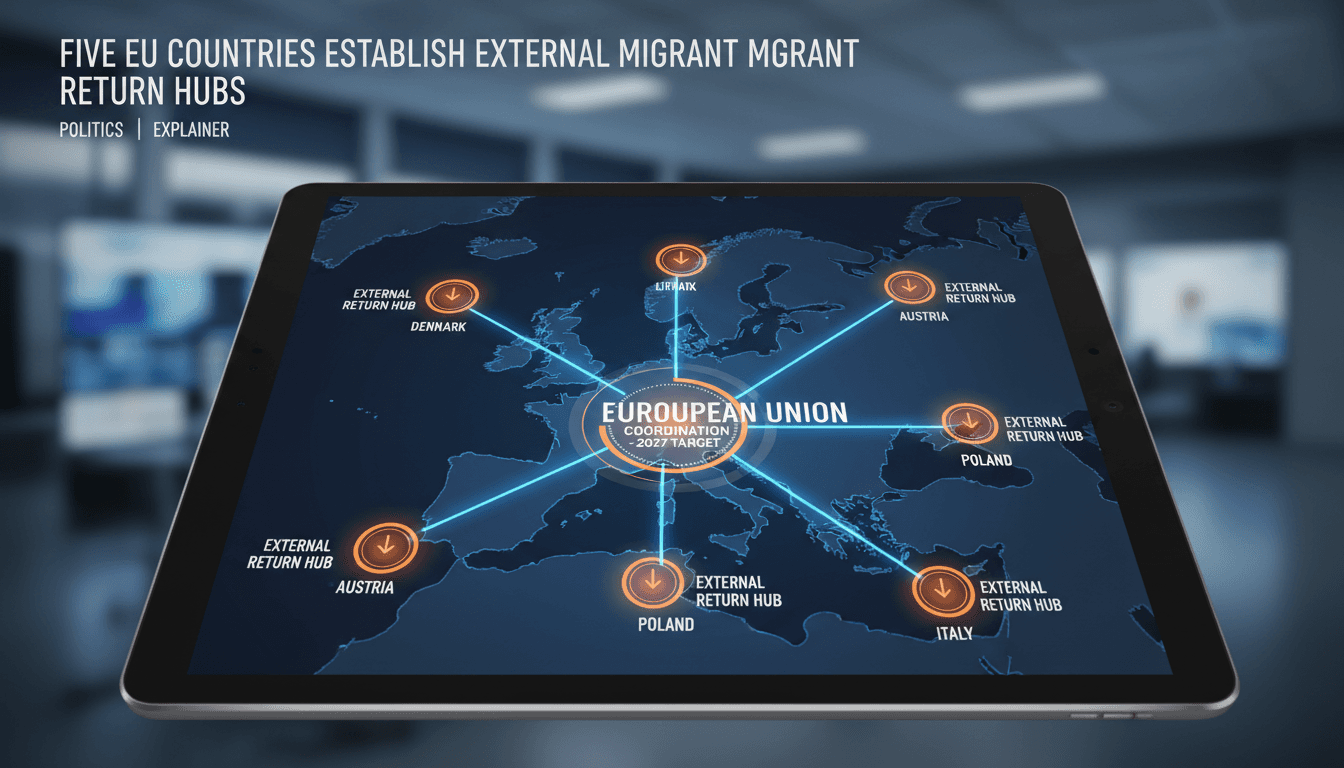
Here's what it means for you.
If you’re involved in international business or migration policy, this new model could reshape labor dynamics and regulatory frameworks across Europe.
Why it matters
This initiative reflects a significant shift in EU migration policy, potentially impacting labor markets and international relations.
What happened (in 30 seconds)
- On September 4, 2026, Denmark and four other EU countries formalized a model for external migrant return hubs.
- The target for operational status is set for 2027, with negotiations focusing on partnerships with African nations.
- Human rights organizations have raised concerns about the implications for migrant rights and protections.
The context you actually need
- The proposal builds on previous efforts by Denmark to externalize migration processing, including talks with Rwanda in 2021.
- In June 2026, the European Parliament approved revisions to EU migration policy, allowing member states to establish return centers outside the bloc.
- Political pressures from rising irregular migration and public demands for stricter enforcement have accelerated these developments.
What's really happening
The agreement reached in Copenhagen marks a pivotal moment in EU migration policy, driven by a coalition of five member states: Denmark, Germany, the Netherlands, Austria, and Greece. This coalition, referred to as the "Group of Five," aims to create operational return hubs in third countries, primarily in Africa, to manage rejected asylum seekers and irregular migrants. The Danish Minister of Immigration, Morten Bødskov, indicated that the group anticipates signing its first partnership agreement with a non-EU country by early 2027, with initial transfers expected by the end of that year.
This initiative is a response to increasing political pressure within Europe for stricter migration controls. The EU has faced rising numbers of irregular migrants, prompting calls for more robust enforcement mechanisms. The recent legislative changes in the EU have explicitly allowed for the establishment of these external return centers, which are intended to process migrants outside the EU's borders. This shift is not merely about deportation; officials describe the hubs as facilities that will offer opportunities rather than detention, with oversight from international organizations.
However, the plan has drawn significant criticism from human rights organizations, which warn of potential violations and the creation of "human rights black holes." Critics argue that the enforceability of protections for migrants in these external hubs remains uncertain. The UNHCR and IOM have emphasized the need for compliance with international legal frameworks, indicating that they have not yet been formally approached regarding these plans.
The implications of this model extend beyond immediate humanitarian concerns. By externalizing migration processing, the EU aims to alleviate pressure on its borders and manage migration flows more effectively. This could lead to a reconfiguration of labor markets within Europe, as the availability of migrant labor may be influenced by the success or failure of these return hubs. Additionally, the geopolitical landscape may shift as the EU engages with African nations to establish these partnerships, potentially altering diplomatic relations and economic ties.
Who feels it first (and how)
- Migrant populations: Those seeking asylum or irregular migrants may face increased uncertainty and potential deportation.
- Human rights organizations: Groups advocating for migrant rights will likely intensify their efforts to monitor and challenge these policies.
- European businesses: Companies reliant on migrant labor may experience shifts in workforce availability and regulatory compliance.
- African nations: Countries involved in negotiations may see changes in their diplomatic and economic relationships with the EU.
What to watch next
- Partnership agreements: Monitor the progress of negotiations with African nations, as these will determine the operational viability of the return hubs.
- Human rights assessments: Watch for reports from human rights organizations regarding the conditions and treatment of migrants in these external hubs.
- Public opinion shifts: Keep an eye on how public sentiment in EU countries evolves in response to these policies, as it could influence future migration legislation.
The operational model for return hubs has been agreed upon by five EU countries.
Initial transfers of migrants to these hubs will begin by the end of 2027.
The long-term effectiveness and human rights implications of these return hubs remain uncertain.
Frequently Asked Questions
- Why it matters?
- This initiative reflects a significant shift in EU migration policy, potentially impacting labor markets and international relations.
- What happened (in 30 seconds)?
- On September 4, 2026, Denmark and four other EU countries formalized a model for external migrant return hubs. The target for operational status is set for 2027, with negotiations focusing on partnerships with African nations. Human rights organizations have raised concerns about the implications for migrant rights and protections.
- What's really happening?
- The agreement reached in Copenhagen marks a pivotal moment in EU migration policy, driven by a coalition of five member states: Denmark, Germany, the Netherlands, Austria, and Greece. This coalition, referred to as the "Group of Five," aims to create operational return hubs in third countries, primarily in Africa, to manage rejected asylum seekers and irregular migrants. The Danish Minister of Immigration, Morten Bødskov, indicated that the group anticipates signing its first partnership agreeme
- Who feels it first (and how)?
- Migrant populations: Those seeking asylum or irregular migrants may face increased uncertainty and potential deportation. Human rights organizations: Groups advocating for migrant rights will likely intensify their efforts to monitor and challenge these policies. European businesses: Companies reliant on migrant labor may experience shifts in workforce availability and regulatory compliance. African nations: Countries involved in negotiations may see changes in their diplomatic and economi
- What to watch next?
- Partnership agreements: Monitor the progress of negotiations with African nations, as these will determine the operational viability of the return hubs. Human rights assessments: Watch for reports from human rights organizations regarding the conditions and treatment of migrants in these external hubs. Public opinion shifts: Keep an eye on how public sentiment in EU countries evolves in response to these policies, as it could influence future migration legislation.
Corporate leadership, finance, technology, and market trends.
"Fortune covers financial trends, leadership, and innovation with a pragmatic editorial approach."
— A47 Editor
Denmark and four EU countries agree on migrant ‘return hubs’ outside the bloc, aim to start by 2027
Denmark, along with four EU countries, has reached an agreement to establish migrant 'return hubs' outside the European Union, with plans to initiate this program by 2027. Netherlands' Minister of Asylum and Migration, Bart van den Brink, described t...
Global news coverage with extensive reporting on Middle Eastern conflicts and geopolitics.
"Al Jazeera is a Qatar-based broadcaster known for wide regional coverage and alternative perspectives."
— A47 Editor
Five EU nations inch towards deal on migrant ‘return hubs’ by 2027
Five European Union nations, including Germany, Austria, Greece, Denmark, and the Netherlands, are moving closer to an agreement on establishing migrant 'return hubs' by 2027, although the specific locations for these centers have not yet been disclo...
Comprehensive coverage of Middle Eastern and global issues.
"Al Jazeera is a prominent voice from the Global South, especially the Middle East, with an emphasis on underreported stories."
— A47 Editor
Five EU nations inch towards deal on migrant ‘return hubs’ by 2027
Five European Union nations, including Germany, Austria, Greece, Denmark, and the Netherlands, are moving closer to an agreement on establishing migrant 'return hubs' by 2027, although the specific locations for these centers have not yet been disclo...
English-language news from Qatar covering domestic and regional affairs.
"Gulf Times reflects Qatari perspectives on regional developments."
— A47 Editor
Five European nations seek deals to send migrants out of the EU
Five European nations, including Denmark, Germany, and Austria, are planning to sign agreements this year to facilitate the transfer of migrants without legal residency to countries outside the European Union, as discussed in a recent meeting hosted ...