
U.S. Military Disables Advertising Identifiers on Devices Amid Threats from Adversaries in Middle East
Here's what it means for you.
If you work in defense, cybersecurity, or tech, this shift could reshape how data privacy is managed in sensitive environments.
Why it matters
The disabling of advertising identifiers reflects a growing recognition of the risks posed by commercial data exploitation in military operations.
What happened (in 30 seconds)
- U.S. military services disabled advertising tracking identifiers on government-issued devices in 2026 due to threats from foreign adversaries.
- Reports confirmed that adversaries were using commercial location data to target U.S. personnel in the Middle East.
- Congressional leaders called for further safeguards and an investigation into data sources and personal device risks.
The context you actually need
- Warnings about commercial location data risks have been present since at least 2016, highlighting vulnerabilities in military operations.
- Geopolitical tensions in 2026, particularly involving the U.S. and Iran, increased the urgency for protective measures against data exploitation.
- Military branches progressively implemented measures throughout 2026, indicating a systemic shift towards enhanced cybersecurity protocols.
What's really happening
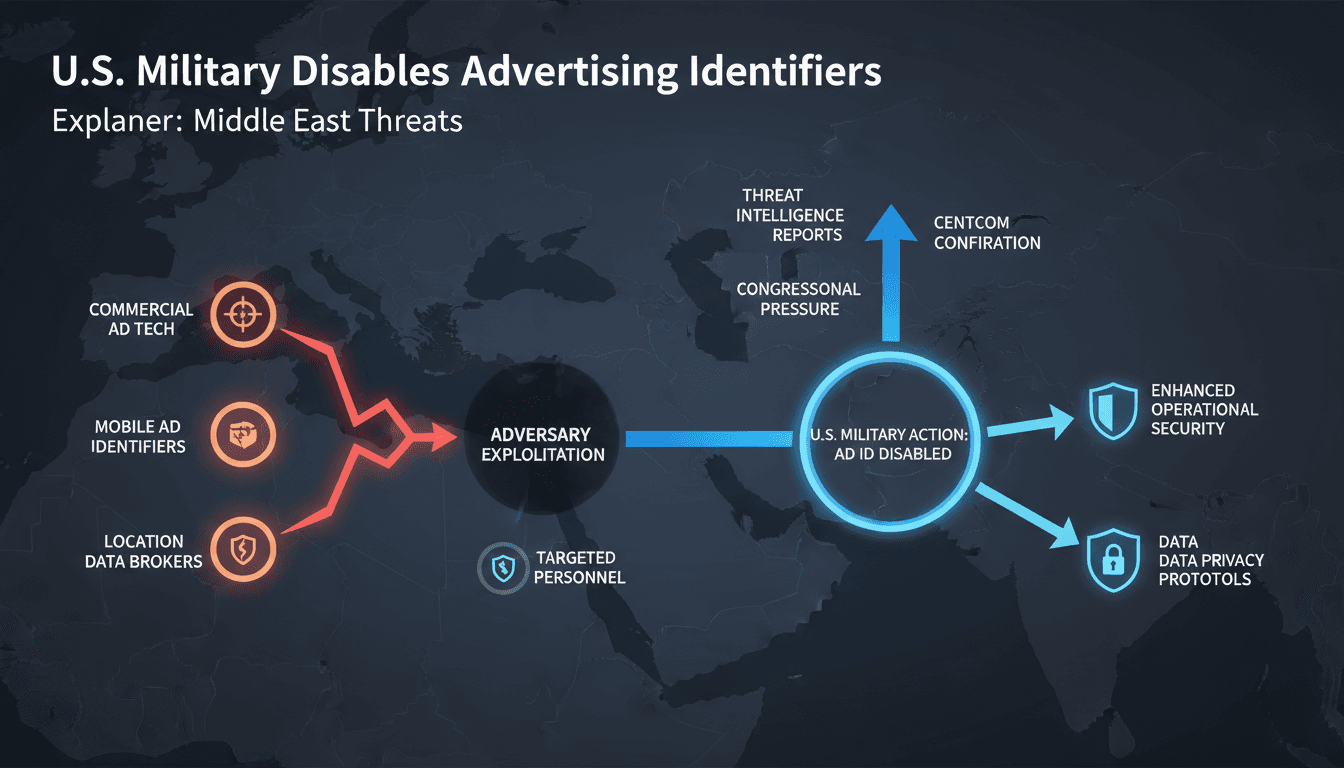
In April 2026, U.S. Central Command (CENTCOM) confirmed to Congress that multiple threat reports indicated adversaries were exploiting commercial location data to surveil U.S. personnel in the Middle East. This revelation prompted immediate action from military branches, including the Air Force, Army, and Special Operations Command, which began disabling mobile advertising identifiers (MAID) on government-issued devices. By September 2026, these measures were fully implemented across the services.
The decision to disable advertising identifiers stems from a broader understanding of the vulnerabilities posed by commercial data. For years, military personnel have been warned about the risks associated with location tracking, especially as geopolitical tensions escalated in the region. The situation was exacerbated by confrontations over the Strait of Hormuz, where U.S. forces were actively engaged in operations. Adversaries recognized the potential to exploit readily available adtech-derived datasets, leading to a heightened risk of targeted attacks.
Senator Ron Wyden and Representative Pat Harrigan played pivotal roles in pushing for these changes. Their advocacy highlighted the need for comprehensive safeguards to protect U.S. troops from being tracked through commercial data. As a result, the Pentagon is now under pressure to conduct a thorough review of data sources and enforce stricter controls on personal devices used in sensitive areas.
The implications of these changes extend beyond immediate military operations. They signal a shift in how data privacy is approached within the defense sector, emphasizing the need for robust cybersecurity measures. As military branches adapt to these challenges, the conversation around data privacy and security will likely influence broader discussions in both the public and private sectors.
Who feels it first (and how)
- Military personnel: Directly impacted by the disabling of ad trackers, enhancing their operational security.
- Defense contractors: May need to adjust their technology offerings to comply with new cybersecurity protocols.
- Cybersecurity professionals: Increased demand for expertise in protecting sensitive data in military contexts.
- Tech companies: Potential shifts in how commercial location data is utilized and regulated.
What to watch next
- Congressional actions: Monitor for further legislative measures aimed at enhancing data privacy for military personnel.
- Military cybersecurity protocols: Watch for updates on how these changes influence broader defense strategies and technology adoption.
- Commercial data regulations: Keep an eye on potential shifts in regulations affecting how companies handle location data, particularly in sensitive sectors.
U.S. military branches have disabled advertising identifiers on government devices.
Increased scrutiny on commercial data practices and potential regulatory changes in the tech industry.
The long-term impact on military operations and the effectiveness of these measures against adversary tactics.
Frequently Asked Questions
- Why it matters?
- The disabling of advertising identifiers reflects a growing recognition of the risks posed by commercial data exploitation in military operations.
- What happened (in 30 seconds)?
- U.S. military services disabled advertising tracking identifiers on government-issued devices in 2026 due to threats from foreign adversaries. Reports confirmed that adversaries were using commercial location data to target U.S. personnel in the Middle East. Congressional leaders called for further safeguards and an investigation into data sources and personal device risks.
- What's really happening?
- In April 2026, U.S. Central Command (CENTCOM) confirmed to Congress that multiple threat reports indicated adversaries were exploiting commercial location data to surveil U.S. personnel in the Middle East. This revelation prompted immediate action from military branches, including the Air Force, Army, and Special Operations Command, which began disabling mobile advertising identifiers (MAID) on government-issued devices. By September 2026, these measures were fully implemented across the service
- Who feels it first (and how)?
- Military personnel: Directly impacted by the disabling of ad trackers, enhancing their operational security. Defense contractors: May need to adjust their technology offerings to comply with new cybersecurity protocols. Cybersecurity professionals: Increased demand for expertise in protecting sensitive data in military contexts. Tech companies: Potential shifts in how commercial location data is utilized and regulated.
- What to watch next?
- Congressional actions: Monitor for further legislative measures aimed at enhancing data privacy for military personnel. Military cybersecurity protocols: Watch for updates on how these changes influence broader defense strategies and technology adoption. Commercial data regulations: Keep an eye on potential shifts in regulations affecting how companies handle location data, particularly in sensitive sectors.
Global business headlines with AI angles.
"General business outlet that frequently covers AI."
— A47 Editor
Ad Tracking Devices Are Reportedly Being Used To Target U.S. Forces In The Middle East. Troops Are Taking Measures.
Reports indicate that ad tracking devices are being utilized to target U.S. military forces in the Middle East, prompting the Air Force and U.S. Special Operations Command to implement countermeasures. The Air Force informed Senator Ron Wyden that th...
Startup news with frequent AI coverage.
"Covers launches, funding, and product updates in AI."
— A47 Editor
US military disabled ad tracking on troops’ devices following reports of targeted attacks
The U.S. military has disabled ad tracking on troops' devices following reports that foreign adversaries, particularly Iran, exploited location data to target military personnel. A senator's letter confirmed this action, highlighting the urgency of p...
Tech culture, product news, and critical takes on the tech industry's social impact.
"The Guardian's tech coverage blends mainstream news, critical analysis, and cultural commentary on emerging technologies and digital trends."
— A47 Editor
US military disables ad trackers on troops’ phones amid security fears
US military officials have disabled advertising trackers on various phones and computers used by troops, following concerns raised by Senator Ron Wyden regarding the use of location data to track American forces in the Middle East. This decision was ...