
Sadiq Khan's Car Tax Conviction Withdrawn Due to DVLA Scam
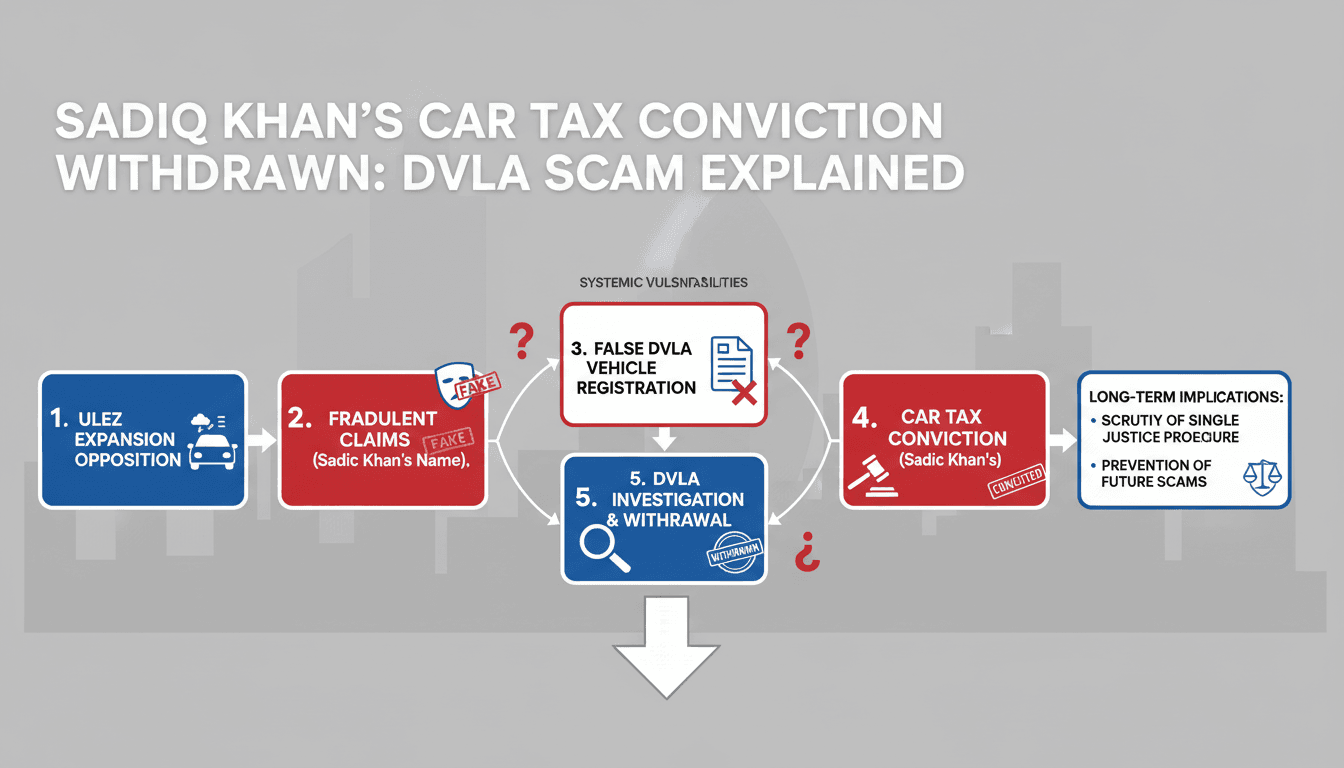
Here's what it means for you.
This incident highlights vulnerabilities in public systems that could affect your interactions with government agencies.
Why it matters
The withdrawal of Khan's conviction raises questions about the integrity of vehicle registration processes and public trust in government systems.
What happened (in 30 seconds)
- Conviction withdrawn: On 3 September 2026, the car tax conviction against Sadiq Khan was formally withdrawn after a DVLA investigation revealed a scam.
- Scam identified: The mayor was falsely registered as the owner of a vehicle he did not own, leading to a conviction in absentia.
- Public disclosure: The case was brought to light on 2 September, prompting immediate action from the DVLA to rectify the situation.
The context you actually need
- Ongoing ULEZ opposition: The incident occurred amid public protests against London's Ultra Low Emission Zone (ULEZ) expansion, with reports of similar scams.
- Single Justice Procedure flaws: Khan's conviction was a result of the Single Justice Procedure, which has been criticized for its handling of low-level motoring offences.
- Previous incidents: This is not the first time fraudulent vehicle ownership claims have been made against Khan, indicating a pattern of misuse.
What's really happening
The recent withdrawal of Sadiq Khan's car tax conviction underscores significant vulnerabilities within the UK's vehicle registration and enforcement systems. The incident began when the Driver and Vehicle Licensing Agency (DVLA) identified a 2002 Nissan Micra registered in Khan's name, which he did not own. This registration was linked to a scam that involved misdirected notices sent to an unrelated address, specifically a restaurant owned by celebrity chef Gordon Ramsay.
On 18 August 2026, Khan was convicted in absentia for failing to tax the vehicle, resulting in a £220 fine, plus additional costs. The conviction was based on the Single Justice Procedure, a streamlined process designed to handle low-level offences without a full court hearing. However, this system has been criticized for its lack of transparency and potential for errors, as evidenced by Khan's case.
The public disclosure of the conviction on 2 September prompted Khan's office to alert the DVLA about the fraudulent registration. The DVLA acted swiftly, requesting a formal reopening of the case, which was granted in a one-minute hearing on 3 September. This rapid response highlights the agency's recognition of the scam and its commitment to rectifying the situation.
However, the incident raises broader concerns about the integrity of the vehicle registration process and the potential for similar scams to occur in the future. The DVLA has confirmed it will investigate the false registration, but the effectiveness of its systems remains in question. The case also reflects the ongoing public opposition to the ULEZ expansion, with some individuals resorting to fraudulent means to express their dissent.
As the DVLA investigates, the implications of this incident extend beyond Khan himself. It calls into question the reliability of the Single Justice Procedure and the safeguards in place to protect individuals from wrongful convictions based on erroneous data. The potential for public mistrust in government systems could have lasting effects on compliance and engagement with regulatory frameworks.
Who feels it first (and how)
- Local government officials: Increased scrutiny on how vehicle registrations are managed and enforced.
- DVLA employees: Potential changes in procedures and protocols to prevent future scams.
- London residents: Heightened awareness of vehicle registration issues and their implications for public trust.
- Protesters against ULEZ: Possible shifts in tactics as fraudulent registrations are exposed.
What to watch next
- DVLA investigation outcomes: The results of the DVLA's investigation into the false registration will reveal systemic weaknesses and potential reforms.
- Public response to ULEZ: Continued public sentiment against ULEZ may lead to further protests or alternative forms of dissent.
- Changes to the Single Justice Procedure: Legislative or procedural changes may emerge in response to the vulnerabilities highlighted by this case.
The conviction against Sadiq Khan was formally withdrawn due to a recognized scam.
The DVLA will implement changes to prevent similar fraudulent registrations in the future.
The long-term impact on public trust in government systems remains uncertain.
Frequently Asked Questions
- Why it matters?
- The withdrawal of Khan's conviction raises questions about the integrity of vehicle registration processes and public trust in government systems.
- What happened (in 30 seconds)?
- Conviction withdrawn: On 3 September 2026, the car tax conviction against Sadiq Khan was formally withdrawn after a DVLA investigation revealed a scam. Scam identified: The mayor was falsely registered as the owner of a vehicle he did not own, leading to a conviction in absentia. Public disclosure: The case was brought to light on 2 September, prompting immediate action from the DVLA to rectify the situation.
- What's really happening?
- The recent withdrawal of Sadiq Khan's car tax conviction underscores significant vulnerabilities within the UK's vehicle registration and enforcement systems. The incident began when the Driver and Vehicle Licensing Agency (DVLA) identified a 2002 Nissan Micra registered in Khan's name, which he did not own. This registration was linked to a scam that involved misdirected notices sent to an unrelated address, specifically a restaurant owned by celebrity chef Gordon Ramsay. On 18 August 2026, K
- Who feels it first (and how)?
- Local government officials: Increased scrutiny on how vehicle registrations are managed and enforced. DVLA employees: Potential changes in procedures and protocols to prevent future scams. London residents: Heightened awareness of vehicle registration issues and their implications for public trust. Protesters against ULEZ: Possible shifts in tactics as fraudulent registrations are exposed.
- What to watch next?
- DVLA investigation outcomes: The results of the DVLA's investigation into the false registration will reveal systemic weaknesses and potential reforms. Public response to ULEZ: Continued public sentiment against ULEZ may lead to further protests or alternative forms of dissent. Changes to the Single Justice Procedure: Legislative or procedural changes may emerge in response to the vulnerabilities highlighted by this case.
United Kingdom-focused news including local politics, business, and social issues.
"BBC News is widely regarded as a reputable international news organization, known for its impartial tone and public service mandate."
— A47 Editor
Car tax conviction against mayor withdrawn
The conviction against Sir Sadiq Khan has been withdrawn following his prosecution in a car ownership scam. This development comes as a significant turn in the legal proceedings involving the mayor, who faced allegations related to car tax violations...
Political developments, elections, and policy issues in the UK.
"Sky News is a UK-based 24-hour channel known for fast-breaking news and political coverage."
— A47 Editor
Sadiq Khan's car tax conviction withdrawn after mayor targeted by 'scam'
A car tax conviction against London Mayor Sadiq Khan has been withdrawn after he was targeted by a scam. This incident highlights vulnerabilities in the system that can affect public officials.
Political developments, elections, and policy issues in the UK.
"Sky News is a UK-based 24-hour channel known for fast-breaking news and political coverage."
— A47 Editor
Sadiq Khan says he's been scammed after London mayor convicted of failing to tax car
London Mayor Sadiq Khan has been convicted for failing to tax a car that officials confirmed he does not own, leading him to claim he is a victim of a scam. This conviction raises questions about accountability and the management of public figures in...