
Volkswagen's Osnabrück Plant Transitions to Defence Manufacturing Amid European Rearmament
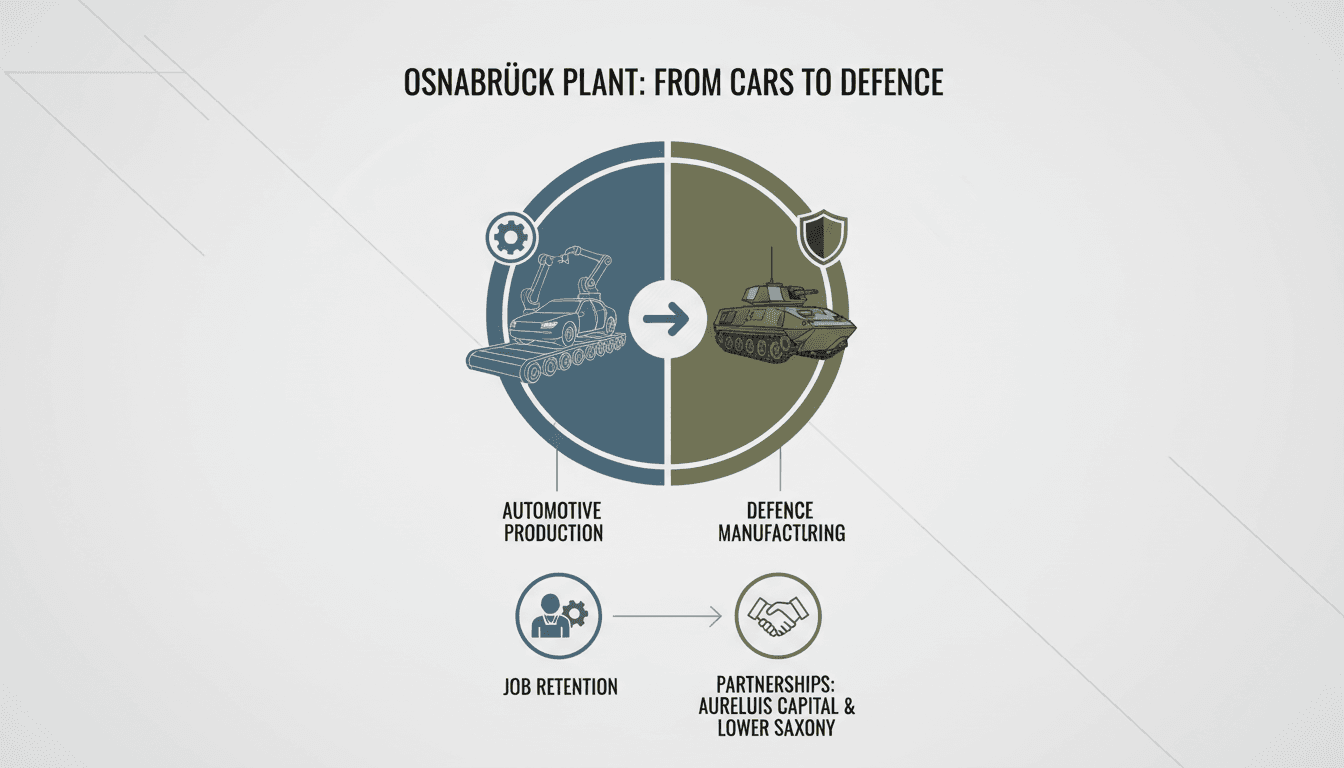
Why it matters
This conversion reflects the urgent need for European industries to pivot towards defence capabilities amid rising geopolitical tensions.
What happened (in 30 seconds)
- Volkswagen announced the sale of its Osnabrück plant to Aurelius Capital and the State of Lower Saxony for conversion to defence production on September 7, 2026.
- 1,400 jobs will be preserved as the facility transitions to manufacturing air-defence systems, primarily in collaboration with Israel's Rafael Advanced Defense Systems.
- The plant will serve as a competence centre for security solutions, addressing both local employment needs and European defence demands.
The context you actually need
- Volkswagen's restructuring began in late 2024, with plans to cease vehicle production at Osnabrück by summer 2027 due to cost-cutting measures.
- Germany's increased defence spending in response to geopolitical tensions has prompted a reevaluation of industrial capabilities, leading to interest in repurposing automotive sites.
- Previous discussions with defence firms, including Rafael, laid the groundwork for this pivot, indicating a strategic shift in industrial focus.
What's really happening
The decision to convert the Osnabrück plant from automotive to defence manufacturing is a strategic response to both internal and external pressures. Volkswagen's restructuring efforts, initiated in late 2024, aimed to streamline operations and reduce costs amid declining vehicle demand and increased competition. The plant, historically known for producing special vehicles and the T-Roc Cabriolet, faced imminent closure as vehicle production was set to end in 2027.
However, the geopolitical landscape in Europe has shifted dramatically, with rising tensions prompting nations to bolster their defence capabilities. Germany, in particular, has committed to increasing its defence budget, leading to a surge in demand for military equipment and technology. This context has created an opportunity for Volkswagen to pivot its operations, aligning with national interests while preserving jobs.
The preliminary agreement signed on September 7, 2026, between Volkswagen, Aurelius Capital, and the State of Lower Saxony marks a significant turning point. Aurelius will take majority ownership of the plant, with Volkswagen providing essential industrial expertise and infrastructure support during the transition. The collaboration with Rafael Advanced Defense Systems focuses on air-defence components, specifically related to the Iron Dome project, which underscores the strategic importance of this partnership.
The deal is not just about preserving jobs; it also positions the Osnabrück site as a competence centre for security and defence solutions, catering to both German and broader European needs. Approximately 1,400 of the 1,800 employees will retain their positions, with job guarantees extending to 2029 for many workers. This transition reflects a broader trend of repurposing industrial sites to meet evolving market demands, particularly in the defence sector.
Local reactions in Osnabrück have been mixed, with some embracing the new direction while others express concern over the city's historical identity as a 'city of peace.' Nevertheless, the deal is seen as a model for other automotive facilities facing similar challenges, highlighting the potential for industrial adaptation in response to changing geopolitical realities.
Who feels it first (and how)
- Volkswagen employees: Approximately 1,400 workers will retain their jobs, providing stability in a transitioning job market.
- Local businesses: Suppliers and service providers in Osnabrück may experience shifts in demand as the plant transitions to defence manufacturing.
- Defence contractors: Companies like Rafael Advanced Defense Systems will benefit from new partnerships and contracts related to air-defence production.
What to watch next
- Job retention rates: Monitoring how many of the 1,400 jobs remain secure as the transition progresses will be crucial for local economic stability.
- Defence spending trends: Observing how Germany's increased defence budget influences other industries and regions could signal broader economic shifts.
- Partnership developments: Keeping an eye on further collaborations between Volkswagen and defence firms will provide insights into the future of industrial adaptation.
The Osnabrück plant will transition to defence manufacturing, preserving approximately 1,400 jobs.
Other automotive facilities may consider similar conversions in response to changing market demands and geopolitical pressures.
The long-term impact on Volkswagen's overall restructuring costs and share performance remains to be seen.
Frequently Asked Questions
- Why it matters?
- This conversion reflects the urgent need for European industries to pivot towards defence capabilities amid rising geopolitical tensions.
- What happened (in 30 seconds)?
- Volkswagen announced the sale of its Osnabrück plant to Aurelius Capital and the State of Lower Saxony for conversion to defence production on September 7, 2026. 1,400 jobs will be preserved as the facility transitions to manufacturing air-defence systems, primarily in collaboration with Israel's Rafael Advanced Defense Systems. The plant will serve as a competence centre for security solutions, addressing both local employment needs and European defence demands.
- What's really happening?
- The decision to convert the Osnabrück plant from automotive to defence manufacturing is a strategic response to both internal and external pressures. Volkswagen's restructuring efforts, initiated in late 2024, aimed to streamline operations and reduce costs amid declining vehicle demand and increased competition. The plant, historically known for producing special vehicles and the T-Roc Cabriolet, faced imminent closure as vehicle production was set to end in 2027. However, the geopolitical la
- Who feels it first (and how)?
- Volkswagen employees: Approximately 1,400 workers will retain their jobs, providing stability in a transitioning job market. Local businesses: Suppliers and service providers in Osnabrück may experience shifts in demand as the plant transitions to defence manufacturing. Defence contractors: Companies like Rafael Advanced Defense Systems will benefit from new partnerships and contracts related to air-defence production.
- What to watch next?
- Job retention rates: Monitoring how many of the 1,400 jobs remain secure as the transition progresses will be crucial for local economic stability. Defence spending trends: Observing how Germany's increased defence budget influences other industries and regions could signal broader economic shifts. Partnership developments: Keeping an eye on further collaborations between Volkswagen and defence firms will provide insights into the future of industrial adaptation.
Global business, markets, and technology policy/industry coverage.
"France 24 provides balanced international coverage with a European perspective."
— A47 Editor
Volkswagen's Osnabrück plant to switch from cars to defence
Volkswagen has reached a preliminary agreement to sell its Osnabrück plant in Lower Saxony to the state government and Israeli investor Aurelius Capital, with plans to transition the facility to produce defense equipment for Rafael Advanced Defence S...
24/7 international news from a French perspective in multiple languages.
"France 24 is viewed as a globally focused outlet with balanced coverage and a European perspective."
— A47 Editor
Volkswagen's Osnabrück plant to switch from cars to defence
Volkswagen has reached a preliminary agreement to sell its Osnabrück plant in Lower Saxony to the state government and Israeli investor Aurelius Capital, with production set to shift from automotive manufacturing to defense equipment for Rafael Advan...
UAE-based English-language newspaper covering regional politics, economics, and global affairs.
"The National reflects Emirati policy perspectives while maintaining international editorial standards."
— A47 Editor
Volkswagen signs deal to turn factory into Israeli defence hub
Volkswagen has signed a deal to transform one of its factories into a defense hub in Israel, marking a significant shift in the company's operational focus. This development highlights Volkswagen's strategic move into the defense sector, aligning wit...
U.S. business news, corporate developments, and economy.
"The Wall Street Journal is respected for deep financial and economic reporting with a center-right editorial perspective."
— A47 Editor
Volkswagen Factory to Become Defense Plant in Deal With Israel’s Aurelius
Volkswagen has reached a preliminary agreement to transition its Osnabrück plant in Lower Saxony into a defense manufacturing facility under the majority ownership of the Israeli investment company Aurelius. This shift marks a significant pivot from ...