
Sheikh Saleh bin Hamid Articulates Islamic Principles for Women's Rights in Saudi Arabia
Why it matters
This statement could influence gender equality discussions and policies in Islamic contexts, affecting women's rights and roles in society.
What happened (in 30 seconds)
- On September 8, 2026, Sheikh Saleh bin Hamid issued a statement in Al-Jazirah outlining an Islamic framework for women's treatment.
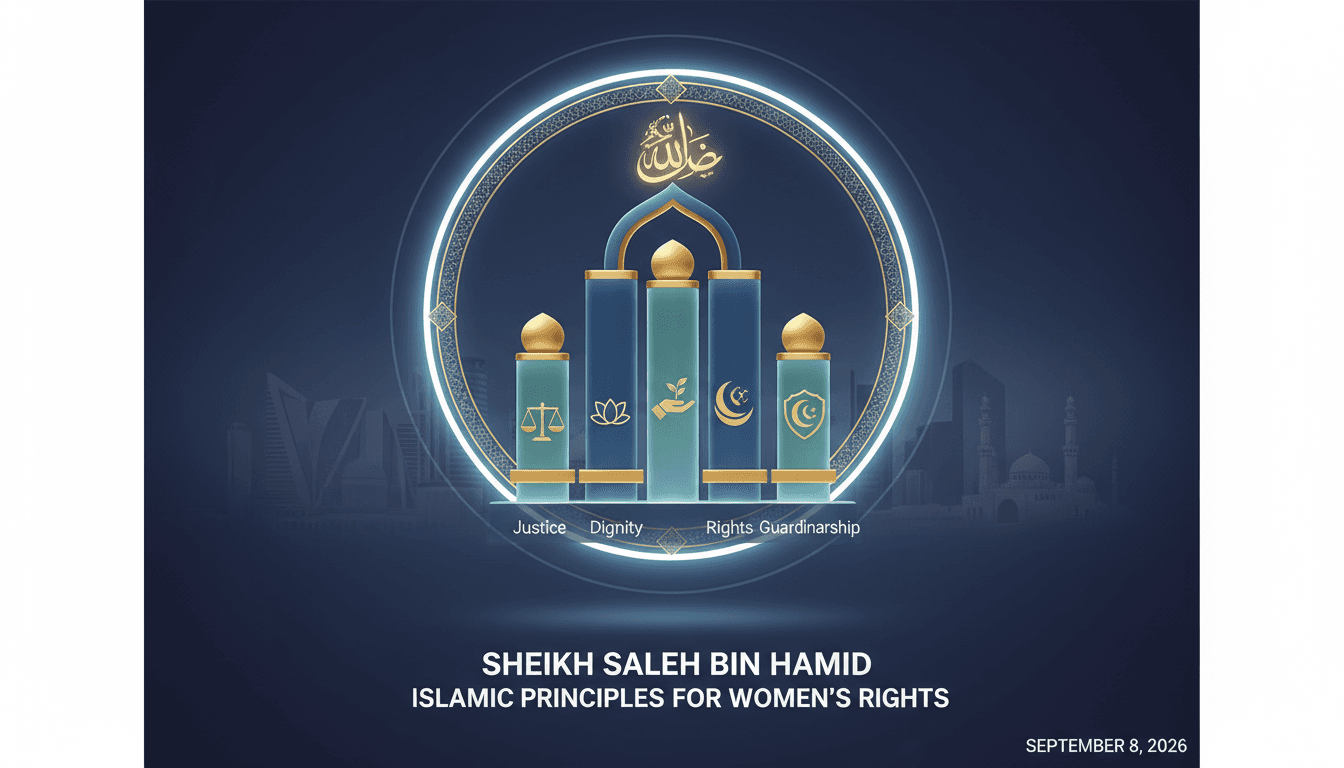
- The framework emphasizes four core principles: dignity, rights, mercy, and guardianship responsibility.
- This declaration aims to address ongoing debates about women's status in Muslim societies by promoting a balanced, rights-based approach.
The context you actually need
- Discussions on women's rights in Islamic jurisprudence have been ongoing, particularly in Saudi and broader Arab media.
- Previous publications have explored gender dynamics, advocating for complementary roles rather than hierarchical structures.
- The declaration aligns with regional efforts to reconcile traditional teachings with contemporary social contexts, reflecting a shift towards more equitable interpretations.
What's really happening
Sheikh Saleh bin Hamid's declaration is a significant moment in the evolving discourse on women's rights within Islamic frameworks. By articulating a balanced approach rooted in dignity, justice, mercy, and guardianship, Ibn Hamid provides a comprehensive metric for how women should be treated in society. This framework is not merely theoretical; it has practical implications for how gender relations are navigated in everyday life.
The emphasis on human dignity as a foundational principle suggests a shift away from interpretations that may have historically marginalized women. By asserting that both genders possess inherent dignity, the declaration challenges traditional narratives that often place men in dominant roles. This could lead to a re-evaluation of gender dynamics in various sectors, including education, employment, and family life.
The principle of equitable rights distribution is particularly noteworthy. It signals a move towards recognizing women's rights as integral to Islamic teachings, rather than as secondary or conditional. This could empower women to advocate for their rights more effectively, potentially leading to increased participation in public life and decision-making processes.
Compassionate interpersonal treatment is another critical aspect of the declaration. This principle encourages a more humane approach to gender relations, fostering environments where women feel respected and valued. Such an atmosphere can enhance collaboration and productivity in workplaces, benefiting both men and women.
Lastly, the concept of accountable male guardianship introduces a framework where men are seen as responsible for the welfare of women, rather than as authoritarian figures. This could reshape family dynamics, encouraging shared responsibilities and mutual respect within households.
Overall, the declaration reflects a broader cultural shift towards recognizing women's rights within Islamic contexts. It aligns with ongoing efforts in the UAE and other Gulf states to promote gender equality while respecting traditional values. As these discussions gain traction, they may influence educational programs, legal reforms, and community initiatives aimed at enhancing women's roles in society.
Who feels it first (and how)
- Women in professional sectors: They may experience shifts in workplace policies and practices that promote gender equality.
- Educators and community leaders: They will likely need to adapt curricula and programs to reflect these new principles.
- Families: Changes in dynamics may lead to more equitable sharing of responsibilities and decision-making.
What to watch next
- Policy changes: Monitor for any new laws or regulations in Saudi Arabia and the UAE that reflect these principles, as they could set precedents for other Muslim-majority countries.
- Public discourse: Watch for shifts in media narratives around women's rights and gender roles, which may indicate broader societal acceptance of these ideas.
- Community programs: Look for initiatives aimed at educating both men and women about their rights and responsibilities under this new framework.
Sheikh Saleh bin Hamid's declaration has been published and is gaining attention.
There will be a gradual shift in public discourse regarding women's rights in Islamic contexts.
The immediate impact on legal frameworks and societal norms remains to be seen.
Frequently Asked Questions
- Why it matters?
- This statement could influence gender equality discussions and policies in Islamic contexts, affecting women's rights and roles in society.
- What happened (in 30 seconds)?
- On September 8, 2026, Sheikh Saleh bin Hamid issued a statement in Al-Jazirah outlining an Islamic framework for women's treatment. The framework emphasizes four core principles: dignity, rights, mercy, and guardianship responsibility. This declaration aims to address ongoing debates about women's status in Muslim societies by promoting a balanced, rights-based approach.
- What's really happening?
- Sheikh Saleh bin Hamid's declaration is a significant moment in the evolving discourse on women's rights within Islamic frameworks. By articulating a balanced approach rooted in dignity, justice, mercy, and guardianship, Ibn Hamid provides a comprehensive metric for how women should be treated in society. This framework is not merely theoretical; it has practical implications for how gender relations are navigated in everyday life. The emphasis on human dignity as a foundational principle sugge
- Who feels it first (and how)?
- Women in professional sectors: They may experience shifts in workplace policies and practices that promote gender equality. Educators and community leaders: They will likely need to adapt curricula and programs to reflect these new principles. Families: Changes in dynamics may lead to more equitable sharing of responsibilities and decision-making.
- What to watch next?
- Policy changes: Monitor for any new laws or regulations in Saudi Arabia and the UAE that reflect these principles, as they could set precedents for other Muslim-majority countries. Public discourse: Watch for shifts in media narratives around women's rights and gender roles, which may indicate broader societal acceptance of these ideas. Community programs: Look for initiatives aimed at educating both men and women about their rights and responsibilities under this new framework.
Arabic-language local and national news coverage from Saudi Arabia.
"Al-Jazirah is a major Saudi daily with strong emphasis on domestic reporting and official developments."
— A47 Editor
ابن حميد: ميزان الإسلام في التعامل مع المرأة يقوم على كرامة الإنسان وعدالة الحقوق ورحمة المعاملة ومسؤولية القوامة
A seminar titled 'The Role of Religious Leaders in Combating Violence Against Women' was held in Jeddah, organized by the International Islamic Fiqh Academy, chaired by Sheikh Dr. Saleh bin Abdullah bin Hamid, a prominent figure in Islamic scholarshi...
Arabic-language reporting focused on domestic developments in Saudi Arabia.
"Okaz is a mainstream Saudi newspaper that often reflects domestic priorities and official-facing coverage."
— A47 Editor
بحث دور القيادات الدينية في مواجهة العنف ضد المرأة
A seminar titled 'The Role of Religious Leaders in Combating Violence Against Women' commenced yesterday in Jeddah, focusing on prevention and treatment of violence against women, correcting misconceptions related to certain religious texts, and enha...
Arabic-language reporting focused on domestic developments in Saudi Arabia.
"Okaz is a mainstream Saudi newspaper that often reflects domestic priorities and official-facing coverage."
— A47 Editor
ندوة "مواجهة العنف ضد المرأة " تبحث تصحيح المفاهيم المغلوطة
The seminar titled 'The Role of Religious Leaders in Combating Violence Against Women' commenced yesterday in Jeddah, focusing on prevention and treatment of violence against women, correcting misconceptions related to certain religious texts, and en...