
UK Government Proposes Stricter Residency Rules for Political Donors
Why it matters
These proposed changes could reshape the landscape of political funding in the UK, impacting both domestic and expatriate voters.
What happened (in 30 seconds)
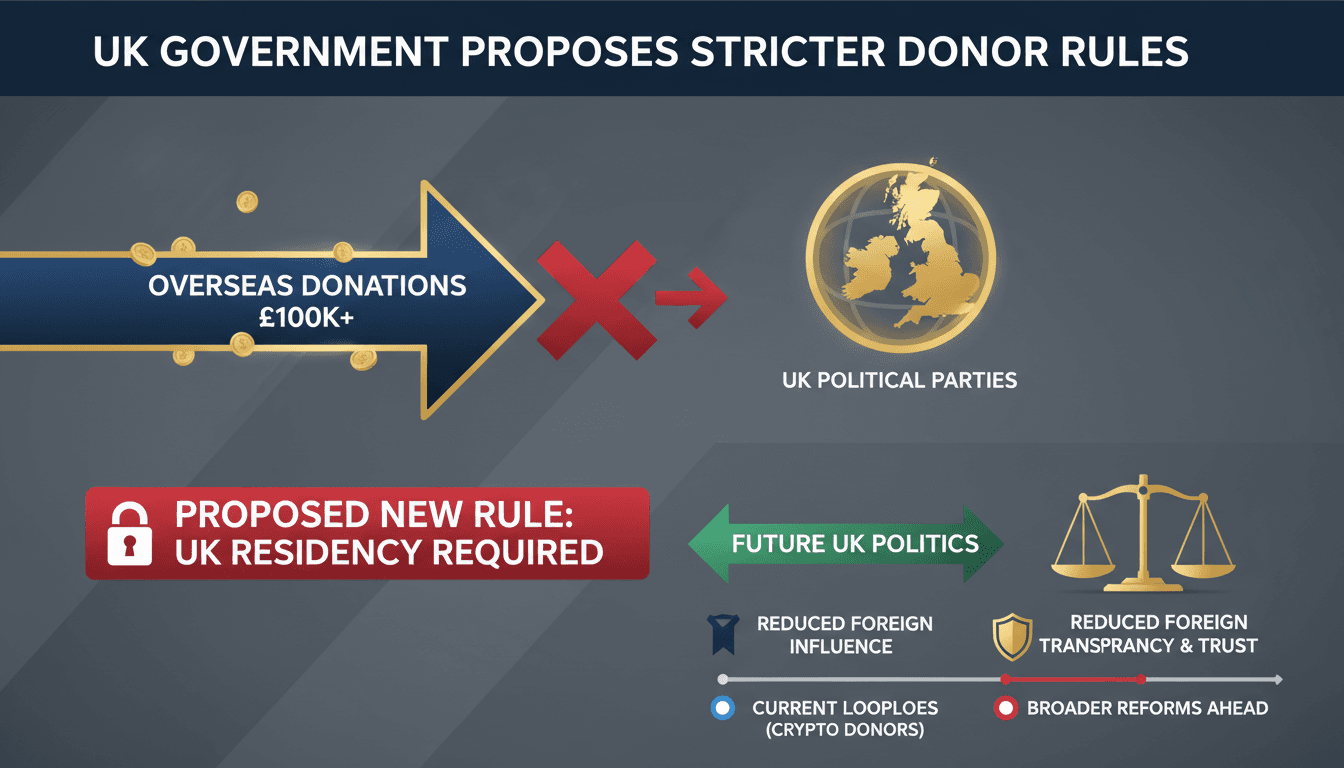
- On September 15, 2026, the UK Labour government proposed tightening residency requirements for political donors contributing over £100,000 annually.
- This follows £72 million in donations to Reform UK from crypto-billionaires Ben Delo and Christopher Harborne, raising concerns about foreign influence.
- The proposals amend the Representation of the People Bill, currently under debate in the House of Lords, aiming for uniform application across all political parties.
The context you actually need
- Current rules allow unlimited contributions from overseas voters, despite bans on foreign donations, leading to potential loopholes.
- Earlier measures introduced a £100,000 cap on overseas electors, backdated to March 25, 2026, alongside checks on company donations and a moratorium on crypto donations.
- The recent donations highlighted concerns about the genuine connection of returning residents to the UK, prompting the government to act.
What's really happening
The UK Labour government's proposal to tighten residency requirements for large political donors is a direct response to the recent record-breaking donations made by Ben Delo and Christopher Harborne to Reform UK. These donations, totaling £72 million, have raised alarms about the potential for foreign influence in UK politics, especially given that both donors had recently lived abroad. The proposed amendments to the Representation of the People Bill aim to ensure that individuals making substantial contributions to political parties maintain a genuine and ongoing connection to the UK.
Under the new rules, donors exceeding the £100,000 cap would need to prove their residency status, aligning with existing tax regulations that define residency based on physical presence in the UK for at least 183 days. This move is designed to close loopholes that allow returning citizens to circumvent the spirit of the law, which seeks to prevent foreign money from influencing UK elections. The government has emphasized that these measures will apply uniformly across all political parties, aiming to create a level playing field in political funding.
The backdrop to these changes includes earlier legislative efforts in March and July 2026, which introduced a £100,000 annual cap on donations from overseas electors. These measures were part of a broader initiative to address concerns raised in the Rycroft Review regarding foreign influence in UK elections. The scrutiny of the recent donations has prompted calls for stricter regulations, with unions advocating for broader caps on "mega-donors" while defending their own funding practices.
As the bill continues to be debated in the House of Lords, there are indications that the government may consider retrospective application of the new rules, which could affect recent donations. This uncertainty has led to mixed reactions, with some political figures warning of potential reciprocal restrictions on union funding and the risk of undermining the democratic process. The outcome of this legislative proposal could have significant implications for the future of political donations in the UK, particularly for expatriates and large donors.
Who feels it first (and how)
- UK citizens living abroad: They may face stricter requirements for political contributions, impacting their ability to engage in UK politics.
- Political parties: All parties will need to adapt to the new rules, potentially affecting their funding strategies.
- Trade unions: They may experience pressure to adjust their funding practices in response to the new regulations.
What to watch next
- Debate outcomes in the House of Lords: The final form of the bill could significantly alter political funding dynamics.
- Reactions from political parties and unions: Their responses will indicate how the new rules may reshape political alliances and funding strategies.
- Potential legal challenges: Any pushback against the new regulations could lead to court cases that further define the landscape of political donations.
The UK Labour government is proposing stricter residency requirements for political donors.
The bill will undergo significant debate and may face amendments before final approval.
The potential for retrospective application of the rules and its implications for recent donations remains uncertain.
Frequently Asked Questions
- Why it matters?
- These proposed changes could reshape the landscape of political funding in the UK, impacting both domestic and expatriate voters.
- What happened (in 30 seconds)?
- On September 15, 2026, the UK Labour government proposed tightening residency requirements for political donors contributing over £100,000 annually. This follows £72 million in donations to Reform UK from crypto-billionaires Ben Delo and Christopher Harborne, raising concerns about foreign influence. The proposals amend the Representation of the People Bill, currently under debate in the House of Lords, aiming for uniform application across all political parties.
- What's really happening?
- The UK Labour government's proposal to tighten residency requirements for large political donors is a direct response to the recent record-breaking donations made by Ben Delo and Christopher Harborne to Reform UK. These donations, totaling £72 million, have raised alarms about the potential for foreign influence in UK politics, especially given that both donors had recently lived abroad. The proposed amendments to the Representation of the People Bill aim to ensure that individuals making substa
- Who feels it first (and how)?
- UK citizens living abroad: They may face stricter requirements for political contributions, impacting their ability to engage in UK politics. Political parties: All parties will need to adapt to the new rules, potentially affecting their funding strategies. Trade unions: They may experience pressure to adjust their funding practices in response to the new regulations.
- What to watch next?
- Debate outcomes in the House of Lords: The final form of the bill could significantly alter political funding dynamics. Reactions from political parties and unions: Their responses will indicate how the new rules may reshape political alliances and funding strategies. Potential legal challenges: Any pushback against the new regulations could lead to court cases that further define the landscape of political donations.
United Kingdom-focused news including local politics, business, and social issues.
"BBC News is widely regarded as a reputable international news organization, known for its impartial tone and public service mandate."
— A47 Editor
Political donors could face tougher residency rules
The UK government is considering implementing stricter residency rules for political donors following Reform UK's receipt of £72 million in donations from two cryptocurrency billionaires, Ben Delo and Christopher Harborne, both of whom have recently ...
International coverage from The Guardian's global desks.
"The Guardian is known for its progressive editorial stance and in-depth analysis."
— A47 Editor
Ministers seek law change to make £72m donations to Reform illegal
The UK government plans to introduce amendments to existing legislation that could render the £72 million donations to Reform UK illegal, imposing stricter residency requirements on political donors. This move is seen as a direct response to the unpr...
UK and international business news, economics, and corporate coverage.
"The Guardian’s business section covers finance and markets with a progressive editorial tone."
— A47 Editor
Will the £72m of donations to Reform UK be allowed?
Reform UK has announced record donations totaling £72 million from cryptocurrency billionaires Christopher Harborne and Ben Delo, each contributing £36 million, marking the largest political donations in British history. However, legal experts are qu...
International coverage from The Guardian's global desks.
"The Guardian is known for its progressive editorial stance and in-depth analysis."
— A47 Editor
Trade unions, MPs and donors urge Burnham to revisit party funding rules
Trade unions, MPs, and donors are urging Prime Minister Andy Burnham to reconsider party funding regulations in light of Reform UK's recent £72 million donations from two cryptocurrency billionaires. Burnham, who previously supported caps on domestic...
Real-time updates, analysis, and reports on the blockchain and cryptocurrency sectors.
"Crypto News delivers real-time updates, analysis, and reports on the blockchain and cryptocurrency sectors."
— A47 Editor
Reform UK’s £72M donations face new legal test
Reform UK has received £72 million in donations from cryptocurrency billionaires, raising questions about the implications of retrospective U.K. donation rules on this substantial funding. This financial support comes amid ongoing scrutiny regarding ...