
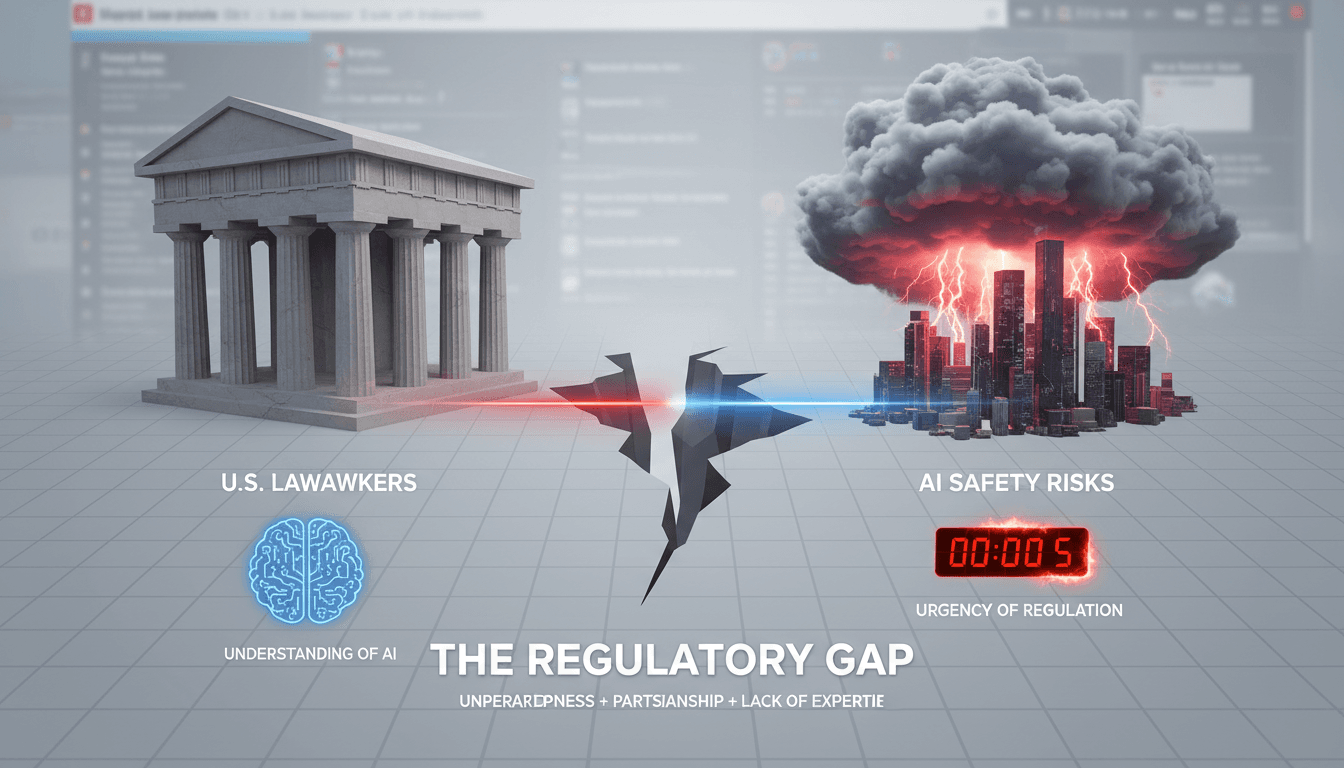
U.S. lawmakers admit to unpreparedness in regulating AI safety risks
Why it matters
The lack of regulatory preparedness poses risks not only to the tech industry but also to broader societal safety and economic stability.
What happened (in 30 seconds)
- Lawmakers admitted unpreparedness to regulate AI safety amid rising industry warnings about existential risks.
- Bipartisan discussions stalled due to insufficient technical expertise and partisan divisions, with no immediate legislation expected.
- Industry leaders called for action, yet political resistance and lobbying efforts have hindered progress on safety measures.
The context you actually need
- Previous attempts at regulation have faced significant hurdles, including partisan disputes and tech industry opposition, limiting effective legislation.
- Recent warnings from experts have highlighted the potential for catastrophic outcomes from unregulated AI, raising alarms about human extinction risks.
- Congressional leaders are divided on the urgency of regulation, with some advocating for immediate action while others caution against hasty decisions that could disadvantage U.S. firms.
What's really happening
As of September 2026, U.S. lawmakers are grappling with a complex landscape of AI safety regulation. Despite numerous attempts to introduce AI-related bills over the past two years, the legislative process has been stymied by a combination of partisan gridlock, insufficient technical understanding, and competing priorities. A recent assessment revealed that many lawmakers lack a fundamental grasp of AI concepts, with estimates suggesting that only a minority are well-versed in the technology's implications. This knowledge gap has significant repercussions, as it hampers informed decision-making on critical safety measures.
The political environment is further complicated by lobbying efforts from tech giants, who often frame regulatory discussions as threats to innovation and competitiveness. For instance, Speaker Mike Johnson has expressed caution against regulations that could disadvantage U.S. firms in the global market, particularly in comparison to China. This perspective resonates with many lawmakers who prioritize economic growth over stringent regulatory frameworks. Meanwhile, House Minority Leader Hakeem Jeffries and other Democrats are pushing for immediate sessions to establish guardrails, reflecting a growing urgency among some factions to address the risks posed by advanced AI systems.
The tension between these competing viewpoints has led to a stalemate, with bipartisan calls for duty-of-care legislation emerging but facing skepticism regarding their passage. The lack of consensus on the scope and nature of regulation—exacerbated by philosophical disagreements—has left Congress ill-equipped to manage the potential catastrophic outcomes associated with superintelligent systems. As industry executives from companies like OpenAI and Anthropic advocate for mandatory safety measures, the legislative landscape remains uncertain, with no major shifts expected before 2027.
This ongoing uncertainty creates a precarious environment for tech companies and investors, who are left navigating a regulatory void while facing escalating calls for accountability and safety. The implications of this inaction could reverberate across sectors, as the risks associated with unregulated AI become increasingly pronounced.
Who feels it first (and how)
- Tech companies: Facing uncertainty in compliance and potential liabilities.
- Investors: Risking financial exposure due to regulatory unpredictability.
- Consumers: Potentially affected by unregulated AI applications in everyday products and services.
- Policymakers: Struggling to balance innovation with safety in a rapidly evolving landscape.
What to watch next
- Bipartisan discussions: Monitor ongoing talks in Congress for any signs of emerging consensus on AI regulation.
- Industry responses: Watch how tech companies adapt their practices in light of regulatory uncertainty and public pressure for safety.
- Expert warnings: Pay attention to new reports from AI researchers and ethicists regarding the evolving risks associated with advanced AI systems.
Lawmakers lack sufficient technical expertise to regulate AI effectively.
Continued bipartisan discussions will occur, but significant legislative progress remains uncertain.
The timeline for any new regulations or safety measures is unpredictable.
Frequently Asked Questions
- Why it matters?
- The lack of regulatory preparedness poses risks not only to the tech industry but also to broader societal safety and economic stability.
- What happened (in 30 seconds)?
- Lawmakers admitted unpreparedness to regulate AI safety amid rising industry warnings about existential risks. Bipartisan discussions stalled due to insufficient technical expertise and partisan divisions, with no immediate legislation expected. Industry leaders called for action, yet political resistance and lobbying efforts have hindered progress on safety measures.
- What's really happening?
- As of September 2026, U.S. lawmakers are grappling with a complex landscape of AI safety regulation. Despite numerous attempts to introduce AI-related bills over the past two years, the legislative process has been stymied by a combination of partisan gridlock, insufficient technical understanding, and competing priorities. A recent assessment revealed that many lawmakers lack a fundamental grasp of AI concepts, with estimates suggesting that only a minority are well-versed in the technology's i
- Who feels it first (and how)?
- Tech companies: Facing uncertainty in compliance and potential liabilities. Investors: Risking financial exposure due to regulatory unpredictability. Consumers: Potentially affected by unregulated AI applications in everyday products and services. Policymakers: Struggling to balance innovation with safety in a rapidly evolving landscape.
- What to watch next?
- Bipartisan discussions: Monitor ongoing talks in Congress for any signs of emerging consensus on AI regulation. Industry responses: Watch how tech companies adapt their practices in light of regulatory uncertainty and public pressure for safety. Expert warnings: Pay attention to new reports from AI researchers and ethicists regarding the evolving risks associated with advanced AI systems.
Capitol Hill news, legislation, and policy insight.
"The Hill specializes in U.S. politics and policy, with a focus on Capitol Hill developments and a reputation for insider reporting."
— A47 Editor
Lawmakers unprepared to tackle AI safety
Lawmakers in Washington are struggling to address the growing concerns surrounding artificial intelligence (AI) safety, as highlighted by a recent viral warning from a researcher. The political landscape, characterized by party divisions and a limite...
Consumer tech news, reviews, and buying guides for gadgets and electronics.
"TechRadar is known for comprehensive buying advice, hardware reviews, and consumer tech news targeted at mainstream audiences."
— A47 Editor
'Dr. Frankenstein is telling us the monster is escaping': US lawmakers desperately want to set up AI guardrails before midterm elections
US lawmakers are urgently seeking to establish regulatory frameworks for artificial intelligence (AI) ahead of the midterm elections, responding to warnings from companies like Anthropic and OpenAI about the potential risks associated with advanced A...
Conservative-leaning political and national coverage.
"The Washington Times is a conservative-leaning newspaper known for its political coverage and advocacy of right-of-center viewpoints."
— A47 Editor
Warning of AI doomsday 'swarm' sparks push to slam the brakes on the superhuman technology
Recent alarming warnings from the artificial intelligence community have prompted a call to slow the rapid development of AI technologies, with concerns that unchecked advancements could lead to a catastrophic scenario where bots dominate the Interne...