
Celtic Nations Leaders Sign Pact for UK Constitutional Change and Referendums
Why it matters
The Cardiff Pact signals a significant push for self-determination in the UK, potentially reshaping political dynamics and economic policies.
What happened (in 30 seconds)
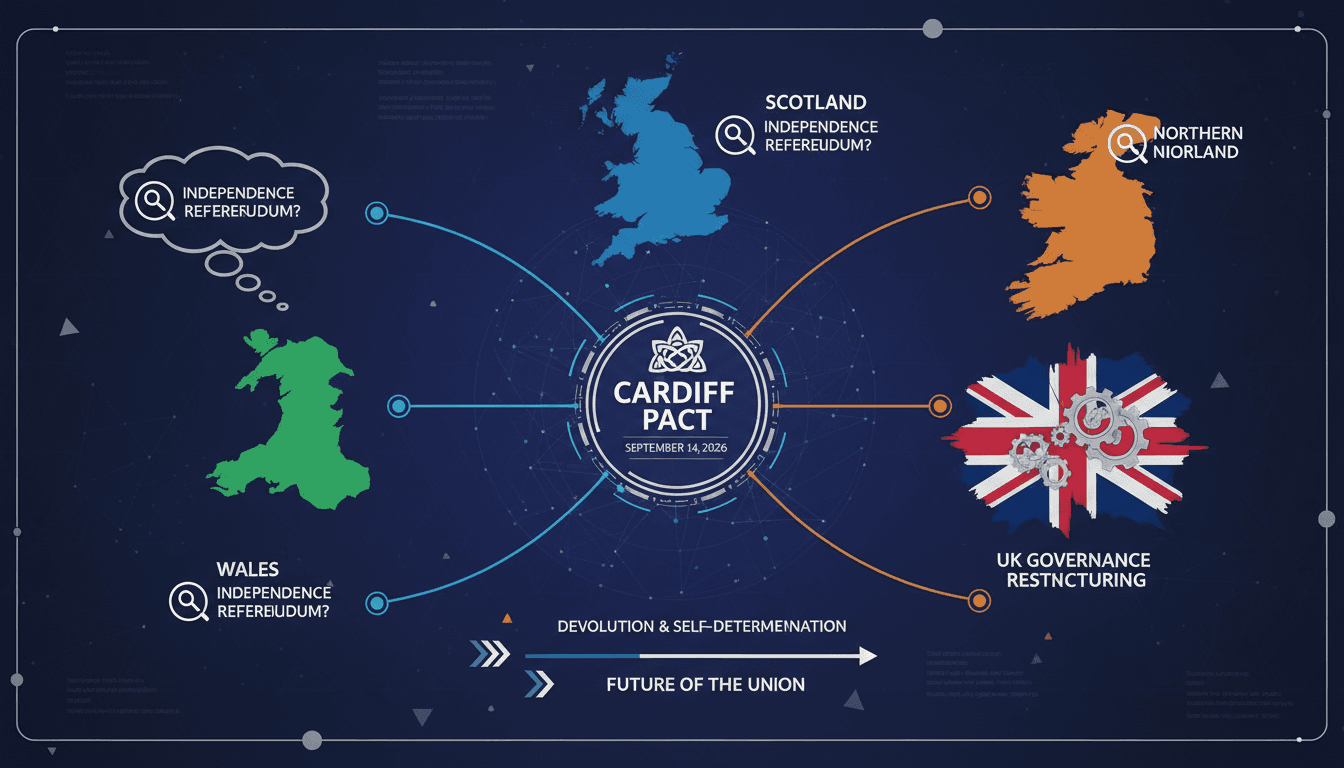
- On September 14, 2026, leaders from Wales, Scotland, and Northern Ireland signed a memorandum in Cardiff demanding constitutional change and referendums.
- The agreement emphasizes the right to self-determination and rejects Westminster's authority to block democratic processes.
- Prime Minister Andy Burnham's administration faces increased pressure as nationalist parties gain power and advocate for immediate referendums.
The context you actually need
- Nationalist parties in Scotland, Wales, and Northern Ireland gained power simultaneously for the first time in May 2026 elections, marking a shift in governance.
- Prime Minister Burnham's focus on devolution has intensified discussions around funding, powers, and constitutional rights, especially post-Brexit.
- Polling data indicates significant support for independence, with approximately 47% in Scotland, 32% in Wales, and 36% in Northern Ireland, reflecting growing nationalist sentiments.
What's really happening
The Cardiff Pact, signed by key nationalist leaders, represents a strategic alignment among the Celtic nations to assert their rights to self-determination. This memorandum is not merely a symbolic gesture; it is a calculated move to pressure the UK government into recognizing the legitimacy of independence referendums. The leaders—Rhun ap Iorwerth (Plaid Cymru), John Swinney (SNP), and Michelle O'Neill and Mary Lou McDonald (Sinn Féin)—are leveraging their recent electoral successes to amplify their demands.
The backdrop of this agreement is critical. Following the May 2026 elections, the nationalist parties have gained unprecedented control, creating a unified front that challenges Westminster's authority. Prime Minister Andy Burnham's administration, which has emphasized devolution, now faces scrutiny over its commitment to these principles. The nationalist leaders are framing their demands as a necessary step toward democratic governance, rejecting any attempts by Westminster to stifle their aspirations.
The memorandum calls for the UK government to "prepare, plan and facilitate constitutional change," indicating a proactive approach rather than a passive request. This shift in tone suggests that the leaders are ready to mobilize public support and political pressure to achieve their goals. The emphasis on immediate referendums, particularly in Scotland and Northern Ireland, highlights the urgency of their demands.
Moreover, the Cardiff Agreement, which outlines shared priorities such as child poverty and economic growth, signals a broader agenda that extends beyond independence. The leaders are also advocating for future alignment with the EU, which could have significant implications for trade and international relations. This aspect is particularly relevant in the context of post-Brexit Britain, where the economic landscape is still evolving.
The implications of the Cardiff Pact extend beyond the UK. As these nations push for constitutional change, they may inspire similar movements in other regions, potentially reshaping global governance norms. The interconnectedness of today's political landscape means that shifts in one area can have ripple effects worldwide, influencing everything from trade agreements to international diplomatic relations.
Who feels it first (and how)
- Political leaders in the UK, particularly those in Westminster, will face immediate pressure to respond to the demands of the Celtic nations.
- Businesses and investors in the UK may experience uncertainty as the potential for constitutional change could impact economic stability and investment decisions.
- Citizens in Scotland, Wales, and Northern Ireland will feel the effects of increased political mobilization, potentially leading to referendums that could alter their governance structures.
What to watch next
- Referendum timelines: Keep an eye on announcements regarding the scheduling of independence referendums in Scotland and Northern Ireland, as these will be pivotal in shaping the political landscape.
- Public opinion shifts: Monitor polling data for changes in public sentiment regarding independence, as this will influence the momentum of nationalist movements.
- UK government responses: Watch for the UK government's strategies to address the demands of the Celtic nations, which could include new policies or negotiations on devolution.
The Cardiff Pact was signed on September 14, 2026, by leaders from Wales, Scotland, and Northern Ireland.
Increased pressure on the UK government to facilitate discussions around constitutional change and referendums.
The long-term impact of these developments on UK-EU relations and global trade dynamics.
Frequently Asked Questions
- Why it matters?
- The Cardiff Pact signals a significant push for self-determination in the UK, potentially reshaping political dynamics and economic policies.
- What happened (in 30 seconds)?
- On September 14, 2026, leaders from Wales, Scotland, and Northern Ireland signed a memorandum in Cardiff demanding constitutional change and referendums. The agreement emphasizes the right to self-determination and rejects Westminster's authority to block democratic processes. Prime Minister Andy Burnham's administration faces increased pressure as nationalist parties gain power and advocate for immediate referendums.
- What's really happening?
- The Cardiff Pact, signed by key nationalist leaders, represents a strategic alignment among the Celtic nations to assert their rights to self-determination. This memorandum is not merely a symbolic gesture; it is a calculated move to pressure the UK government into recognizing the legitimacy of independence referendums. The leaders—Rhun ap Iorwerth (Plaid Cymru), John Swinney (SNP), and Michelle O'Neill and Mary Lou McDonald (Sinn Féin)—are leveraging their recent electoral successes to amplify
- Who feels it first (and how)?
- Political leaders in the UK, particularly those in Westminster, will face immediate pressure to respond to the demands of the Celtic nations. Businesses and investors in the UK may experience uncertainty as the potential for constitutional change could impact economic stability and investment decisions. Citizens in Scotland, Wales, and Northern Ireland will feel the effects of increased political mobilization, potentially leading to referendums that could alter their governance structures.
- What to watch next?
- Referendum timelines: Keep an eye on announcements regarding the scheduling of independence referendums in Scotland and Northern Ireland, as these will be pivotal in shaping the political landscape. Public opinion shifts: Monitor polling data for changes in public sentiment regarding independence, as this will influence the momentum of nationalist movements. UK government responses: Watch for the UK government's strategies to address the demands of the Celtic nations, which could include new
News and current affairs from across Europe.
"The Guardian is known for its progressive editorial stance and in-depth analysis."
— A47 Editor
Tuesday briefing: How to understand Wales, Scotland and Northern Ireland’s joint call for change
Leaders from Plaid Cymru, the Scottish National Party (SNP), and Sinn Féin have signed a memorandum in Cardiff, affirming their right to seek independence from the UK amid growing pressure on Westminster regarding the future of the United Kingdom. Th...
United Kingdom-focused news including local politics, business, and social issues.
"BBC News is widely regarded as a reputable international news organization, known for its impartial tone and public service mandate."
— A47 Editor
Westminster's time is coming to an end, Welsh, Scottish, Northern Irish leaders say
Leaders from Plaid Cymru, the Scottish National Party (SNP), and Sinn Féin have called for the UK government to prepare for constitutional change, signaling a potential shift in the political landscape of the United Kingdom. This statement comes as d...
Political developments, policy debates, elections, and government affairs in the UK.
"BBC News is widely regarded as a reputable international news organization, known for its impartial tone and public service mandate."
— A47 Editor
'It's up to the people to decide their future'
Leaders from Plaid Cymru, the Scottish National Party (SNP), and Sinn Féin have called on the UK government to prepare for constitutional change, emphasizing that the future should be determined by the people. This statement reflects a growing sentim...