
EU Member States Advocate for Enhanced Arctic Strategy at Rovaniemi Summit
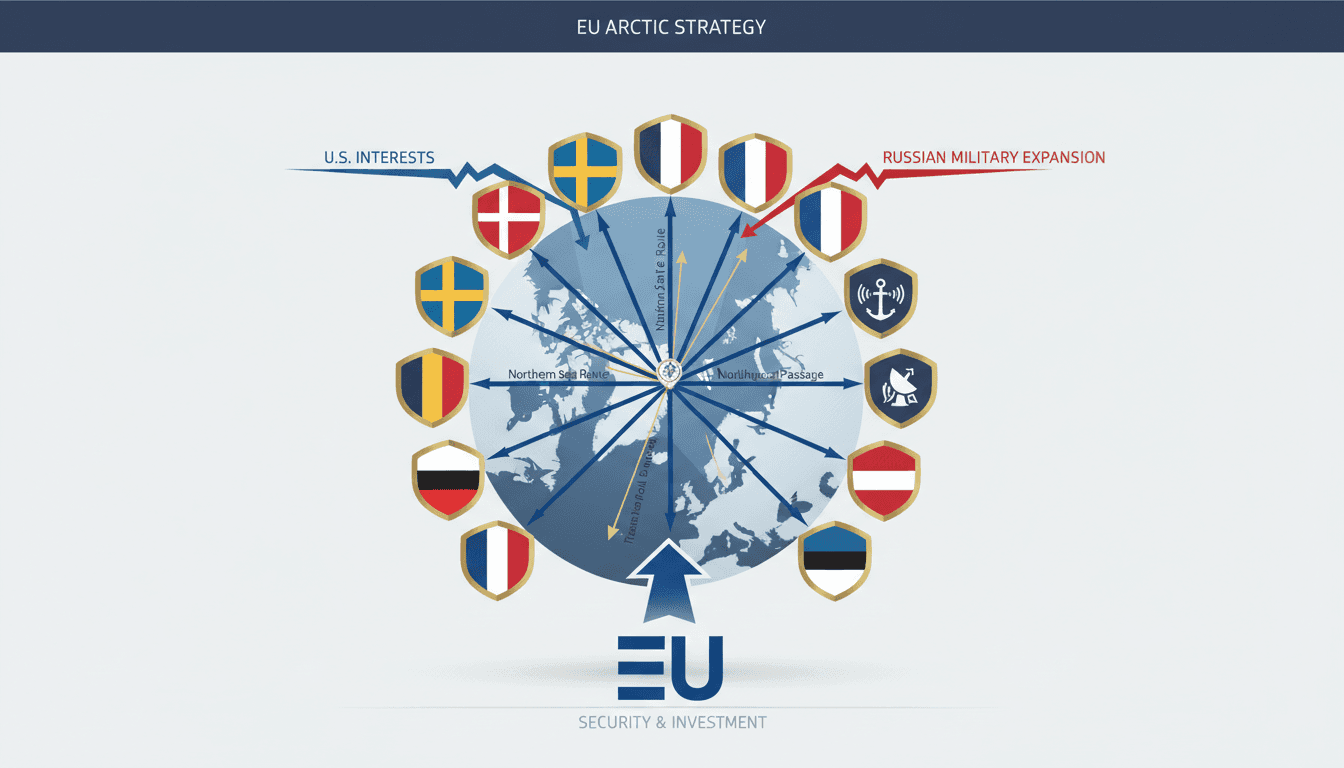
Why it matters
The EU's strategic pivot in the Arctic could reshape energy markets and international shipping routes, impacting global trade.
What happened (in 30 seconds)
- Twelve EU member states convened the European Arctic Summit in Rovaniemi, Finland, on September 14, 2026.
- A joint declaration was issued, urging the EU to adopt a more proactive role in Arctic affairs amid rising geopolitical tensions.
- The updated Arctic Strategy is set for release in October 2026, focusing on security and infrastructure investments.
The context you actually need
- The EU's previous Arctic policy dates back to 2021, prior to significant geopolitical shifts, including Russia's military expansion and U.S. interest in Greenland.
- Climate change is accelerating ice melt, opening new shipping routes and resource access, which has heightened competition among global powers.
- The Rovaniemi summit was driven by Finland and supported by eleven other nations, reflecting a collective European response to external threats in the Arctic.
What's really happening
The Rovaniemi summit on September 14, 2026, marked a significant moment for twelve EU member states, as they collectively pushed for a more assertive Arctic policy. Finnish Prime Minister Petteri Orpo hosted the event, emphasizing the need to address the primary threat posed by Russia's military expansion in the region. This summit comes at a time when the Arctic is increasingly viewed as a geopolitical hotspot, with German Chancellor Friedrich Merz underscoring its strategic importance.
The joint declaration from the summit calls for the European Union to integrate security considerations into its Arctic strategy, which is set to be updated in October 2026. EU foreign policy chief Kaja Kallas confirmed that the forthcoming strategy will prioritize security, potentially including the development of icebreaker capabilities and enhancing military mobility in the region. This shift reflects a broader recognition that the Arctic is not just an environmental concern but also a matter of national and regional security.
Parallel developments include EU Commission President Ursula von der Leyen's visit to Greenland in September 2026, aimed at strengthening partnerships in infrastructure and raw materials. The proposals discussed at the summit encompass the establishment of joint icebreaker fleets, improved satellite connectivity, and budget allocations for Arctic initiatives in the next multiannual financial framework. These initiatives signal a commitment to not only address security concerns but also to capitalize on the economic opportunities presented by a changing Arctic landscape.
The backdrop of this summit includes heightened tensions due to Russia's military infrastructure expansion in the Arctic and China's pursuit of economic footholds in critical minerals and infrastructure. The U.S. has also intensified its focus on the region, particularly following President Donald Trump's renewed interest in acquiring Greenland, a Danish territory outside the EU. This has raised European concerns about external influences and the need for a unified response.
As the EU prepares to update its Arctic strategy, the implications for member states and global stakeholders are profound. The focus on security and infrastructure investment could lead to increased budgetary priorities for Arctic initiatives, influencing defense and infrastructure sectors across Europe.
Who feels it first (and how)
- European governments: Increased focus on Arctic security and defense spending.
- Logistics companies: Potential changes in shipping routes and costs due to new Arctic developments.
- Energy sectors: Opportunities for resource extraction and infrastructure development in the Arctic.
- Environmental organizations: Heightened scrutiny of climate impacts and geopolitical tensions in the region.
What to watch next
- EU's updated Arctic Strategy: The release in October 2026 will clarify the bloc's priorities and funding for Arctic initiatives.
- Military developments in the Arctic: Watch for increased military presence and infrastructure investments from EU member states.
- Global shipping routes: Monitor changes in shipping dynamics as Arctic ice melts, potentially altering trade flows.
Twelve EU member states are advocating for a more proactive Arctic role.
The updated Arctic Strategy will prioritize security and infrastructure investments.
The long-term impact of these initiatives on global trade and geopolitical stability.
Frequently Asked Questions
- Why it matters?
- The EU's strategic pivot in the Arctic could reshape energy markets and international shipping routes, impacting global trade.
- What happened (in 30 seconds)?
- Twelve EU member states convened the European Arctic Summit in Rovaniemi, Finland, on September 14, 2026. A joint declaration was issued, urging the EU to adopt a more proactive role in Arctic affairs amid rising geopolitical tensions. The updated Arctic Strategy is set for release in October 2026, focusing on security and infrastructure investments.
- What's really happening?
- The Rovaniemi summit on September 14, 2026, marked a significant moment for twelve EU member states, as they collectively pushed for a more assertive Arctic policy. Finnish Prime Minister Petteri Orpo hosted the event, emphasizing the need to address the primary threat posed by Russia's military expansion in the region. This summit comes at a time when the Arctic is increasingly viewed as a geopolitical hotspot, with German Chancellor Friedrich Merz underscoring its strategic importance. The jo
- Who feels it first (and how)?
- European governments: Increased focus on Arctic security and defense spending. Logistics companies: Potential changes in shipping routes and costs due to new Arctic developments. Energy sectors: Opportunities for resource extraction and infrastructure development in the Arctic. Environmental organizations: Heightened scrutiny of climate impacts and geopolitical tensions in the region.
- What to watch next?
- EU's updated Arctic Strategy: The release in October 2026 will clarify the bloc's priorities and funding for Arctic initiatives. Military developments in the Arctic: Watch for increased military presence and infrastructure investments from EU member states. Global shipping routes: Monitor changes in shipping dynamics as Arctic ice melts, potentially altering trade flows.
RT is a Russian state-funded network covering global events from a Russian perspective.
"RT is widely criticized for promoting pro-Kremlin narratives and is considered by many to be a state propaganda outlet."
— A47 Editor
EU members plot Arctic expansion
European leaders are advocating for a more prominent role for the EU in the Arctic region, particularly in response to NATO's expanding military presence. This call for action comes amid rising geopolitical tensions, especially concerning Russia's mi...
24/7 international news from a French perspective in multiple languages.
"France 24 is viewed as a globally focused outlet with balanced coverage and a European perspective."
— A47 Editor
Leaders urge EU to boost Arctic role to tackle Russia 'threat'
Twelve European countries convened in Finland, urging the European Union to enhance its Arctic presence in response to perceived threats from Russia and geopolitical tensions involving the United States, particularly under former President Donald Tru...
International news coverage curated for readers in the UAE and Gulf region.
"Emirates 24|7 world coverage presents global developments through a UAE-facing and Gulf-relevant editorial lens."
— A47 Editor
European leaders discuss Arctic security as melting ice opens new trade routes
European leaders convened in Rovaniemi, Finland, to address the increasing competition in the Arctic region, driven by climate change that is creating new shipping routes and access to natural resources. The summit included discussions on security co...