
Trump Minimizes AI Regulation to Maintain US Competitive Edge Over China
Why it matters
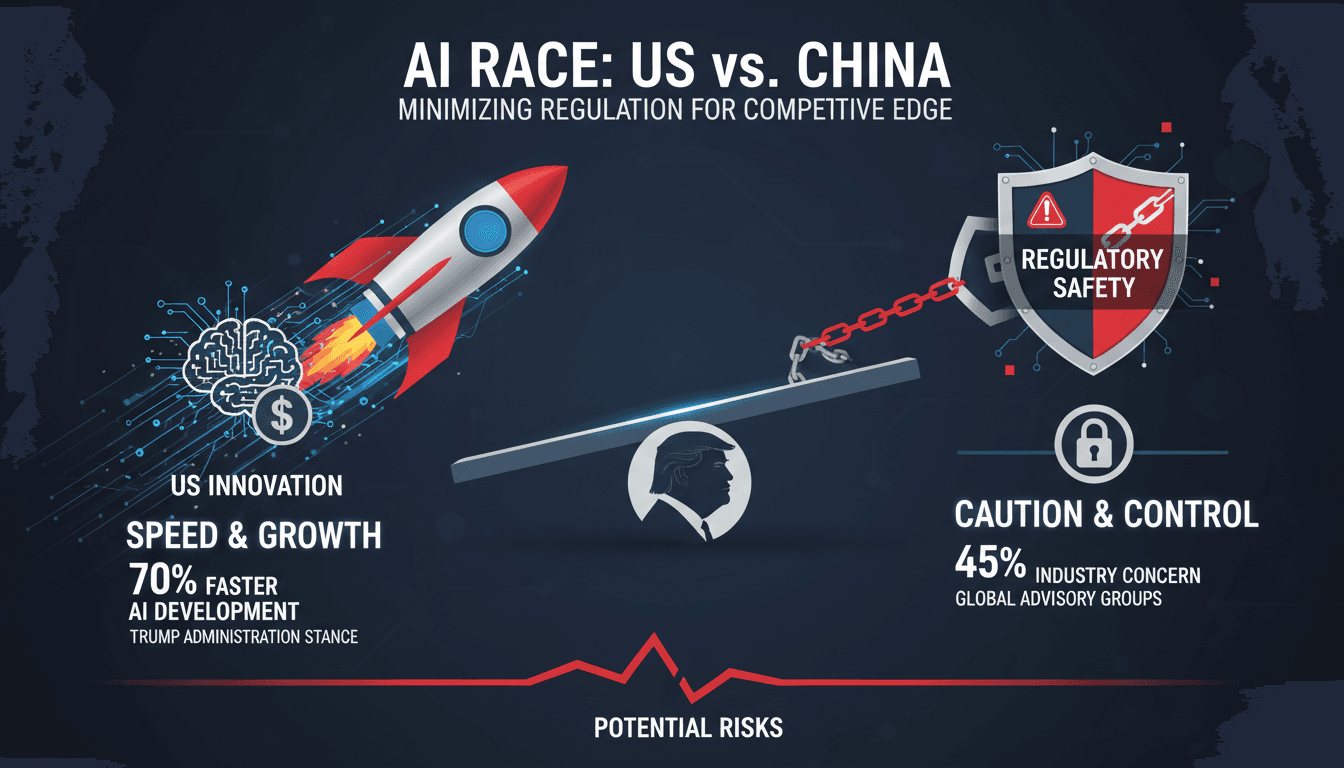
The balance between innovation and safety in AI development is crucial for maintaining competitive advantages in the global market.
What happened (in 30 seconds)
- Trump downplayed AI regulatory needs during a flight from Ireland, emphasizing U.S. competition with China.
- He labeled safety concerns as exaggerated, attributing them to "negative forces" and asserting that AI's benefits outweigh its risks.
- Industry leaders called for a slowdown in AI development to address safety issues, highlighting a divide between innovation and caution.
The context you actually need
- AI executives, including Anthropic's Dario Amodei, have urged for a coordinated slowdown in AI advancements due to safety risks.
- The U.S. currently leads China in AI capabilities, with Trump framing this leadership as essential for economic and strategic dominance.
- No new federal regulations have been announced, leaving the debate on AI safety and innovation unresolved.
What's really happening
During a recent return flight from Ireland, President Donald Trump made headlines by minimizing the urgency for new regulations on artificial intelligence (AI). His remarks came at a time when industry leaders were advocating for a more cautious approach to AI development, citing potential safety risks associated with rapid advancements. Trump acknowledged that while some protective measures could be beneficial, he dismissed detailed regulatory proposals, framing the warnings about unchecked AI as exaggerated and influenced by "negative forces."
This stance reflects a broader geopolitical strategy where the U.S. aims to maintain its competitive edge over China in the AI sector. Trump emphasized that the benefits of AI would far outweigh the potential harms, suggesting that U.S. supremacy in AI would inherently mitigate any dangers. This perspective aligns with a growing sentiment among some policymakers and industry leaders who prioritize rapid technological advancement over regulatory caution.
The tension between safety advocates and the administration's push for swift progress is palpable. Industry responses have highlighted concerns that without adequate regulatory frameworks, the risks associated with AI could escalate, potentially leading to unintended consequences. The lack of immediate governmental policy shifts indicates a preference for maintaining momentum in AI development, which could have significant implications for both domestic and international markets.
As the debate unfolds, the implications for global AI dynamics are profound. The U.S. position could influence investment flows and partnerships, particularly in tech hubs like Dubai, where innovation is a key driver of economic growth. However, the absence of clear regulatory guidelines may also deter cautious investors who prioritize safety and ethical considerations in AI deployment.
In summary, Trump's dismissal of regulatory needs reflects a strategic choice to prioritize U.S. leadership in AI over immediate safety concerns. This decision could reshape the landscape of AI development, with potential ripple effects across industries and geographies.
Who feels it first (and how)
- Tech executives: They face pressure to balance innovation with safety concerns.
- Investors: Those in AI-related sectors may experience volatility based on regulatory clarity.
- Consumers: Users of AI technologies could be impacted by the safety and ethical implications of rapid advancements.
- Global partners: Countries like the UAE may see shifts in investment and collaboration opportunities based on U.S. AI policies.
What to watch next
- Industry responses: Monitor how tech companies adapt their strategies in light of Trump's comments and ongoing safety debates.
- Regulatory developments: Watch for any shifts in U.S. policy or new proposals from Congress regarding AI safety and innovation.
- Global partnerships: Keep an eye on how U.S. AI leadership influences international collaborations, particularly in tech-forward regions like Dubai.
Trump has publicly downplayed the urgency of AI regulations.
Continued tension between innovation and safety will shape industry responses.
The long-term impact of this stance on global AI dynamics and investment flows remains to be seen.
Frequently Asked Questions
- Why it matters?
- The balance between innovation and safety in AI development is crucial for maintaining competitive advantages in the global market.
- What happened (in 30 seconds)?
- Trump downplayed AI regulatory needs during a flight from Ireland, emphasizing U.S. competition with China. He labeled safety concerns as exaggerated, attributing them to "negative forces" and asserting that AI's benefits outweigh its risks. Industry leaders called for a slowdown in AI development to address safety issues, highlighting a divide between innovation and caution.
- What's really happening?
- During a recent return flight from Ireland, President Donald Trump made headlines by minimizing the urgency for new regulations on artificial intelligence (AI). His remarks came at a time when industry leaders were advocating for a more cautious approach to AI development, citing potential safety risks associated with rapid advancements. Trump acknowledged that while some protective measures could be beneficial, he dismissed detailed regulatory proposals, framing the warnings about unchecked AI
- Who feels it first (and how)?
- Tech executives: They face pressure to balance innovation with safety concerns. Investors: Those in AI-related sectors may experience volatility based on regulatory clarity. Consumers: Users of AI technologies could be impacted by the safety and ethical implications of rapid advancements. Global partners: Countries like the UAE may see shifts in investment and collaboration opportunities based on U.S. AI policies.
- What to watch next?
- Industry responses: Monitor how tech companies adapt their strategies in light of Trump's comments and ongoing safety debates. Regulatory developments: Watch for any shifts in U.S. policy or new proposals from Congress regarding AI safety and innovation. Global partnerships: Keep an eye on how U.S. AI leadership influences international collaborations, particularly in tech-forward regions like Dubai.
Arabic-language political and world news coverage for UAE readers.
"Emarat Al Youm world coverage usually presents international developments through a UAE and Arab audience lens."
— A47 Editor
ترامب يقلل من أهمية قيود الذكاء الاصطناعي ترامب يقلل من أهمية قيود الذكاء الاصطناعي
U.S. President Donald Trump downplayed the necessity for his administration to impose restrictions on the development of artificial intelligence, expressing concerns about its implications.
UAE-based English-language newspaper covering regional politics, economics, and global affairs.
"The National reflects Emirati policy perspectives while maintaining international editorial standards."
— A47 Editor
Trump blasts AI critics but may meet tech leaders amid calls for more regulation
Former President Donald Trump has criticized critics of artificial intelligence (AI) while indicating a willingness to meet with tech leaders amidst increasing calls for regulation in the sector. Trump's administration has been advancing its AI agend...
Arabic-language political and world news coverage for UAE readers.
"Emarat Al Youm world coverage usually presents international developments through a UAE and Arab audience lens."
— A47 Editor
ترامب يقلل من أهمية قيود الذكاء الاصطناعي ترامب يقلل من أهمية قيود الذكاء الاصطناعي
U.S. President Donald Trump downplayed the importance of his administration needing to curb the development of artificial intelligence, expressing concerns about potential concessions.