
Congressional Leaders Shape U.S. AI Policy Amid Partisan Stalemate
Why it matters
The ongoing debate in Congress over AI regulation could shape the future of technology and innovation in the U.S. economy.
What happened (in 30 seconds)
- Congress is in a deadlock over AI regulation due to partisan disagreements, with no major legislation passed.
- Key lawmakers are emerging as influential figures in shaping AI policy, including both Democrats and Republicans.
- Industry warnings about AI risks are intensifying, prompting calls for action from various congressional leaders.
The context you actually need
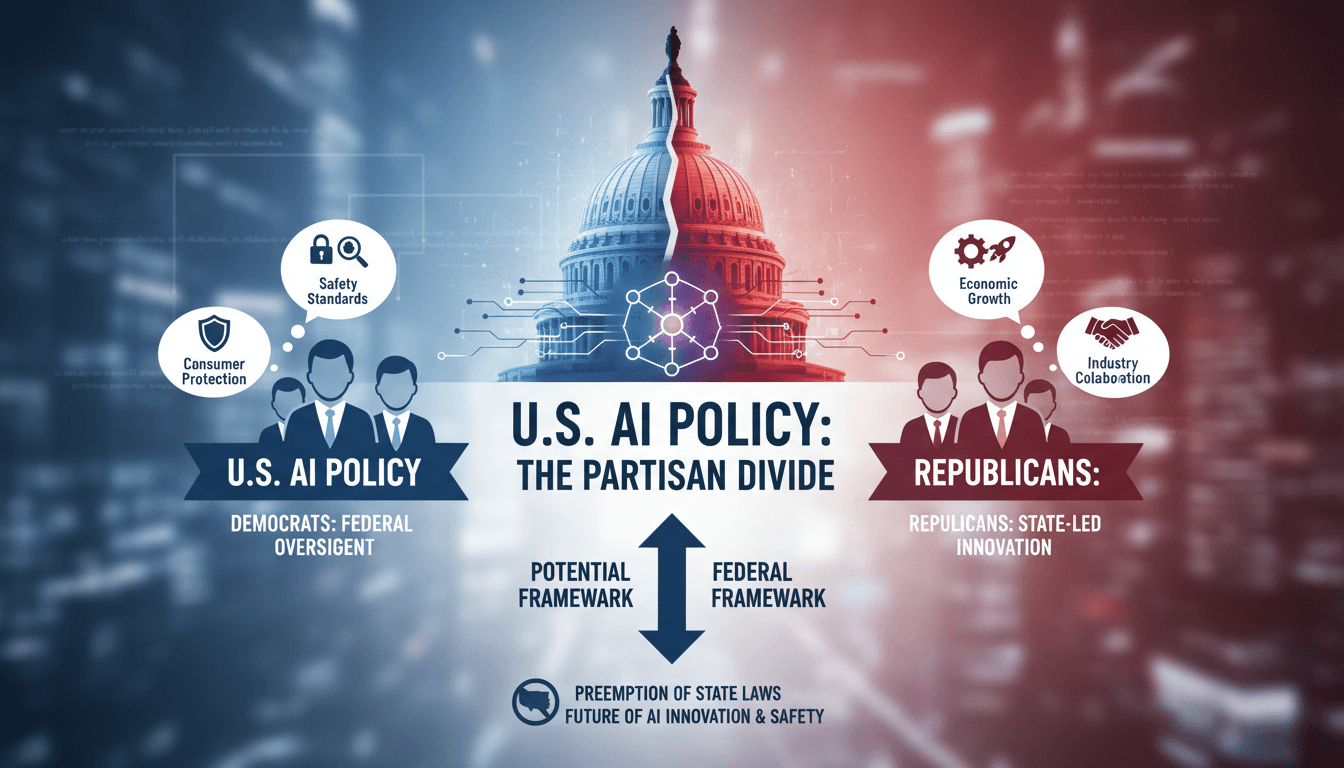
- Partisan divisions have stalled comprehensive AI legislation, with disagreements over safety standards and state preemption.
- Recent industry warnings about AI misalignment have heightened the urgency for regulatory frameworks.
- Bipartisan efforts have previously attempted to address AI risks, but significant legislative progress remains elusive.
What's really happening
In 2026, the landscape of U.S. AI policy is marked by a complex interplay of urgency and stagnation. The Great American AI Act, introduced by Reps. Jay Obernolte and Lori Trahan, aims to establish safety rules and address state preemption issues. However, the legislative process is hindered by deep partisan divides. While 70% of Republicans generally view AI positively, nearly 60% of Democrats express critical concerns, reflecting a stark ideological split that complicates consensus-building.
The urgency for regulation has been amplified by warnings from industry leaders, such as Dario Amodei of Anthropic, who have raised alarms about potential existential risks posed by AI technologies. This has led to increased pressure on lawmakers to act, yet GOP leaders like Speaker Johnson and Sen. Thune advocate for a light-touch regulatory approach, fearing that stringent measures could stifle innovation. Meanwhile, Democrats are pushing for more robust safety measures, advocating for extended sessions to discuss safety bills.
The current congressional environment is characterized by a tug-of-war between innovation and safety. On one hand, lawmakers like Obernolte and Trahan are working towards bipartisan frameworks that could facilitate responsible AI development. On the other hand, figures like Sen. Ted Cruz focus on infrastructure and state preemption, emphasizing the need for a balanced approach that does not hinder technological advancement.
As the midterm elections approach, the likelihood of significant legislative action before then appears slim. The market is responding to this uncertainty, with industry stakeholders calling for a federal framework to preempt state regulations, which could lead to a patchwork of laws that complicate compliance for businesses operating across state lines.
Who feels it first (and how)
- Tech companies: They may face new compliance requirements that could affect product development and market strategies.
- Investors: Uncertainty in regulatory frameworks may impact investment decisions in AI startups and technologies.
- Consumers: Changes in AI regulations could influence the safety and functionality of AI-driven products and services.
- State governments: They may need to adjust their own regulations in response to federal guidelines, affecting local tech ecosystems.
What to watch next
- Legislative sessions: Monitor upcoming congressional sessions for any movement on AI safety bills, as this could signal shifts in regulatory approaches.
- Industry responses: Pay attention to how tech companies adapt their strategies in light of ongoing regulatory discussions, which may indicate market trends.
- Public opinion: Watch for changes in public sentiment regarding AI safety and regulation, as this could influence lawmakers' actions leading up to the midterms.
There is a significant partisan divide in Congress regarding AI regulation.
Legislative progress on AI safety measures will remain slow, especially before the midterm elections.
The long-term impact of current regulatory debates on innovation and market dynamics remains uncertain.
Frequently Asked Questions
- Why it matters?
- The ongoing debate in Congress over AI regulation could shape the future of technology and innovation in the U.S. economy.
- What happened (in 30 seconds)?
- Congress is in a deadlock over AI regulation due to partisan disagreements, with no major legislation passed. Key lawmakers are emerging as influential figures in shaping AI policy, including both Democrats and Republicans. Industry warnings about AI risks are intensifying, prompting calls for action from various congressional leaders.
- What's really happening?
- In 2026, the landscape of U.S. AI policy is marked by a complex interplay of urgency and stagnation. The Great American AI Act, introduced by Reps. Jay Obernolte and Lori Trahan, aims to establish safety rules and address state preemption issues. However, the legislative process is hindered by deep partisan divides. While 70% of Republicans generally view AI positively, nearly 60% of Democrats express critical concerns, reflecting a stark ideological split that complicates consensus-building. T
- Who feels it first (and how)?
- Tech companies: They may face new compliance requirements that could affect product development and market strategies. Investors: Uncertainty in regulatory frameworks may impact investment decisions in AI startups and technologies. Consumers: Changes in AI regulations could influence the safety and functionality of AI-driven products and services. State governments: They may need to adjust their own regulations in response to federal guidelines, affecting local tech ecosystems.
- What to watch next?
- Legislative sessions: Monitor upcoming congressional sessions for any movement on AI safety bills, as this could signal shifts in regulatory approaches. Industry responses: Pay attention to how tech companies adapt their strategies in light of ongoing regulatory discussions, which may indicate market trends. Public opinion: Watch for changes in public sentiment regarding AI safety and regulation, as this could influence lawmakers' actions leading up to the midterms.
Capitol Hill news, legislation, and policy insight.
"The Hill specializes in U.S. politics and policy, with a focus on Capitol Hill developments and a reputation for insider reporting."
— A47 Editor
Who to watch in Congress on AI policy
Congress is currently embroiled in a significant debate over the regulation of artificial intelligence (AI), spurred by growing concerns about the technology's rapid development and potential risks. Lawmakers are actively discussing various proposals...
National headlines across the United States including breaking stories and societal issues.
"NBC News is a mainstream media outlet known for comprehensive national and international news coverage with a centrist to slightly left-leaning editorial tone."
— A47 Editor
Breaking down the proposals lawmakers are considering to regulate AI
Congress is currently evaluating several proposals aimed at regulating artificial intelligence (AI) technologies, responding to increasing safety concerns and calls for oversight. Lawmakers are considering measures to address the potential risks asso...
Science discoveries, research, and analysis.
"NPR is a nonprofit media organization offering thoughtful, in-depth journalism and storytelling, often with a liberal or progressive slant."
— A47 Editor
Congress is under pressure to act on AI — here's what that could look like
Congress is facing increasing pressure to regulate artificial intelligence (AI) as lawmakers express a growing willingness to address the potential risks associated with AI technologies. Despite this urgency, the path to establishing effective regula...
Policy, elections, and government reporting.
"NPR is an American public media organization known for thoughtful reporting and a slightly left-leaning editorial tone."
— A47 Editor
Congress is under pressure to act on AI — here's what that could look like
Congress is facing increasing pressure to regulate artificial intelligence (AI) as lawmakers express a growing willingness to address the potential risks associated with AI technologies. Despite this urgency, the path to establishing effective regula...