
Canada proposed as EU's first associate member amid U.S. trade pressures
Why it matters
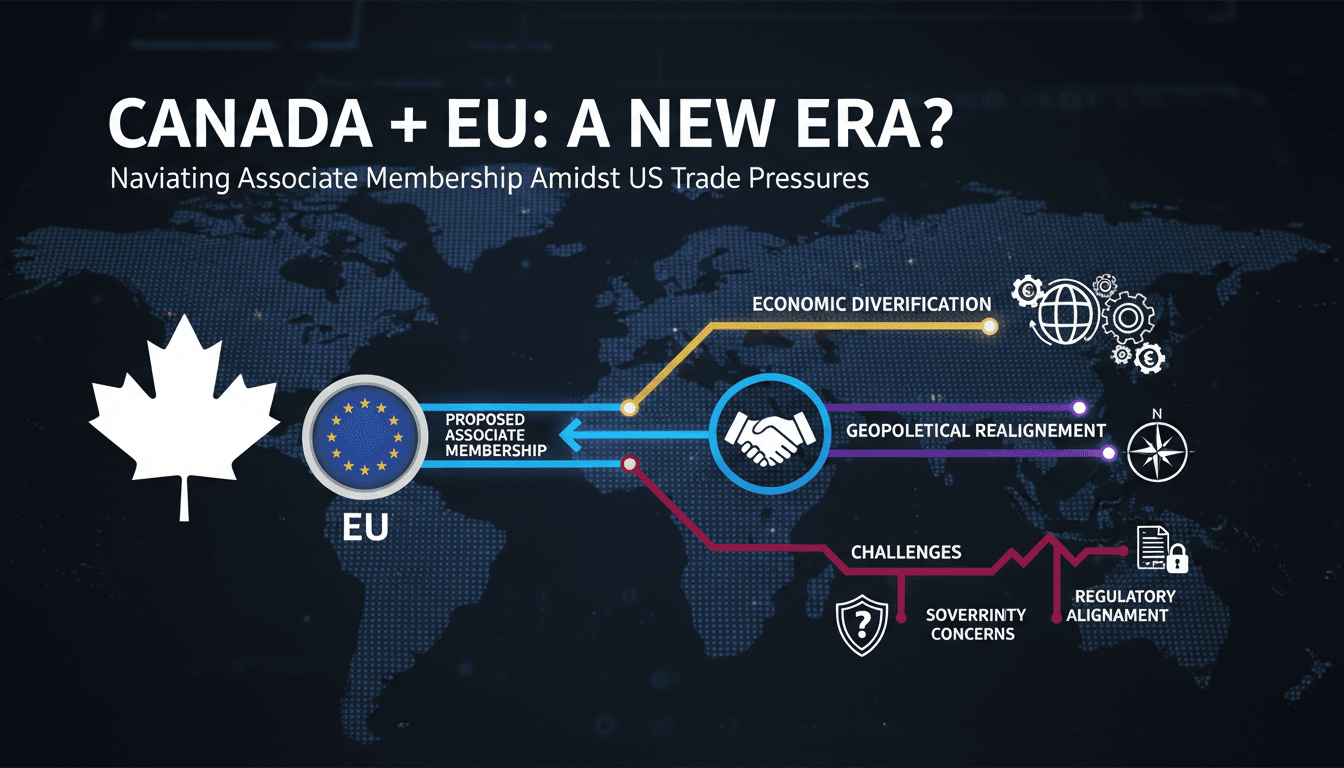
This proposal reflects Canada’s strategic pivot to diversify its economic partnerships amid U.S. trade pressures.
What happened (in 30 seconds)
- On September 16, 2026, European Commission President Ursula von der Leyen proposed Canada as the EU's first 'associate member' during her State of the Union address.
- The proposal aims to deepen cooperation in economic security, defense, technology, and Arctic matters, but lacks a clear legal framework.
- Canadian officials have downplayed the term 'associate member,' emphasizing sovereignty and rejecting any fiscal contributions to the EU budget.
The context you actually need
- Canada has been a CETA partner with the EU since 2017, focusing on free trade and economic collaboration.
- The proposal arises amid escalating U.S. tariffs and sovereignty threats under President Trump, pushing Canada to seek new alliances.
- Critics in Canada are concerned about potential regulatory alignment and fiscal obligations without clear definitions or benefits.
What's really happening
The proposal for Canada to become the EU's first 'associate member' is a significant diplomatic overture that seeks to redefine Canada-EU relations. This initiative comes at a time when Canada is feeling the pressure from the U.S. under President Trump's administration, which has employed tariffs and aggressive rhetoric that threaten Canadian economic sovereignty. The idea of an 'associate member' is particularly intriguing because it suggests a new tier of partnership that could allow Canada to engage more deeply with the EU without the full obligations of membership, which is restricted to European states under EU treaties.
However, the term 'associate member' is not legally defined within EU treaties, leading to immediate skepticism from Canadian critics. They question what this status would entail in terms of fiscal contributions to the EU budget, regulatory alignment with EU laws, and potential shifts in immigration policy. Canadian Prime Minister Mark Carney has been clear that Canada is not seeking full EU membership, which has been a consistent stance due to concerns over sovereignty. Instead, the focus is on creating a 'unique alliance' that enhances cooperation without compromising Canadian autonomy.
The proposal also highlights the EU's interest in strengthening ties with non-European partners, particularly in areas like technology and critical minerals, which are vital for both economic security and defense integration. This shift could lead to a more significant role for Canada in European markets, especially as the EU looks to diversify its supply chains and reduce reliance on other global powers.
As discussions progress, the upcoming Canada-EU summit scheduled for October 29-30, 2026, in Montreal will be crucial. It will provide a platform for both sides to clarify the implications of this proposal and address the concerns raised by critics. The outcome of these discussions could set the tone for future Canada-EU relations and influence how other non-European countries approach partnerships with the EU.
Who feels it first (and how)
- Canadian businesses: They may face new regulatory frameworks and market access conditions.
- Trade analysts: They will need to reassess trade dynamics and potential impacts on U.S.-Canada relations.
- EU diplomats: They will navigate the complexities of integrating a non-European partner into their economic framework.
What to watch next
- The Montreal summit: This will be a key indicator of how both parties define the associate membership and its implications.
- Market reactions: Watch for shifts in trade agreements or tariffs that could arise from this proposal.
- Public opinion in Canada: Growing concerns or support could influence the government's approach to the EU partnership.
The proposal aims to deepen Canada-EU ties amid U.S. pressures.
There will be ongoing discussions about the implications of the associate membership.
The specific rights and obligations associated with the proposed 'associate member' status.
Frequently Asked Questions
- Why it matters?
- This proposal reflects Canada’s strategic pivot to diversify its economic partnerships amid U.S. trade pressures.
- What happened (in 30 seconds)?
- On September 16, 2026, European Commission President Ursula von der Leyen proposed Canada as the EU's first 'associate member' during her State of the Union address. The proposal aims to deepen cooperation in economic security, defense, technology, and Arctic matters, but lacks a clear legal framework. Canadian officials have downplayed the term 'associate member,' emphasizing sovereignty and rejecting any fiscal contributions to the EU budget.
- What's really happening?
- The proposal for Canada to become the EU's first 'associate member' is a significant diplomatic overture that seeks to redefine Canada-EU relations. This initiative comes at a time when Canada is feeling the pressure from the U.S. under President Trump's administration, which has employed tariffs and aggressive rhetoric that threaten Canadian economic sovereignty. The idea of an 'associate member' is particularly intriguing because it suggests a new tier of partnership that could allow Canada to
- Who feels it first (and how)?
- Canadian businesses: They may face new regulatory frameworks and market access conditions. Trade analysts: They will need to reassess trade dynamics and potential impacts on U.S.-Canada relations. EU diplomats: They will navigate the complexities of integrating a non-European partner into their economic framework.
- What to watch next?
- The Montreal summit: This will be a key indicator of how both parties define the associate membership and its implications. Market reactions: Watch for shifts in trade agreements or tariffs that could arise from this proposal. Public opinion in Canada: Growing concerns or support could influence the government's approach to the EU partnership.
National coverage of politics and current events across Canada.
"Global News is a mainstream Canadian outlet with a centrist editorial stance, focusing on factual reporting."
— A47 Editor
How Canada-EU ‘associate member’ proposal raises questions with few answers
European Commission President Ursula von der Leyen has proposed that Canada become the first associate member of the European Union, a move that raises significant questions regarding costs and sovereignty. This proposal comes amid escalating trade t...
International stories from NPR’s global desk.
"NPR is an American public media organization known for thoughtful reporting and a slightly left-leaning editorial tone."
— A47 Editor
EU rolls out red carpet to Canada to become its first 'associate member'
The European Union's top official has endorsed Canadian Prime Minister Mark Carney's initiative for Canada to become the EU's first 'associate member,' a move aimed at strengthening ties amid increasing pressure from the United States. This proposal ...
24/7 international news from a French perspective in multiple languages.
"France 24 is viewed as a globally focused outlet with balanced coverage and a European perspective."
— A47 Editor
The 28th state? Carney's Canada draws closer to European Union
Canadian Prime Minister Mark Carney is advancing discussions for Canada to become the European Union's first associate member, a status proposed by European Commission President Ursula von der Leyen. This initiative comes as Carney prepares for a spe...
24/7 international news from a French perspective in multiple languages.
"France 24 is viewed as a globally focused outlet with balanced coverage and a European perspective."
— A47 Editor
EU: An unprecedented offer to Canada
European Commission President Ursula von der Leyen has proposed that Canada become the European Union's first associate member, a significant diplomatic gesture as trade tensions with the United States escalate under President Donald Trump's administ...
Global political, business, and cultural coverage from WSJ international desks.
"The Wall Street Journal offers extensive international reporting with a reputation for financial insight and a center-right editorial stance."
— A47 Editor
EU Chief Backs Canada’s Push to Become Bloc’s First Associate Member
European Commission President Ursula von der Leyen has proposed that Canada become the first-ever associate member of the European Union, a significant diplomatic move aimed at strengthening ties amid rising trade tensions with the United States. Thi...
Global political, business, and cultural coverage from WSJ international desks.
"The Wall Street Journal offers extensive international reporting with a reputation for financial insight and a center-right editorial stance."
— A47 Editor
What Would Canada’s Associate Membership of the EU Look Like?
The European Commission President Ursula von der Leyen has proposed that Canada become the first-ever 'associate member' of the European Union, a significant diplomatic move amid rising trade tensions with the United States. This proposal highlights ...
Global business headlines with AI angles.
"General business outlet that frequently covers AI."
— A47 Editor
Canada Could Become EU's First Associate Member. Ottowa Gets The Invite As Its Trade War With Trump Remains High.
Canada has received an invitation to potentially become the European Union's first associate member, a proposal announced by Ursula von der Leyen during her annual State of the European Union address in Strasbourg. This marks a notable change in the ...
UK and international business news, economics, and corporate coverage.
"The Guardian’s business section covers finance and markets with a progressive editorial tone."
— A47 Editor
European Union invites Canada to become first ever ‘associate member’
The European Commission President Ursula von der Leyen has invited Canada to become the first-ever 'associate member' of the European Union, emphasizing shared democratic values and common approaches to global challenges such as artificial intelligen...
News and current affairs from across Europe.
"The Guardian is known for its progressive editorial stance and in-depth analysis."
— A47 Editor
European Union invites Canada to become first ever ‘associate member’
The European Commission President Ursula von der Leyen has invited Canada to become the first-ever 'associate member' of the European Union, emphasizing shared democratic values and common approaches to global challenges such as artificial intelligen...
International coverage of politics, culture, and current affairs.
"BBC News is widely regarded as a reputable international news organization, known for its impartial tone and public service mandate."
— A47 Editor
EU chief backs plan for Canada to become 'associate member'
European Commission President Ursula von der Leyen has expressed support for Canada to become the European Union's first 'associate member,' a move aimed at strengthening diplomatic and economic ties amid escalating trade tensions with the United Sta...
International coverage of politics, security, and social issues.
"Global News is a mainstream Canadian outlet with a centrist editorial stance, focusing on factual reporting."
— A47 Editor
EU wants Canada as its first ‘associate member.’ What does that mean?
European Commission President Ursula von der Leyen has proposed that Canada become the European Union's first associate member during her State of the Union address, marking a significant diplomatic shift as trade tensions with the United States rise...
European current affairs, EU politics, and regional developments.
"France 24 is viewed as a globally focused outlet with balanced coverage and a European perspective."
— A47 Editor
EU chief invites Canada to be first-ever ‘associate member’
European Commission President Ursula von der Leyen proposed that Canada could become the European Union's first 'associate member' during her annual State of the European Union address, attended by Canadian Prime Minister Mark Carney. This proposal r...