
SEC and CFTC Initiate Crypto Rulemaking After CLARITY Act Vote Fails
Why it matters
The failure of the CLARITY Act shifts regulatory authority to agencies, impacting how digital assets are governed and traded.
What happened (in 30 seconds)
- The Senate voted 49-50 against advancing the Digital Asset Market Clarity Act on September 15, 2026, failing to meet the 60-vote threshold.
- SEC and CFTC leaders announced they would proceed with rulemaking under existing authority, despite the legislative setback.
- Market reaction included significant outflows from Bitcoin ETFs, totaling $450.33 million on the day of the vote.
The context you actually need
- The CLARITY Act aimed to create a federal framework for digital asset regulation, dividing authority between the SEC and CFTC.
- Partisan disagreements over ethics provisions and presidential conflicts of interest hindered the bill's progress in the Senate.
- Industry leaders expressed disappointment but acknowledged that regulators could still provide clarity through independent initiatives.
What's really happening
The failure of the CLARITY Act represents a significant pivot in the regulatory landscape for digital assets in the U.S. The Senate's inability to pass the bill, which had garnered support from both industry and some political factions, underscores the deepening partisan divides that complicate legislative efforts. The 49-50 vote reflects not just a failure to achieve consensus on crypto regulation but also highlights broader concerns about ethics and conflicts of interest, particularly in light of President Trump's reported $1.4 billion in crypto-related earnings.
With the SEC and CFTC now taking the lead, the focus shifts from legislative action to agency-led initiatives. SEC Chair Paul Atkins and CFTC Chairman Mike Selig have both committed to advancing rules that will govern the digital asset market, leveraging their existing statutory authority. This means that while the legislative route has stalled, regulatory clarity may still emerge, albeit through a different process.
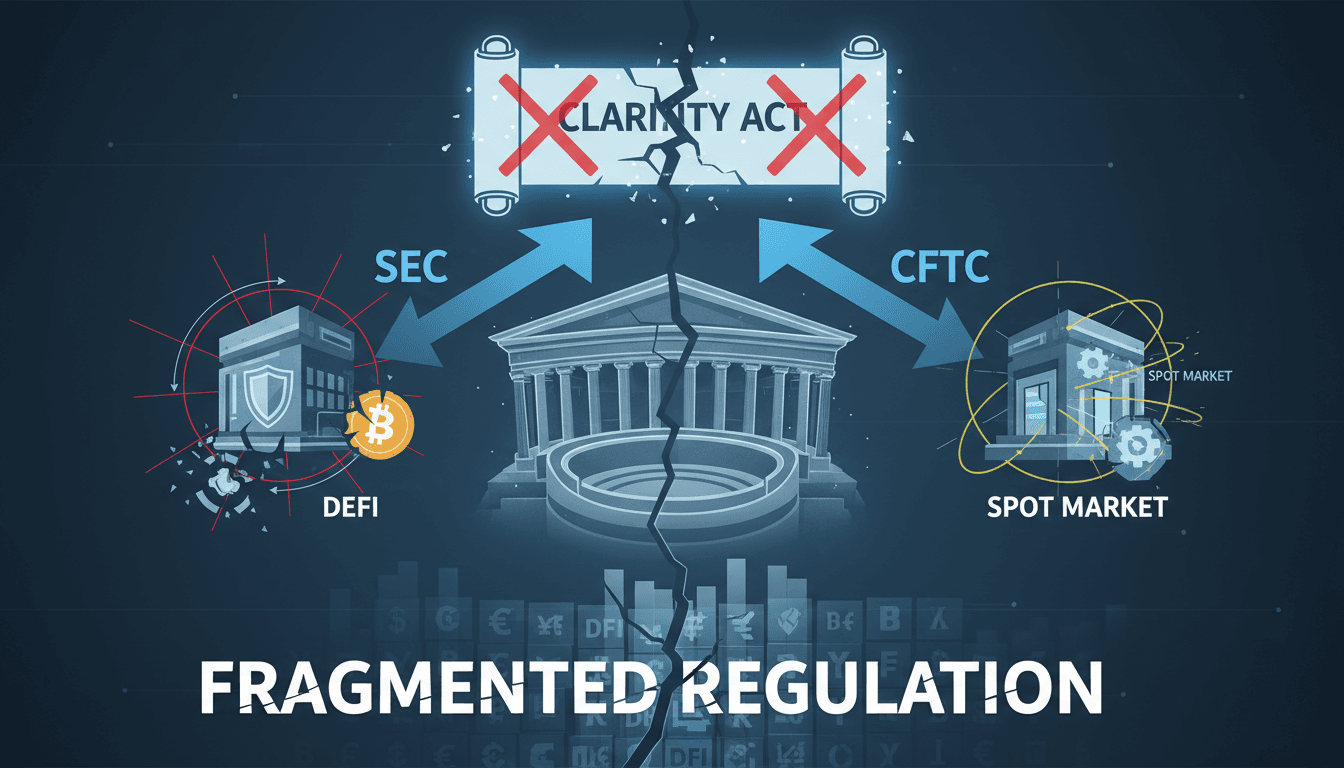
The implications of this shift are profound. The SEC and CFTC will likely prioritize rulemaking that addresses registration requirements for exchanges and stablecoin provisions, which were central to the CLARITY Act. This could lead to a more fragmented regulatory environment, as different agencies may interpret their mandates differently, creating uncertainty for market participants.
Moreover, the market's immediate reaction—evidenced by the $450.33 million outflow from Bitcoin ETFs—indicates a lack of confidence among investors in the current regulatory framework. This could lead to increased volatility in the crypto markets as participants adjust to the evolving landscape.
As the SEC and CFTC move forward, they will face pressure from both industry stakeholders and consumer advocates. Industry leaders like Coinbase's Brian Armstrong and Circle's Jeremy Allaire have expressed hope that independent regulatory actions can still provide the clarity needed for market stability. However, critics remain concerned about the adequacy of ethics provisions and the potential for overreach by regulators.
In summary, while the legislative route has been blocked, the regulatory landscape is poised for significant changes that could redefine how digital assets are managed and traded in the U.S.
Who feels it first (and how)
- Crypto exchanges: They will need to adapt to new compliance requirements set by the SEC and CFTC.
- Investors: Market volatility may increase as regulatory clarity evolves, impacting investment strategies.
- Financial institutions: Banks and traditional finance entities may face new challenges in integrating digital assets into their services.
What to watch next
- Regulatory announcements: Keep an eye on upcoming rules from the SEC and CFTC, as these will shape the operational landscape for crypto.
- Market reactions: Monitor how investors respond to regulatory changes, particularly in terms of ETF flows and asset prices.
- Legislative efforts: Watch for any renewed attempts to pass crypto legislation, especially as the 2026 midterms approach.
The SEC and CFTC will proceed with independent rulemaking.
Increased market volatility as investors react to regulatory developments.
The long-term impact of agency-led initiatives on the overall crypto market structure.
Frequently Asked Questions
- Why it matters?
- The failure of the CLARITY Act shifts regulatory authority to agencies, impacting how digital assets are governed and traded.
- What happened (in 30 seconds)?
- The Senate voted 49-50 against advancing the Digital Asset Market Clarity Act on September 15, 2026, failing to meet the 60-vote threshold. SEC and CFTC leaders announced they would proceed with rulemaking under existing authority, despite the legislative setback. Market reaction included significant outflows from Bitcoin ETFs, totaling $450.33 million on the day of the vote.
- What's really happening?
- The failure of the CLARITY Act represents a significant pivot in the regulatory landscape for digital assets in the U.S. The Senate's inability to pass the bill, which had garnered support from both industry and some political factions, underscores the deepening partisan divides that complicate legislative efforts. The 49-50 vote reflects not just a failure to achieve consensus on crypto regulation but also highlights broader concerns about ethics and conflicts of interest, particularly in light
- Who feels it first (and how)?
- Crypto exchanges: They will need to adapt to new compliance requirements set by the SEC and CFTC. Investors: Market volatility may increase as regulatory clarity evolves, impacting investment strategies. Financial institutions: Banks and traditional finance entities may face new challenges in integrating digital assets into their services.
- What to watch next?
- Regulatory announcements: Keep an eye on upcoming rules from the SEC and CFTC, as these will shape the operational landscape for crypto. Market reactions: Monitor how investors respond to regulatory changes, particularly in terms of ETF flows and asset prices. Legislative efforts: Watch for any renewed attempts to pass crypto legislation, especially as the 2026 midterms approach.
Covers Bitcoin plus altcoin news, market updates, and educational resources.
"Bitcoin.com provides news, market data, and guides focused on Bitcoin and the wider crypto industry."
— A47 Editor
SEC and CFTC Take the Wheel After CLARITY Vote Failure
The U.S. Senate recently failed to advance the CLARITY Act, a legislative proposal aimed at establishing clearer regulations for the cryptocurrency sector, resulting in a significant setback for regulatory clarity in the industry. This failure leaves...
Covers blockchain, cryptocurrency news, project analysis, and market insights.
"Cointelegraph is a leading crypto-focused media outlet known for timely news, analysis, and educational content related to blockchain and digital assets."
— A47 Editor
Bernstein expects ‘aggressive’ rulemaking from SEC, CFTC, following CLARITY Act failure
Following the failure of the CLARITY Act, Bernstein anticipates that the SEC and CFTC will engage in aggressive rulemaking to address the regulatory void left by the stalled legislation. The Act aimed to provide a comprehensive framework for cryptocu...
Real-time updates, analysis, and reports on the blockchain and cryptocurrency sectors.
"Crypto News delivers real-time updates, analysis, and reports on the blockchain and cryptocurrency sectors."
— A47 Editor
Former CFTC chair says US crypto rules can advance despite CLARITY Act failure
Former Commodity Futures Trading Commission Chairman J. Christopher Giancarlo stated that U.S. regulators can continue to develop cryptocurrency regulations despite the Senate's recent failure to advance the CLARITY Act, which was voted down 49-50. G...