
Greenland Signs Trilateral Security Pact with US and Denmark Expanding Military Presence
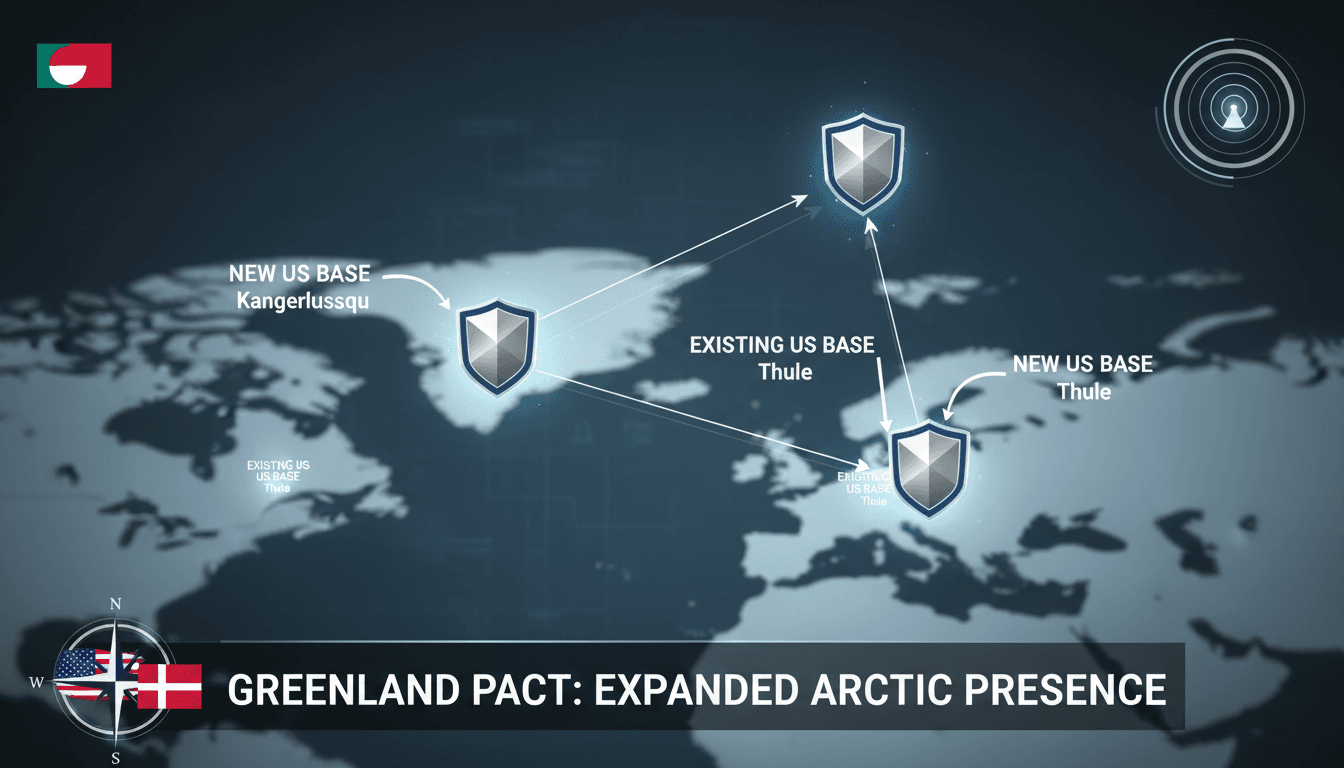
Why it matters
This pact solidifies US military presence in a strategically vital region while affirming Greenland's autonomy, influencing international relations and security policies.
What happened (in 30 seconds)
- Greenland leaders celebrated a heroes' welcome in Nuuk after signing a trilateral security pact with the US and Denmark on September 22, 2026.
- The agreement allows the establishment of two new US military bases in Greenland while reaffirming the territory's right to self-determination.
- Diplomatic tensions resolved as the pact addresses US security concerns over Arctic competition without compromising Greenland's sovereignty.
The context you actually need
- US interest in Greenland has historically been driven by its strategic location and resources, particularly amid rising competition from Russia and China in the Arctic.
- Previous agreements between the US and Denmark laid the groundwork for this pact, but tensions escalated in early 2026, necessitating new negotiations.
- The pact restricts non-NATO and EU influence in sensitive sectors, ensuring that Greenland's autonomy is preserved even in potential future independence scenarios.
What's really happening
The Greenland-US-Denmark trilateral security pact, signed on September 22, 2026, marks a significant shift in Arctic security dynamics. The agreement allows the US to establish two new military bases at Narsarsuaq and Mestersvig, alongside the modernization of the existing Pituffik Space Base. This expansion is not merely about military presence; it reflects a broader strategy to counteract growing geopolitical tensions in the Arctic region, particularly from Russia and China.
The pact is a response to prolonged diplomatic friction, which began with US assertions of interest in acquiring or controlling Greenland. This interest was framed within the context of national security, as the Arctic becomes increasingly contested territory. The agreement effectively resolves these tensions by accommodating US military requirements while explicitly reaffirming Greenland's right to self-determination. This dual focus on security and sovereignty is crucial, as it allows Greenland to enhance its defense capabilities without ceding control over its territory.
Moreover, the pact restricts sensitive investments to NATO, EU, or partner entities, ensuring that Greenland's strategic sectors remain insulated from non-allied influences. This is particularly important given the increasing interest from non-NATO countries in the Arctic's resources and shipping routes. By maintaining a strong NATO alignment, the agreement not only secures Greenland's interests but also reinforces the collective security framework that underpins the alliance.
The Greenlandic delegation's return to Nuuk was met with public acclaim, signaling strong domestic support for the pact. This support is rooted in the understanding that enhanced security cooperation with the US and Denmark does not come at the cost of Greenland's autonomy. The deal is framed as a diplomatic resolution that addresses shared Arctic security needs while preserving the territory's sovereignty.
As the implementation of expanded US military facilities begins, the implications of this agreement will extend beyond Greenland. The pact is likely to influence Arctic geopolitics, shaping the interactions between NATO allies and potential adversaries in the region. The strategic importance of Greenland will only grow as climate change opens new shipping routes and access to untapped resources, making this agreement a pivotal moment in Arctic security.
Who feels it first (and how)
- Greenlandic citizens: They gain enhanced security without compromising sovereignty, fostering national pride.
- US military: Increased operational capabilities in the Arctic, enhancing strategic positioning against adversaries.
- Danish government: Strengthened ties with the US and Greenland, reinforcing Denmark's role in Arctic security.
- Global defense contractors: Potential opportunities for contracts related to the expansion of military facilities.
What to watch next
- Implementation of military bases: Monitor the progress of establishing the new bases at Narsarsuaq and Mestersvig, as this will indicate the US's commitment to Arctic security.
- Geopolitical responses: Watch for reactions from Russia and China, as they may adjust their strategies in response to increased US military presence.
- Greenland's political landscape: Observe any shifts in Greenland's political dynamics, particularly regarding its autonomy and future relations with Denmark and the US.
The pact has been signed and ratified, with implementation underway for expanded US military facilities.
Increased geopolitical tensions in the Arctic as other nations respond to the US military expansion.
The long-term impact on Greenland's autonomy and how it will navigate its relationships with both NATO allies and non-NATO countries.
Frequently Asked Questions
- Why it matters?
- This pact solidifies US military presence in a strategically vital region while affirming Greenland's autonomy, influencing international relations and security policies.
- What happened (in 30 seconds)?
- Greenland leaders celebrated a heroes' welcome in Nuuk after signing a trilateral security pact with the US and Denmark on September 22, 2026. The agreement allows the establishment of two new US military bases in Greenland while reaffirming the territory's right to self-determination. Diplomatic tensions resolved as the pact addresses US security concerns over Arctic competition without compromising Greenland's sovereignty.
- What's really happening?
- The Greenland-US-Denmark trilateral security pact, signed on September 22, 2026, marks a significant shift in Arctic security dynamics. The agreement allows the US to establish two new military bases at Narsarsuaq and Mestersvig, alongside the modernization of the existing Pituffik Space Base. This expansion is not merely about military presence; it reflects a broader strategy to counteract growing geopolitical tensions in the Arctic region, particularly from Russia and China. The pact is a res
- Who feels it first (and how)?
- Greenlandic citizens: They gain enhanced security without compromising sovereignty, fostering national pride. US military: Increased operational capabilities in the Arctic, enhancing strategic positioning against adversaries. Danish government: Strengthened ties with the US and Greenland, reinforcing Denmark's role in Arctic security. Global defense contractors: Potential opportunities for contracts related to the expansion of military facilities.
- What to watch next?
- Implementation of military bases: Monitor the progress of establishing the new bases at Narsarsuaq and Mestersvig, as this will indicate the US's commitment to Arctic security. Geopolitical responses: Watch for reactions from Russia and China, as they may adjust their strategies in response to increased US military presence. Greenland's political landscape: Observe any shifts in Greenland's political dynamics, particularly regarding its autonomy and future relations with Denmark and the US.
News and current affairs from across Europe.
"The Guardian is known for its progressive editorial stance and in-depth analysis."
— A47 Editor
Greenland leaders receive heroes' welcome after signing security pact with US and Denmark – video
Greenland's leaders received a warm welcome in Nuuk after signing a security agreement with the United States and Denmark, which allows for an expanded U.S. military presence on the island while reaffirming Greenland's right to self-determination. Th...
International coverage of politics, culture, and current affairs.
"BBC News is widely regarded as a reputable international news organization, known for its impartial tone and public service mandate."
— A47 Editor
US to build two military bases in Greenland under new deal with Denmark
The United States has signed a defense agreement with Denmark to establish two military bases in Greenland, reaffirming Denmark's sovereignty over the territory. This deal was formalized during the UN General Assembly and aims to enhance U.S. militar...
Global political, business, and cultural coverage from WSJ international desks.
"The Wall Street Journal offers extensive international reporting with a reputation for financial insight and a center-right editorial stance."
— A47 Editor
Here’s What Trump’s Greenland Deal Means for the U.S.
President Donald Trump has signed a significant agreement with Denmark and Greenland, which allows for an expanded U.S. military presence on the Arctic island. This deal aims to enhance security in the Arctic region while respecting Danish sovereignt...
Comprehensive coverage of global events, politics, and international issues.
"NBC News is a mainstream outlet known for comprehensive national and international coverage with a centrist to slightly left-leaning editorial tone."
— A47 Editor
Trump signs deal with Denmark over U.S. military presence in Greenland
President Donald Trump signed a significant agreement with Denmark at the United Nations to enhance the U.S. military presence in Greenland, a move that underscores the strategic importance of the Arctic region. This deal aims to bolster security whi...
Arabic-language political and world news coverage for UAE readers.
"Emarat Al Youm world coverage usually presents international developments through a UAE and Arab audience lens."
— A47 Editor
ترامب يوقع اتفاقا مع الدنمارك وغرينلاند لتعزيز الأمن في القطب الشمالي ترامب يوقع اتفاقا مع الدنمارك وغرينلاند لتعزيز الأمن في القطب الشمالي
U.S. President Donald Trump has signed an agreement with Denmark and Greenland aimed at enhancing security in the Arctic and the North Atlantic. This agreement reflects a collaborative effort to address security concerns in these strategically import...