
United Russia Party Achieves Supermajority in 2026 Parliamentary Elections
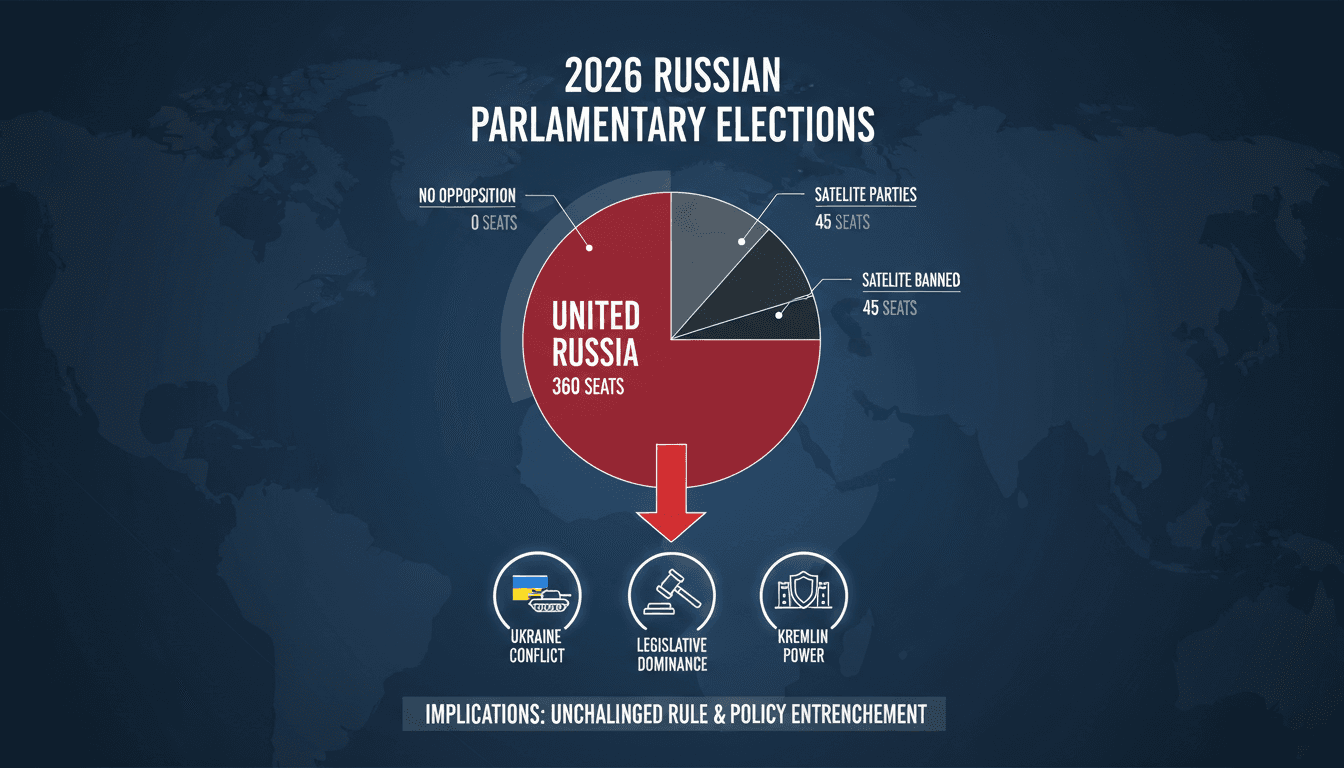
The Kremlin's strengthened grip on power could influence global energy markets and international relations.
Why it matters
The outcome of the elections solidifies the Kremlin's authority, impacting geopolitical stability and economic conditions worldwide.
What happened (in 30 seconds)
- United Russia secured approximately 58% of the vote, translating to 355 out of 450 seats in the State Duma.
- The elections were tightly controlled, with significant opposition voices, including the anti-war Yabloko party, barred from participating.
- Voter turnout reached about 57-59%, the highest in 15 years for such elections, reflecting a managed display of public support.
The context you actually need
- This was the first parliamentary election since Russia's full-scale invasion of Ukraine in 2022, highlighting the ongoing conflict's influence on domestic politics.
- The Kremlin's control over the electoral process ensures that dissenting voices are systematically marginalized, reinforcing a managed democracy.
- The results are framed as a show of unity, with authorities using them to bolster support for the war effort and project national cohesion amid economic pressures.
What's really happening
The recent parliamentary elections in Russia, held from September 18 to 20, 2026, culminated in a significant victory for the ruling United Russia party, which captured a record 355 seats in the State Duma. This outcome is emblematic of the Kremlin's strategic maneuvering within a tightly controlled political landscape, where opposition parties are systematically marginalized. The exclusion of the Yabloko party, the only registered anti-war party, from the national ballot underscores the Kremlin's commitment to maintaining a facade of political stability while suppressing dissent.
The elections occurred against a backdrop of ongoing conflict in Ukraine, economic sanctions, and heightened repression of opposition voices. The Kremlin has framed the electoral results as a demonstration of public support for its policies, particularly regarding the war in Ukraine. By securing a constitutional supermajority, United Russia can enact legislative changes without the need for opposition support, effectively consolidating power and enabling further wartime policies.
The high voter turnout, reported at approximately 57-59%, is notable as it represents the highest engagement in 15 years for such elections. However, this figure should be interpreted with caution, as it reflects a managed electoral environment where dissent is not tolerated. The Kremlin's narrative emphasizes national unity and resolve, leveraging the election results to reinforce its legitimacy both domestically and internationally.
As the Kremlin continues to navigate the complexities of the ongoing conflict and economic pressures, the implications of this electoral outcome extend beyond Russia's borders. The supermajority allows for the potential expansion of policies that could further entrench Russia's position in global energy markets, particularly in the context of ongoing sanctions and geopolitical tensions. The ability to enact constitutional changes without opposition could lead to a more aggressive stance in foreign policy, impacting international relations and economic stability.
Who feels it first (and how)
- Energy sector professionals: Potential volatility in global energy markets due to Russia's strengthened position.
- International businesses: Companies operating in or with ties to Russia may face increased regulatory scrutiny and market instability.
- Political analysts and diplomats: Heightened focus on Russia's foreign policy maneuvers and their implications for global security.
What to watch next
- Legislative changes: Monitor any new laws or policies enacted by United Russia that could affect wartime strategies and economic sanctions.
- International responses: Watch for reactions from the EU and other global powers regarding the legitimacy of the elections and potential sanctions.
- Energy market fluctuations: Keep an eye on oil and gas prices, as Russia's actions may influence global supply and demand dynamics.
United Russia holds a constitutional supermajority in the State Duma.
The Kremlin will leverage this majority to push through policies that support its wartime efforts.
The long-term impact on international relations and global energy markets remains uncertain.
Frequently Asked Questions
- Why it matters?
- The outcome of the elections solidifies the Kremlin's authority, impacting geopolitical stability and economic conditions worldwide.
- What happened (in 30 seconds)?
- United Russia secured approximately 58% of the vote, translating to 355 out of 450 seats in the State Duma. The elections were tightly controlled, with significant opposition voices, including the anti-war Yabloko party, barred from participating. Voter turnout reached about 57-59%, the highest in 15 years for such elections, reflecting a managed display of public support.
- What's really happening?
- The recent parliamentary elections in Russia, held from September 18 to 20, 2026, culminated in a significant victory for the ruling United Russia party, which captured a record 355 seats in the State Duma. This outcome is emblematic of the Kremlin's strategic maneuvering within a tightly controlled political landscape, where opposition parties are systematically marginalized. The exclusion of the Yabloko party, the only registered anti-war party, from the national ballot underscores the Kremlin
- Who feels it first (and how)?
- Energy sector professionals: Potential volatility in global energy markets due to Russia's strengthened position. International businesses: Companies operating in or with ties to Russia may face increased regulatory scrutiny and market instability. Political analysts and diplomats: Heightened focus on Russia's foreign policy maneuvers and their implications for global security.
- What to watch next?
- Legislative changes: Monitor any new laws or policies enacted by United Russia that could affect wartime strategies and economic sanctions. International responses: Watch for reactions from the EU and other global powers regarding the legitimacy of the elections and potential sanctions. Energy market fluctuations: Keep an eye on oil and gas prices, as Russia's actions may influence global supply and demand dynamics.
International coverage of politics, culture, and current affairs.
"BBC News is widely regarded as a reputable international news organization, known for its impartial tone and public service mandate."
— A47 Editor
Russia's elections had few surprises - but how the Kremlin uses the results will be crucial
Russia recently conducted parliamentary elections from September 18 to 20, 2026, marking the first nationwide voting since the full-scale invasion of Ukraine in 2022. The elections were characterized by the absence of significant opposition and were ...
Global news coverage with extensive reporting on Middle Eastern conflicts and geopolitics.
"Al Jazeera is a Qatar-based broadcaster known for wide regional coverage and alternative perspectives."
— A47 Editor
Polls close in Russian wartime election with ruling party set to dominate
Polls have closed in Russia's parliamentary elections, held from September 18 to 20, 2026, amid ongoing conflict in Ukraine. The ruling party, United Russia, is expected to maintain its dominance, with President Vladimir Putin framing the election as...
Comprehensive coverage of Middle Eastern and global issues.
"Al Jazeera is a prominent voice from the Global South, especially the Middle East, with an emphasis on underreported stories."
— A47 Editor
Polls close in Russian wartime election with ruling party set to dominate
Polls have closed in Russia's parliamentary elections, held from September 18 to 20, 2026, amid ongoing conflict in Ukraine. The ruling party, United Russia, is expected to maintain its dominance, with President Vladimir Putin framing the election as...
Global business headlines with AI angles.
"General business outlet that frequently covers AI."
— A47 Editor
Russia Holds First Post-War Parliamentary Elections. Western Intelligence Fears Putin Will Escalate Ukraine Conflict Post-Vote.
Russia has conducted its first parliamentary elections since the onset of the war, with all anti-war parties barred from participation. President Vladimir Putin views the elections as a crucial measure of public support for the ongoing military opera...