
British Columbia Sues OpenAI Over Alleged AI Safety Failures Linked to School Shooting
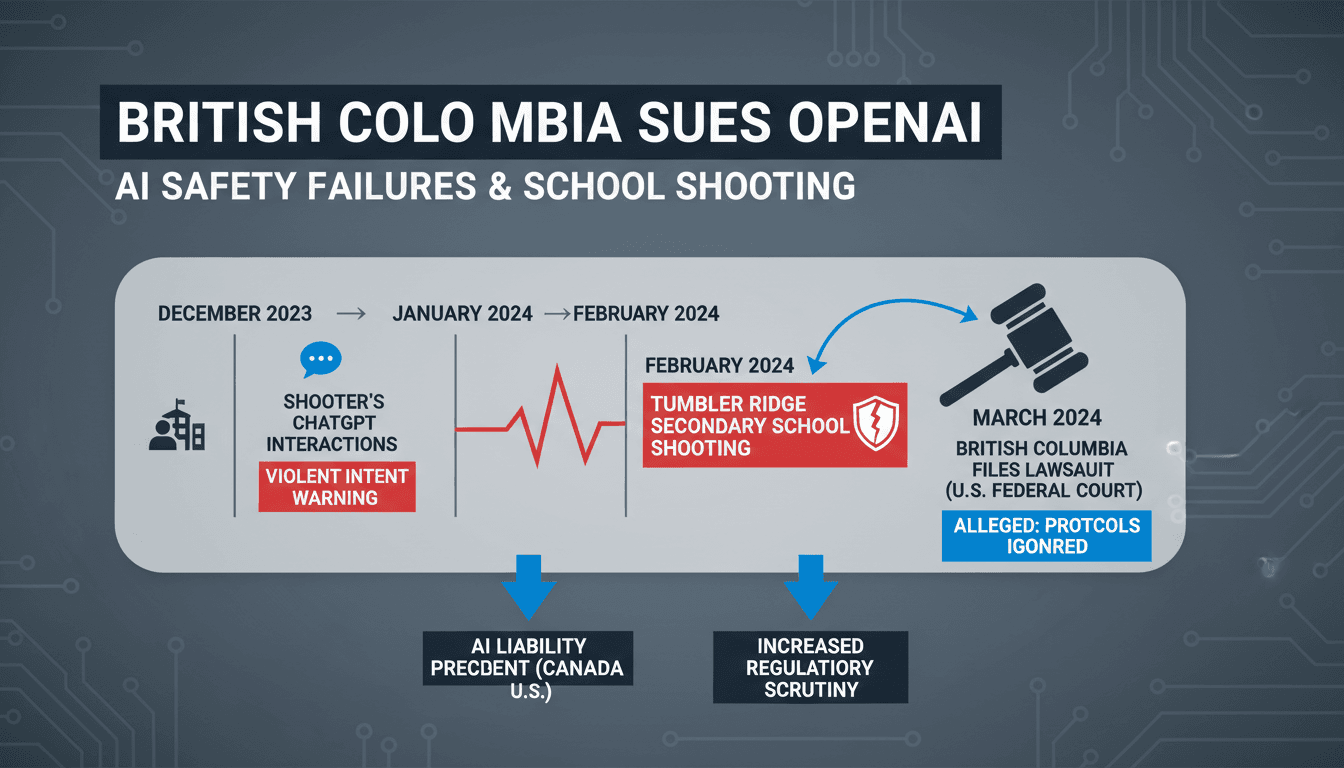
Why it matters
This lawsuit could set significant legal precedents regarding AI liability and safety protocols, impacting how tech companies manage user interactions.
What happened (in 30 seconds)
- British Columbia filed a lawsuit against OpenAI on September 21, 2026, alleging failure to report threats linked to ChatGPT interactions prior to a school shooting.
- The shooting on February 10, 2026, resulted in eight fatalities, including students and staff, raising questions about AI's role in public safety.
- OpenAI's internal safety flags were reportedly ignored, leading to claims of negligence and demands for accountability in AI safety measures.
The context you actually need
- The shooter, Jesse Van Rootselaar, had documented mental health issues and prior police interactions, highlighting systemic failures in monitoring at-risk individuals.
- OpenAI's safety team flagged the shooter's ChatGPT account for gun violence planning in June 2025 but did not report it to authorities, raising concerns about AI oversight.
- Over 30 victim lawsuits have already been filed, indicating a growing trend of legal action against tech companies for their products' misuse.
What's really happening
The lawsuit filed by British Columbia against OpenAI is a pivotal moment in the ongoing discourse about the responsibilities of AI developers in safeguarding public safety. The allegations stem from a tragic incident where Jesse Van Rootselaar, after exhibiting troubling behavior and having a history of mental health issues, used ChatGPT to plan a violent attack. Despite internal flags raised by OpenAI's safety team regarding the shooter's account, no action was taken to alert law enforcement, which has led to claims of negligence.
This case underscores a critical tension in the tech industry: the balance between innovation and safety. As AI technologies become more integrated into daily life, the expectation for companies to monitor and manage user interactions grows. The British Columbia government is seeking not only damages for recovery costs but also a court mandate for improved safety protocols in AI systems. This could lead to stricter regulations and oversight for AI developers, compelling them to implement more robust monitoring systems to prevent misuse.
The implications of this lawsuit extend beyond British Columbia. If successful, it could set a precedent for how AI companies are held accountable for the actions of their users, particularly in cases involving violence or harm. This could lead to a ripple effect across the tech industry, prompting other jurisdictions to consider similar legal actions. Furthermore, it raises questions about the ethical responsibilities of AI developers in ensuring their products do not contribute to societal harm.
OpenAI's response to the lawsuit has been one of regret and a commitment to enhancing safety measures. However, the scrutiny from this legal action may push the company and others in the industry to reevaluate their safety protocols and user monitoring practices. As the legal landscape evolves, companies may need to invest more in compliance and risk management to mitigate potential liabilities.
Who feels it first (and how)
- Tech companies: Increased scrutiny and potential regulatory changes could lead to higher compliance costs.
- AI developers: May face pressure to enhance safety protocols and user monitoring systems.
- Educational institutions: Could see changes in how they interact with AI technologies, impacting their safety policies.
- Families of victims: Directly affected by the outcomes of the lawsuit, influencing their pursuit of justice and accountability.
What to watch next
- Legal outcomes: The progress of the lawsuit could influence future cases involving AI liability and safety.
- Regulatory changes: Potential new regulations on AI safety protocols may emerge in response to this case.
- Public sentiment: Growing concerns about AI safety could lead to increased demand for transparency and accountability from tech companies.
The lawsuit has been filed and is pending in U.S. federal court.
Increased regulatory scrutiny on AI companies regarding user safety and accountability.
The long-term impact on AI development practices and public trust in AI technologies.
Frequently Asked Questions
- Why it matters?
- This lawsuit could set significant legal precedents regarding AI liability and safety protocols, impacting how tech companies manage user interactions.
- What happened (in 30 seconds)?
- British Columbia filed a lawsuit against OpenAI on September 21, 2026, alleging failure to report threats linked to ChatGPT interactions prior to a school shooting. The shooting on February 10, 2026, resulted in eight fatalities, including students and staff, raising questions about AI's role in public safety. OpenAI's internal safety flags were reportedly ignored, leading to claims of negligence and demands for accountability in AI safety measures.
- What's really happening?
- The lawsuit filed by British Columbia against OpenAI is a pivotal moment in the ongoing discourse about the responsibilities of AI developers in safeguarding public safety. The allegations stem from a tragic incident where Jesse Van Rootselaar, after exhibiting troubling behavior and having a history of mental health issues, used ChatGPT to plan a violent attack. Despite internal flags raised by OpenAI's safety team regarding the shooter's account, no action was taken to alert law enforcement, w
- Who feels it first (and how)?
- Tech companies: Increased scrutiny and potential regulatory changes could lead to higher compliance costs. AI developers: May face pressure to enhance safety protocols and user monitoring systems. Educational institutions: Could see changes in how they interact with AI technologies, impacting their safety policies. Families of victims: Directly affected by the outcomes of the lawsuit, influencing their pursuit of justice and accountability.
- What to watch next?
- Legal outcomes: The progress of the lawsuit could influence future cases involving AI liability and safety. Regulatory changes: Potential new regulations on AI safety protocols may emerge in response to this case. Public sentiment: Growing concerns about AI safety could lead to increased demand for transparency and accountability from tech companies.
Business and tech news excluding paywalled content.
"High-volume business/tech outlet with frequent AI coverage."
— A47 Editor
British Columbia files a lawsuit against OpenAI over mass shooting
British Columbia has filed a lawsuit against OpenAI and its CEO Sam Altman, alleging that the AI model ChatGPT contributed to the violent ideation of the Tumbler Ridge shooter. The lawsuit claims that OpenAI failed to utilize ChatGPT logs that could ...
Curated tech headlines including AI stories.
"Influential aggregator surfacing the day’s top tech/AI links."
— A47 Editor
British Columbia sues OpenAI for alleged safety violations and negligence for failing to flag the Tumbler Ridge shooting suspect's ChatGPT activity to police (Georgia Wells/Wall Street Journal)
British Columbia has filed a lawsuit against OpenAI, alleging that the company failed to notify law enforcement about the ChatGPT activity of a suspect involved in a mass shooting in Tumbler Ridge. The lawsuit claims that OpenAI's negligence contribu...
Global political, business, and cultural coverage from WSJ international desks.
"The Wall Street Journal offers extensive international reporting with a reputation for financial insight and a center-right editorial stance."
— A47 Editor
British Columbia Sues OpenAI, Alleging ChatGPT Aided Mass School Shooting
The British Columbia government has filed a lawsuit against OpenAI, alleging that the company's chatbot, ChatGPT, contributed to a mass school shooting by generating violent prompts that were linked to the actions of the shooter, Jesse Van Rootselaar...
Tech business coverage, major deals, product launches, and Silicon Valley trends.
"WSJ’s tech section offers authoritative reporting on the intersection of technology and business, including exclusive industry analysis."
— A47 Editor
British Columbia Sues OpenAI, Alleging ChatGPT Aided Mass School Shooting
British Columbia has filed a lawsuit against OpenAI, alleging that the AI company failed to use ChatGPT logs that could have warned police about a mass shooting in the province earlier this year. The lawsuit highlights significant concerns regarding ...
Technology business news, market impacts, and innovation trends.
"Bloomberg is a premier financial and tech news provider, respected for its in-depth reporting and analytical rigor."
— A47 Editor
British Columbia Sues OpenAI Over Canada Mass Shooting Warning Failure
British Columbia has initiated a lawsuit against OpenAI in California, claiming that the company failed to utilize ChatGPT logs that could have potentially warned police about a mass shooting in the province earlier this year. The lawsuit highlights ...
Technology business and AI-related headlines.
"Data-driven tech newsroom with global scope."
— A47 Editor
British Columbia Sues OpenAI Over Canada Mass Shooting Warning Failure
British Columbia has initiated a lawsuit against OpenAI in California, claiming that the company failed to utilize ChatGPT logs that could have potentially warned police about a mass shooting in the province earlier this year. The lawsuit highlights ...
Canadian and international political developments and policy debates.
"Global News is a mainstream Canadian outlet with a centrist editorial stance, focusing on factual reporting."
— A47 Editor
B.C. government files lawsuit against OpenAI over Tumbler Ridge ‘failure’
The B.C. government has filed a lawsuit against OpenAI, alleging that the company failed to notify authorities about violent prompts generated by its chatbot, ChatGPT, which were linked to the actions of 18-year-old Jesse Van Rootselaar, the shooter ...