
United Russia Secures Supermajority in 2026 Parliamentary Elections
Why it matters
The outcome of these elections solidifies the Kremlin's power, impacting international relations and economic policies.
What happened (in 30 seconds)
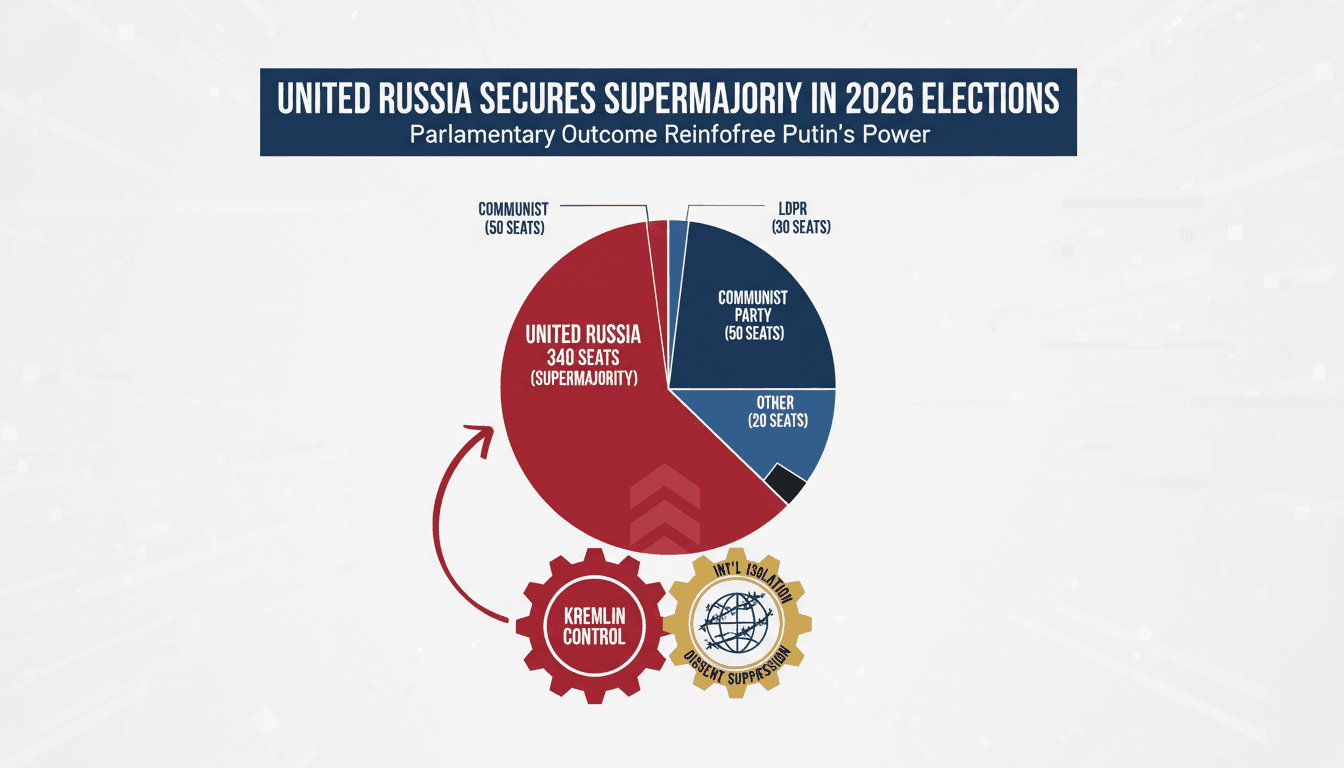
- United Russia secured approximately 355 out of 450 seats in the State Duma following elections held from September 18-20, 2026.
- The elections were marked by significant restrictions on opposition candidates and the inclusion of voters from annexed Ukrainian territories.
- Turnout exceeded 59%, the highest in over a decade, reflecting a tightly controlled electoral process.
The context you actually need
- The elections occurred during an ongoing conflict with Ukraine, which has shaped the political environment and voter sentiment.
- Opposition parties were largely excluded, with anti-war groups like Yabloko barred from participating, raising concerns about the legitimacy of the electoral process.
- Electronic voting and multi-day balloting were implemented, allowing for greater state control over the election outcomes amid a lack of independent oversight.
What's really happening
The parliamentary elections in Russia have reinforced the dominance of United Russia, a party closely aligned with President Vladimir Putin. With preliminary results projecting the party to hold 355 seats in the State Duma, this outcome is not merely a reflection of voter preference but a product of a carefully orchestrated electoral process. The Kremlin has systematically suppressed dissent, ensuring that opposition parties, particularly those critical of the ongoing war in Ukraine, were excluded from the ballot. This exclusion is part of a broader strategy to maintain control over the political narrative and limit any potential challenges to Putin's authority.
The elections were conducted over three days, with a turnout exceeding 59%, the highest in over a decade. However, this figure is misleading, as it reflects a tightly managed voting environment where independent observers were barred from monitoring the process. The inclusion of voters from annexed Ukrainian territories further complicates the legitimacy of the results, as Ukraine and many international observers consider these regions to be illegally occupied.
The use of electronic voting and multi-day balloting has drawn criticism for enabling greater state control over the electoral outcomes. Critics argue that these methods facilitate manipulation and reduce transparency, allowing the Kremlin to project an image of democratic legitimacy while effectively quashing any real opposition. The Central Election Commission, led by Ella Pamfilova, announced the preliminary results, which indicate a record high for United Russia, further entrenching the party's power.
This consolidation of power has significant implications for both domestic and international audiences. Domestically, it signals to the Russian populace that dissent will not be tolerated, while internationally, it reinforces the perception of Russia as a state where political freedoms are severely restricted. The Kremlin's ability to maintain such control amid ongoing conflict suggests a strategic focus on internal stability, even at the cost of international relations.
Who feels it first (and how)
- Political analysts monitoring Russia's geopolitical strategies will assess the implications of this electoral outcome.
- International businesses operating in or with ties to Russia may face increased scrutiny and risk due to the political climate.
- Opposition groups and activists within Russia will experience heightened repression and limited avenues for political expression.
What to watch next
- International reactions: Watch for responses from Western governments regarding sanctions or diplomatic measures in light of the election results.
- Economic indicators: Monitor Russia's economic performance, particularly in sectors impacted by international sanctions, to gauge the effects of political stability.
- Opposition movements: Observe any emerging resistance or dissent within Russia, particularly from younger demographics or previously marginalized groups.
United Russia has secured a supermajority in the State Duma.
The Kremlin will continue to suppress dissent and maintain tight control over political processes.
The long-term impact on international relations and economic conditions remains uncertain.
Frequently Asked Questions
- Why it matters?
- The outcome of these elections solidifies the Kremlin's power, impacting international relations and economic policies.
- What happened (in 30 seconds)?
- United Russia secured approximately 355 out of 450 seats in the State Duma following elections held from September 18-20, 2026. The elections were marked by significant restrictions on opposition candidates and the inclusion of voters from annexed Ukrainian territories. Turnout exceeded 59%, the highest in over a decade, reflecting a tightly controlled electoral process.
- What's really happening?
- The parliamentary elections in Russia have reinforced the dominance of United Russia, a party closely aligned with President Vladimir Putin. With preliminary results projecting the party to hold 355 seats in the State Duma, this outcome is not merely a reflection of voter preference but a product of a carefully orchestrated electoral process. The Kremlin has systematically suppressed dissent, ensuring that opposition parties, particularly those critical of the ongoing war in Ukraine, were exclud
- Who feels it first (and how)?
- Political analysts monitoring Russia's geopolitical strategies will assess the implications of this electoral outcome. International businesses operating in or with ties to Russia may face increased scrutiny and risk due to the political climate. Opposition groups and activists within Russia will experience heightened repression and limited avenues for political expression.
- What to watch next?
- International reactions: Watch for responses from Western governments regarding sanctions or diplomatic measures in light of the election results. Economic indicators: Monitor Russia's economic performance, particularly in sectors impacted by international sanctions, to gauge the effects of political stability. Opposition movements: Observe any emerging resistance or dissent within Russia, particularly from younger demographics or previously marginalized groups.
Global coverage of politics, crises, and international affairs.
"HuffPost provides progressive-oriented reporting on international developments, often focusing on humanitarian and social justice issues."
— A47 Editor
Main Kremlin Party Keeps Control Of Russia's Parliament After Carefully Orchestrated Vote
The Kremlin has successfully maintained control over Russia's parliament following a carefully orchestrated election process, which included the disqualification of the liberal Yabloko party, the only political group openly opposing the war in Ukrain...
International coverage of politics, culture, and current affairs.
"BBC News is widely regarded as a reputable international news organization, known for its impartial tone and public service mandate."
— A47 Editor
'No surprises' as results emerge in Russian parliamentary election
Preliminary results from the recent Russian parliamentary elections indicate that the Kremlin-backed United Russia party is poised to maintain its constitutional majority, reflecting a continuation of its political dominance.
European current affairs, EU politics, and regional developments.
"France 24 is viewed as a globally focused outlet with balanced coverage and a European perspective."
— A47 Editor
Putin's party wins record number of parliamentary seats in first vote since 2022 invasion of Ukraine
The ruling United Russia party has secured a record 355 seats in the Russian parliament following elections held from September 18 to 20, 2026, marking the first parliamentary vote since the full-scale invasion of Ukraine in 2022. The election proces...