
United Russia Achieves Historic 355-Seat Supermajority in State Duma Elections
Why it matters
This election solidifies President Putin's grip on power, potentially impacting international relations and energy prices.
What happened (in 30 seconds)
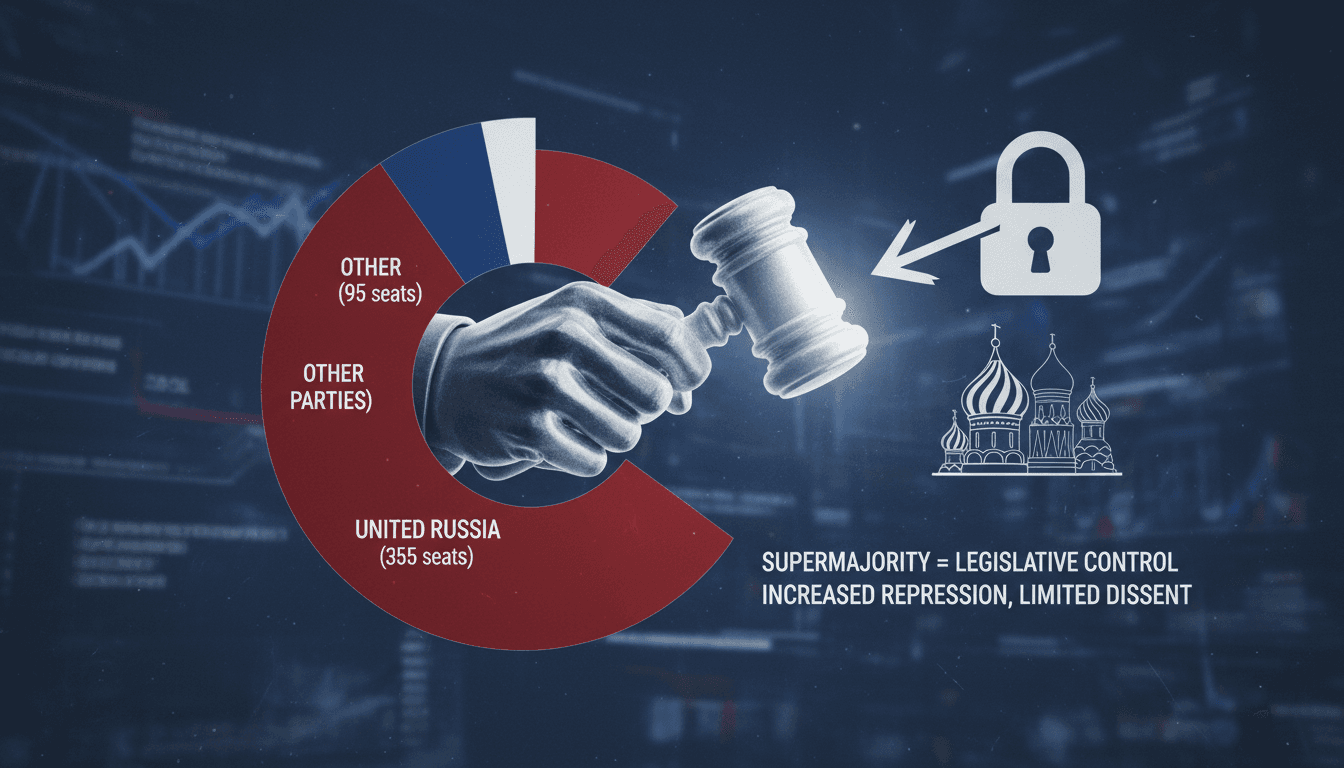
- United Russia party won a record 355 seats in the 450-seat State Duma during elections held from September 18-20, 2026.
- The election excluded major opposition voices and international observers, occurring under wartime conditions amid the ongoing conflict in Ukraine.
- Official results showed over 57% of the vote and a turnout near 60%, reinforcing Putin's legislative control.
The context you actually need
- This was Russia's first parliamentary vote since the full-scale invasion of Ukraine in 2022, marking a significant moment in the ongoing conflict.
- United Russia has dominated the Duma since 2003, previously holding a constitutional majority, which now extends their legislative power.
- The election included residents from four illegally annexed Ukrainian regions, further complicating international perceptions of legitimacy.
What's really happening
The 2026 State Duma elections represent a critical juncture in Russia's political landscape, particularly given the ongoing war in Ukraine. The United Russia party, which has maintained a stronghold in Russian politics since 2003, has now achieved a record 355 seats, surpassing its previous high of 343 in 2016. This supermajority not only consolidates President Vladimir Putin's legislative power but also signals a potential escalation in the Kremlin's repressive measures against dissent.
The elections were conducted under tightly controlled conditions, with significant restrictions on opposition parties and independent observers. The absence of credible electoral oversight, such as the Organization for Security and Co-operation in Europe (OSCE), raises questions about the legitimacy of the results. The Kremlin has framed the outcome as a demonstration of public support for Putin, despite widespread international condemnation labeling the elections as a sham.
The implications of this electoral outcome extend beyond Russia's borders. With the ongoing war in Ukraine, the supermajority may embolden the Kremlin to pursue more aggressive military strategies or domestic policies that suppress dissent. Analysts suggest that the consolidation of power could lead to heightened repression, as the government seeks to quell any anti-war sentiment among the populace. However, Putin has denied any plans for new military mobilizations, leaving the situation somewhat ambiguous.
Moreover, the inclusion of voters from annexed Ukrainian territories complicates the geopolitical landscape. This move not only legitimizes the annexation in the eyes of the Russian government but also challenges international norms regarding territorial integrity. As Western governments continue to impose sanctions and condemn the elections, the potential for increased tensions remains high.
In the context of global energy markets, the election results could have indirect effects. Russia's control over significant energy resources means that any escalation in conflict or changes in policy could impact energy prices worldwide. As a result, businesses and consumers alike may feel the ripple effects of these elections in their economic activities.
Who feels it first (and how)
- Investors in energy markets: Fluctuations in oil and gas prices could affect returns.
- Businesses reliant on stable geopolitical conditions: Increased tensions may disrupt supply chains.
- Consumers globally: Rising energy costs could lead to higher prices for goods and services.
What to watch next
- International responses: Watch for sanctions or diplomatic actions from Western nations, which could impact global markets.
- Domestic policy shifts in Russia: Changes in repression levels or military mobilization could signal future actions.
- Energy market volatility: Monitor fluctuations in oil and gas prices as a reaction to the election outcomes and ongoing conflict.
United Russia has secured a supermajority in the State Duma.
Increased repression of dissent and anti-war sentiment within Russia.
The long-term impact on global energy markets and geopolitical stability.
Frequently Asked Questions
- Why it matters?
- This election solidifies President Putin's grip on power, potentially impacting international relations and energy prices.
- What happened (in 30 seconds)?
- United Russia party won a record 355 seats in the 450-seat State Duma during elections held from September 18-20, 2026. The election excluded major opposition voices and international observers, occurring under wartime conditions amid the ongoing conflict in Ukraine. Official results showed over 57% of the vote and a turnout near 60%, reinforcing Putin's legislative control.
- What's really happening?
- The 2026 State Duma elections represent a critical juncture in Russia's political landscape, particularly given the ongoing war in Ukraine. The United Russia party, which has maintained a stronghold in Russian politics since 2003, has now achieved a record 355 seats, surpassing its previous high of 343 in 2016. This supermajority not only consolidates President Vladimir Putin's legislative power but also signals a potential escalation in the Kremlin's repressive measures against dissent. The el
- Who feels it first (and how)?
- Investors in energy markets: Fluctuations in oil and gas prices could affect returns. Businesses reliant on stable geopolitical conditions: Increased tensions may disrupt supply chains. Consumers globally: Rising energy costs could lead to higher prices for goods and services.
- What to watch next?
- International responses: Watch for sanctions or diplomatic actions from Western nations, which could impact global markets. Domestic policy shifts in Russia: Changes in repression levels or military mobilization could signal future actions. Energy market volatility: Monitor fluctuations in oil and gas prices as a reaction to the election outcomes and ongoing conflict.
Global news coverage with extensive reporting on Middle Eastern conflicts and geopolitics.
"Al Jazeera is a Qatar-based broadcaster known for wide regional coverage and alternative perspectives."
— A47 Editor
Putin’s party wins supermajority in Russia’s parliamentary election
The United Russia party, led by President Vladimir Putin, has secured a supermajority in Russia's parliamentary elections, winning 355 out of 450 seats. This election, held from September 18 to 20, 2026, is significant as it marks the first parliamen...
Comprehensive coverage of Middle Eastern and global issues.
"Al Jazeera is a prominent voice from the Global South, especially the Middle East, with an emphasis on underreported stories."
— A47 Editor
Putin’s party wins supermajority in Russia’s parliamentary election
The United Russia party, led by President Vladimir Putin, has secured a supermajority in Russia's parliamentary elections, winning 355 out of 450 seats. This election, held from September 18 to 20, 2026, is significant as it marks the first parliamen...
International coverage from The Guardian's global desks.
"The Guardian is known for its progressive editorial stance and in-depth analysis."
— A47 Editor
Putin consolidates grip on Russia as 49 Ukraine war veterans elected to parliament
In a tightly controlled parliamentary election, Russia's ruling United Russia party achieved a record victory, securing 355 out of 450 seats in the Duma, including 49 deputies who are veterans of the war in Ukraine. This election, held from September...
24/7 international news from a French perspective in multiple languages.
"France 24 is viewed as a globally focused outlet with balanced coverage and a European perspective."
— A47 Editor
Russia's ruling party on track to win election after Ukraine's drone attacks on Moscow
Russia's ruling United Russia party is projected to win the parliamentary elections, which concluded amid significant turmoil, including a massive drone attack by Ukraine on Moscow that resulted in three fatalities. This attack coincided with the fin...