
Abu Dhabi Court Orders Full Repayment of Defaulted Personal Loan
Why it matters
This case highlights the strict enforcement of loan agreements in the UAE, impacting borrowers' financial security and banks' risk management.
What happened (in 30 seconds)
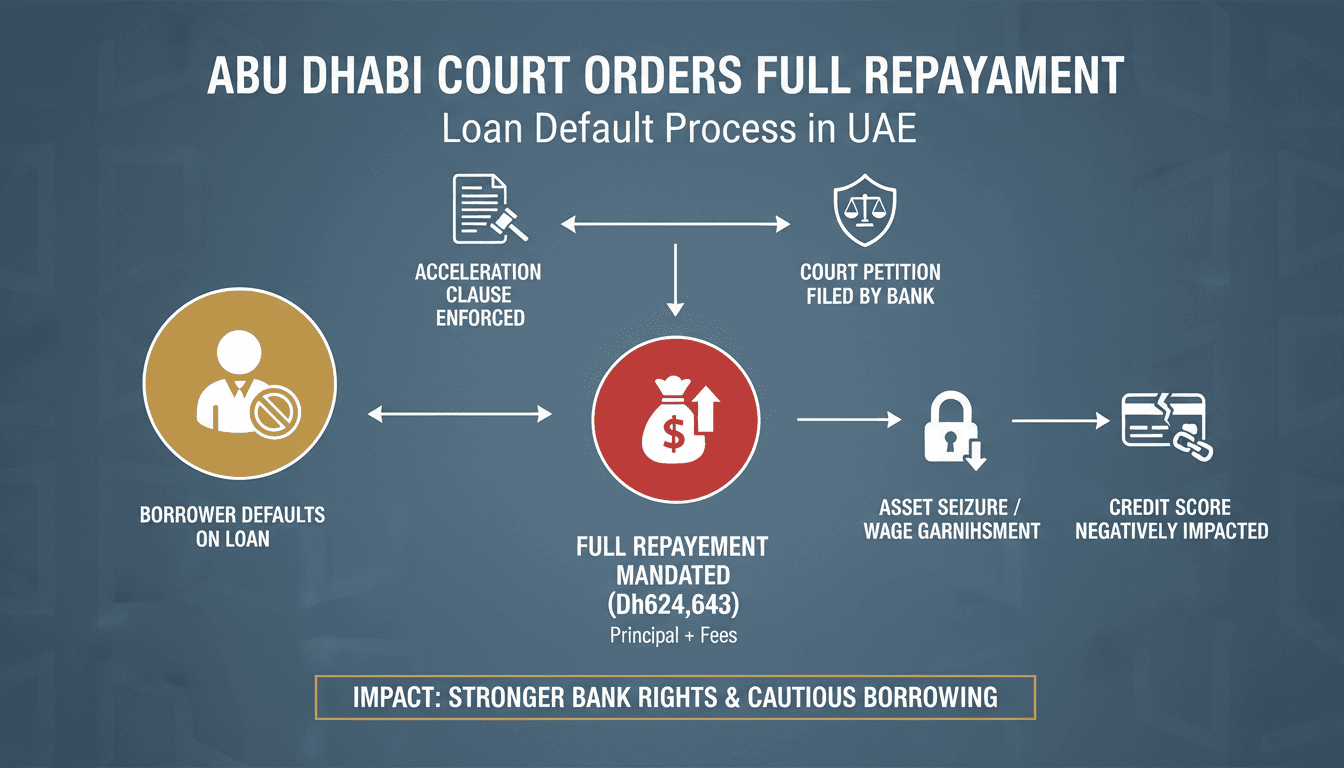
- Court ruling: The Abu Dhabi Commercial Court ordered a borrower to repay Dh624,643 after defaulting on a Dh600,000 personal loan.
- Acceleration clause: The court upheld the bank's right to demand full repayment due to the borrower's failure to make any payments.
- No defense presented: The defendant did not appear in court, leading to a judgment based solely on the bank's documentation.
The context you actually need
- Loan agreements: Personal loans in the UAE often include acceleration clauses, allowing banks to demand immediate repayment upon default.
- Legal framework: Federal laws govern civil claims for loan defaults, enabling banks to recover principal, interest, and costs without criminal penalties for non-fraudulent defaults.
- Court procedures: UAE courts rely on expert reports and contractual documents to establish liability, especially when defendants do not contest claims.
What's really happening
The ruling from the Abu Dhabi Commercial Court serves as a critical reminder of the legal landscape surrounding personal loans in the UAE. When a borrower secures a loan, they typically enter into a contract that includes specific terms regarding repayment, including the possibility of an acceleration clause. This clause allows the lender to demand the full outstanding balance if the borrower defaults, which is defined as missing a certain number of payments.
In this case, the borrower took out a Dh600,000 personal loan with a repayment period of 48 months but failed to make any payments. The bank, armed with documentation such as the loan application, salary certificate, and account statements, initiated legal proceedings to recover the total amount owed, which included the principal plus accrued interest and legal costs. The court's acceptance of the bank's evidence, including an expert report confirming the outstanding balance, led to a judgment in favor of the bank.
This ruling reflects a broader trend in the UAE's financial system, where banks are increasingly vigilant about enforcing loan agreements. The legal framework, established by Federal Decree-Law No. 42 of 2022, allows banks to pursue civil claims without the threat of criminal penalties for borrowers who default without fraudulent intent. This creates a clear pathway for banks to recover debts, reinforcing the importance of adhering to loan terms.
For borrowers, the implications are significant. Defaulting on a loan can lead to severe financial consequences, including salary deductions, account freezes, and travel bans for debts exceeding Dh10,000. Furthermore, the ruling emphasizes the need for borrowers to understand their rights and obligations under UAE law, as well as the potential for restructuring options through negotiation with banks before reaching a judgment.
As the financial landscape evolves, both borrowers and lenders must navigate the complexities of loan agreements and the legal ramifications of default. This case serves as a cautionary tale for individuals considering personal loans in the UAE, highlighting the importance of financial responsibility and awareness of the legal environment.
Who feels it first (and how)
- Borrowers: Individuals with personal loans who may face severe penalties for defaulting.
- Banks: Financial institutions that rely on strict enforcement of loan agreements to manage risk and recover debts.
- Legal professionals: Lawyers and consultants involved in debt recovery and loan enforcement cases.
- Consumers: Potential borrowers who may reconsider taking loans due to heightened awareness of default consequences.
What to watch next
- Regulatory changes: Monitor any updates to UAE banking laws that may affect loan agreements and borrower protections. Changes could impact how banks enforce loans and the rights of borrowers.
- Market trends: Watch for shifts in lending practices among banks, particularly regarding loan terms and conditions. Increased scrutiny on defaults may lead to more stringent lending criteria.
- Consumer behavior: Observe how this ruling influences borrower behavior in the UAE. Increased awareness of legal consequences may lead to more cautious borrowing practices.
The court's ruling reinforces the enforceability of loan agreements in the UAE.
Banks will continue to pursue aggressive recovery measures for defaulted loans.
The long-term impact on consumer borrowing behavior and bank lending practices remains uncertain.
Frequently Asked Questions
- Why it matters?
- This case highlights the strict enforcement of loan agreements in the UAE, impacting borrowers' financial security and banks' risk management.
- What happened (in 30 seconds)?
- Court ruling: The Abu Dhabi Commercial Court ordered a borrower to repay Dh624,643 after defaulting on a Dh600,000 personal loan. Acceleration clause: The court upheld the bank's right to demand full repayment due to the borrower's failure to make any payments. No defense presented: The defendant did not appear in court, leading to a judgment based solely on the bank's documentation.
- What's really happening?
- The ruling from the Abu Dhabi Commercial Court serves as a critical reminder of the legal landscape surrounding personal loans in the UAE. When a borrower secures a loan, they typically enter into a contract that includes specific terms regarding repayment, including the possibility of an acceleration clause. This clause allows the lender to demand the full outstanding balance if the borrower defaults, which is defined as missing a certain number of payments. In this case, the borrower took out
- Who feels it first (and how)?
- Borrowers: Individuals with personal loans who may face severe penalties for defaulting. Banks: Financial institutions that rely on strict enforcement of loan agreements to manage risk and recover debts. Legal professionals: Lawyers and consultants involved in debt recovery and loan enforcement cases. Consumers: Potential borrowers who may reconsider taking loans due to heightened awareness of default consequences.
- What to watch next?
- Regulatory changes: Monitor any updates to UAE banking laws that may affect loan agreements and borrower protections. Changes could impact how banks enforce loans and the rights of borrowers. Market trends: Watch for shifts in lending practices among banks, particularly regarding loan terms and conditions. Increased scrutiny on defaults may lead to more stringent lending criteria. Consumer behavior: Observe how this ruling influences borrower behavior in the UAE. Increased awareness of legal
English-language coverage focused on UAE news, government updates, and domestic affairs.
"Emirates 24|7 reflects a mainstream UAE editorial perspective with strong emphasis on official and domestic developments."
— A47 Editor
UAE borrower who never paid a single loan instalment ordered to repay Dh624,643 plus interest
The Abu Dhabi Commercial Court has ordered an employee to repay Dh624,643 to a bank after he failed to make any payments on a personal loan of Dh600,000. The court's ruling emphasized that the bank had the right to demand immediate repayment due to t...
Arabic-language local coverage focused on UAE domestic issues, civic affairs, and community reporting.
"Emarat Al Youm local coverage emphasizes UAE institutions, public services, and community-level developments."
— A47 Editor
موظف يحصل على قرض بـ 600 ألف درهم ويمتنع عن السداد موظف يحصل على قرض بـ 600 ألف درهم ويمتنع عن السداد
A commercial court in Abu Dhabi has ordered an employee to repay a total of 624,643 dirhams to a bank after he defaulted on a personal loan of 600,000 dirhams. This ruling highlights the legal consequences of failing to meet financial obligations in ...
Arabic-language local coverage focused on UAE domestic issues, civic affairs, and community reporting.
"Emarat Al Youm local coverage emphasizes UAE institutions, public services, and community-level developments."
— A47 Editor
إلزام بنك بتخفيض مديونية عميل وإصدار شهادة بالقيمة إلزام بنك بتخفيض مديونية عميل وإصدار شهادة بالقيمة
The Abu Dhabi Commercial Court has mandated a bank to reduce a client's debt and confirm the outstanding amount at 13,740 dirhams. The client had previously received banking facilities and made the necessary payments, but the bank sought additional a...
UAE-based English-language newspaper covering regional politics, economics, and global affairs.
"The National reflects Emirati policy perspectives while maintaining international editorial standards."
— A47 Editor
Abu Dhabi court secures Dh7.8 million owed to 948 workers in labour disputes
An Abu Dhabi court has secured Dh7.8 million owed to 948 workers involved in various labour disputes, marking a significant step in addressing unpaid wages and ensuring workers' rights are upheld. This ruling underscores the judicial system's commitm...