
Guterres Calls for Global Cooperation in Final UN Address
Why it matters
The call for a cooperative global order could reshape international policies affecting trade, technology, and climate action.
What happened (in 30 seconds)
- Guterres delivered his final address at the UN General Assembly, urging leaders to prioritize cooperation over fragmentation.
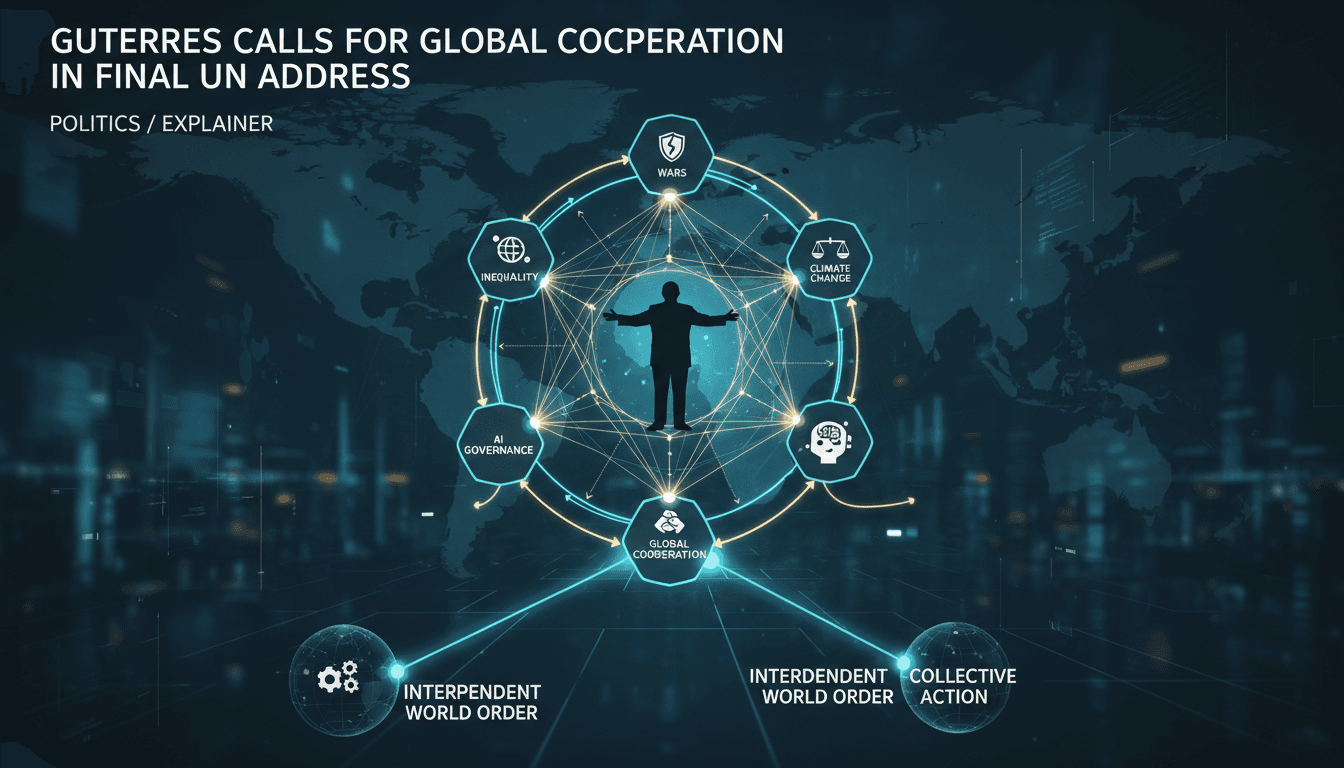
- He highlighted interconnected crises such as wars, climate change, and AI, framing them as symptoms of shifting power dynamics.
- The address received a standing ovation, signaling strong support for multilateralism and UN reform among member states.
The context you actually need
- Guterres' tenure has coincided with rising global fragmentation, including conflicts in Ukraine and Gaza, and challenges posed by climate change and AI.
- The UN faces institutional strains, including outdated governance structures and unpaid dues, complicating its ability to respond effectively.
- Calls for reform are growing, particularly regarding the Security Council's veto system and the need for collective action on pressing global issues.
What's really happening
Antonio Guterres' farewell address at the 81st UN General Assembly encapsulated a decade of escalating global challenges and the urgent need for a cooperative approach to governance. He framed the current crises—ranging from geopolitical conflicts to climate change—as manifestations of a broader power redistribution. This shift is not merely a change in leadership but a reflection of the evolving dynamics between states, corporations, and emerging technologies like artificial intelligence.
Guterres warned against a potential "Great Fracture," where nations retreat into rival blocs, undermining global stability. Instead, he advocated for a model of "networked multipolarity," which emphasizes interdependence and shared international rules. This approach recognizes that no single nation can tackle these challenges alone, necessitating a collaborative framework that includes diverse stakeholders.
The implications of this address extend beyond diplomatic circles. For businesses and professionals, the push for global cooperation could lead to new regulations and standards, particularly in areas like climate finance and AI governance. As countries work together to address these interconnected issues, you may find that your industry faces new opportunities and challenges, driven by international agreements and collaborative initiatives.
Moreover, Guterres' emphasis on UN reform highlights the need for a more agile and responsive international body. This could lead to changes in how global governance operates, impacting everything from trade agreements to environmental policies. As nations strive to adapt to a multipolar world, the ripple effects will likely be felt across various sectors, influencing market dynamics and investment strategies.
In essence, Guterres' address serves as a clarion call for a new era of global cooperation, one that could redefine how nations and businesses interact in an increasingly complex world. The emphasis on shared responsibility and collective action may pave the way for innovative solutions to longstanding problems, ultimately reshaping the global landscape in ways that directly affect you.
Who feels it first (and how)
- Business leaders in sectors like technology and finance may need to adapt to new regulations stemming from international agreements.
- Environmental organizations could see increased funding and collaboration opportunities as nations commit to climate action.
- Workers in industries reliant on global supply chains may experience shifts in job security and operational practices as countries align on standards.
What to watch next
- UN reform discussions: Monitor proposals for changes to the Security Council and other governance structures, as these could impact international relations and policy-making.
- Climate finance initiatives: Watch for new funding mechanisms and partnerships aimed at addressing climate change, which may create opportunities for investment and innovation.
- AI governance frameworks: Keep an eye on international agreements regarding AI regulation, as these will shape the future of technology and its societal implications.
Guterres' address emphasized the need for global cooperation and UN reform.
Increased collaboration on climate finance and AI governance will emerge as nations respond to interconnected crises.
The specific outcomes of proposed UN reforms and their impact on global governance remain to be seen.
Frequently Asked Questions
- Why it matters?
- The call for a cooperative global order could reshape international policies affecting trade, technology, and climate action.
- What happened (in 30 seconds)?
- Guterres delivered his final address at the UN General Assembly, urging leaders to prioritize cooperation over fragmentation. He highlighted interconnected crises such as wars, climate change, and AI, framing them as symptoms of shifting power dynamics. The address received a standing ovation, signaling strong support for multilateralism and UN reform among member states.
- What's really happening?
- Antonio Guterres' farewell address at the 81st UN General Assembly encapsulated a decade of escalating global challenges and the urgent need for a cooperative approach to governance. He framed the current crises—ranging from geopolitical conflicts to climate change—as manifestations of a broader power redistribution. This shift is not merely a change in leadership but a reflection of the evolving dynamics between states, corporations, and emerging technologies like artificial intelligence. Gute
- Who feels it first (and how)?
- Business leaders in sectors like technology and finance may need to adapt to new regulations stemming from international agreements. Environmental organizations could see increased funding and collaboration opportunities as nations commit to climate action. Workers in industries reliant on global supply chains may experience shifts in job security and operational practices as countries align on standards.
- What to watch next?
- UN reform discussions: Monitor proposals for changes to the Security Council and other governance structures, as these could impact international relations and policy-making. Climate finance initiatives: Watch for new funding mechanisms and partnerships aimed at addressing climate change, which may create opportunities for investment and innovation. AI governance frameworks: Keep an eye on international agreements regarding AI regulation, as these will shape the future of technology and its
24/7 international news from a French perspective in multiple languages.
"France 24 is viewed as a globally focused outlet with balanced coverage and a European perspective."
— A47 Editor
Guterres pleads for 'world built on interdependence' in final General Assembly address
UN Secretary-General Antonio Guterres delivered his final address at the General Assembly, advocating for a world built on interdependence amidst pressing global challenges such as climate change, conflict, inequality, and the rise of artificial inte...
Top international stories selected by The Guardian editors.
"The Guardian is known for its progressive editorial stance and in-depth analysis."
— A47 Editor
‘It’s my duty to tell the truth’: UN chief on the climate crisis, capitalism and reasons to be hopeful
António Guterres, the UN Secretary-General, emphasized the urgency of addressing the climate crisis during his tenure, which concludes on December 31. He has been vocal about the detrimental impact of fossil fuel companies and has called for a transi...
International stories from NPR’s global desk.
"NPR is an American public media organization known for thoughtful reporting and a slightly left-leaning editorial tone."
— A47 Editor
What to know as world leaders converge at the United Nations this week
World leaders are gathering at the United Nations for the U.N. General Assembly, with António Guterres attending his final session as Secretary-General amid ongoing conflicts in Ukraine and the Middle East. The assembly is marked by deep divisions wi...