
MoHRE Identifies 377 Cases of Fake Emiratisation in UAE Private Sector
Why it matters
This enforcement action aims to ensure genuine employment for Emiratis, impacting labor market integrity and business competitiveness.
What happened (in 30 seconds)
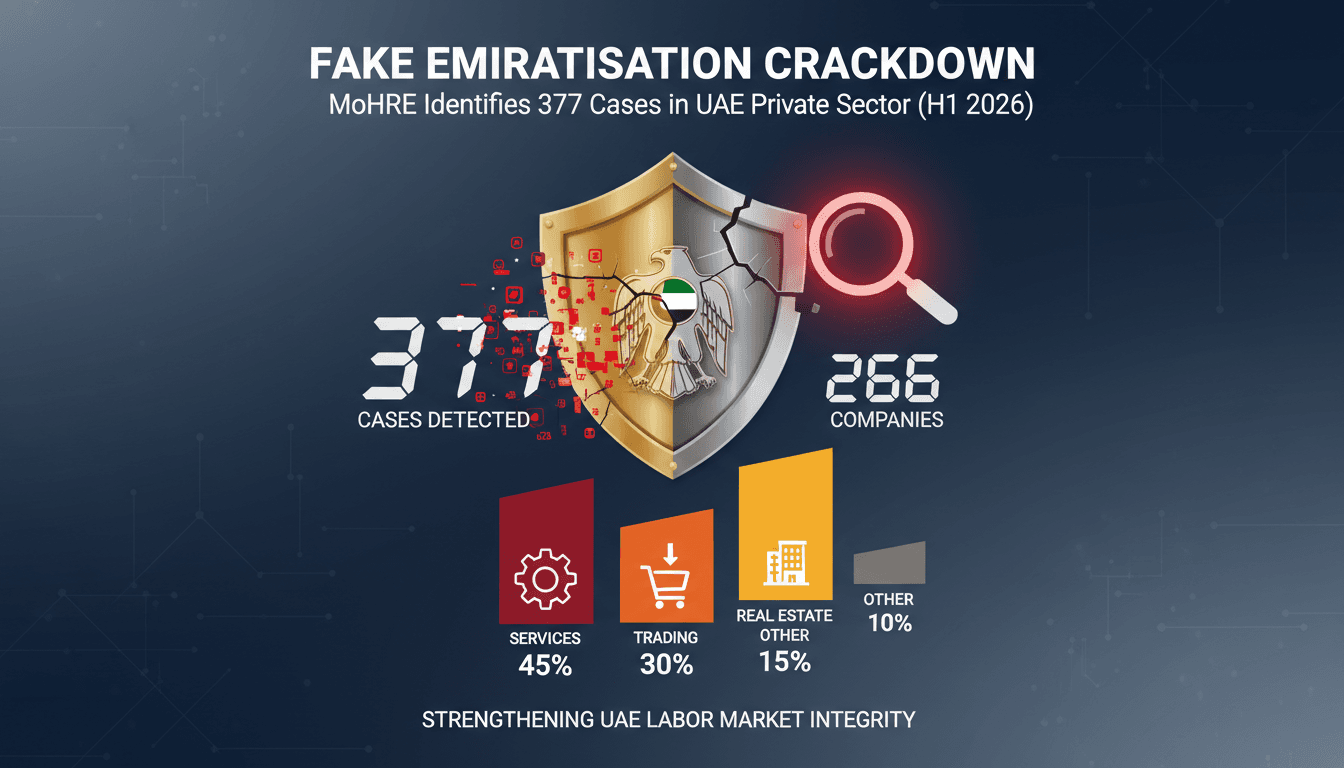
- 377 cases of fake Emiratisation were detected across 266 private companies in the first half of 2026.
- Legal proceedings have been initiated against these companies under Cabinet Decision No. (43) of 2025.
- MoHRE is enhancing monitoring systems to prevent future violations and ensure compliance with Emiratisation policies.
The context you actually need
- Emiratisation policies are designed to increase Emirati participation in the private sector, promoting genuine employment and skill development.
- Fake Emiratisation undermines these goals by creating artificial compliance, distorting labor market data, and disadvantaging compliant employers.
- The Ministry of Human Resources and Emiratisation (MoHRE) is committed to maintaining the integrity of the labor market through rigorous monitoring and enforcement.
What's really happening
In the first half of 2026, the Ministry of Human Resources and Emiratisation (MoHRE) identified 377 instances of fake Emiratisation across 266 private sector companies. This detection was made possible through advanced field and digital monitoring systems, which have become increasingly sophisticated in recent years. The Ministry's announcement on September 23, 2026, highlighted the initiation of legal proceedings against the involved entities, reinforcing the UAE's commitment to genuine Emiratisation practices.
Fake Emiratisation refers to the practice where Emirati citizens are registered as employees without actual job responsibilities or functions. This is often done to meet Emiratisation targets or to improperly access government incentives designed to promote the hiring of Emiratis. Such practices not only distort labor market data but also misallocate resources, creating an uneven playing field for compliant businesses and qualified Emirati citizens seeking genuine employment opportunities.
The MoHRE's actions are grounded in Cabinet Decision No. (43) of 2025, which outlines the legal framework for addressing these violations. The Ministry has emphasized that Emiratisation requires actual job functions and career paths, and it has issued guidance to companies on avoiding such deceptive practices. Furthermore, the Ministry encourages reporting of suspected cases through various channels, including a dedicated hotline and a smart app.
The implications of these enforcement actions extend beyond the immediate legal repercussions for the companies involved. They signal a broader commitment to enhancing the integrity of the Emirati labor market. By cracking down on fake Emiratisation, the MoHRE aims to protect compliant businesses from unfair competition and ensure that Emirati citizens have access to meaningful employment opportunities. This is particularly crucial in a rapidly evolving economic landscape where genuine skill development and career progression are essential for the UAE's long-term growth.
As the Ministry continues to develop its monitoring capabilities, it is likely that more cases will be identified, leading to further legal actions. This proactive approach not only aims to deter future violations but also reinforces the importance of compliance with Emiratisation policies across the private sector.
Who feels it first (and how)
- Private sector companies: Those found in violation will face legal consequences and potential reputational damage.
- Emirati job seekers: Genuine candidates may benefit from increased job opportunities as compliance improves.
- HR professionals: They will need to adapt hiring practices to align with stricter enforcement and compliance standards.
What to watch next
- Increased monitoring: Look for enhancements in MoHRE's digital verification tools, which could lead to more frequent audits and checks.
- Legal outcomes: Monitor the results of the legal proceedings against the identified companies, which may set precedents for future enforcement actions.
- Market response: Watch how compliant businesses adjust their hiring strategies in response to the crackdown, potentially leading to a more competitive labor market.
377 cases of fake Emiratisation have been detected.
More companies may be scrutinized as MoHRE enhances its monitoring capabilities.
The long-term impact on the labor market and employment rates for Emiratis remains to be seen.
Frequently Asked Questions
- Why it matters?
- This enforcement action aims to ensure genuine employment for Emiratis, impacting labor market integrity and business competitiveness.
- What happened (in 30 seconds)?
- 377 cases of fake Emiratisation were detected across 266 private companies in the first half of 2026. Legal proceedings have been initiated against these companies under Cabinet Decision No. (43) of 2025. MoHRE is enhancing monitoring systems to prevent future violations and ensure compliance with Emiratisation policies.
- What's really happening?
- In the first half of 2026, the Ministry of Human Resources and Emiratisation (MoHRE) identified 377 instances of fake Emiratisation across 266 private sector companies. This detection was made possible through advanced field and digital monitoring systems, which have become increasingly sophisticated in recent years. The Ministry's announcement on September 23, 2026, highlighted the initiation of legal proceedings against the involved entities, reinforcing the UAE's commitment to genuine Emirati
- Who feels it first (and how)?
- Private sector companies: Those found in violation will face legal consequences and potential reputational damage. Emirati job seekers: Genuine candidates may benefit from increased job opportunities as compliance improves. HR professionals: They will need to adapt hiring practices to align with stricter enforcement and compliance standards.
- What to watch next?
- Increased monitoring: Look for enhancements in MoHRE's digital verification tools, which could lead to more frequent audits and checks. Legal outcomes: Monitor the results of the legal proceedings against the identified companies, which may set precedents for future enforcement actions. Market response: Watch how compliant businesses adjust their hiring strategies in response to the crackdown, potentially leading to a more competitive labor market.
Arabic-language local coverage focused on UAE domestic issues, civic affairs, and community reporting.
"Emarat Al Youm local coverage emphasizes UAE institutions, public services, and community-level developments."
— A47 Editor
«الموارد البشرية» تضبط 377 حالة توطين صوري في 266 شركة بـ «الخاص» «الموارد البشرية» تضبط 377 حالة توطين صوري في 266 شركة بـ «الخاص»
The Ministry of Human Resources and Emiratisation has identified 377 cases of fictitious localization across 266 companies in the private sector during the first half of 2026. This action highlights ongoing efforts to ensure compliance with labor reg...
UAE-based English-language newspaper covering regional politics, economics, and global affairs.
"The National reflects Emirati policy perspectives while maintaining international editorial standards."
— A47 Editor
UAE detects 377 fake Emiratisation cases at 266 private companies in first half of the year
The Ministry of Human Resources and Emiratisation (MOHRE) in the UAE has uncovered 377 instances of fake Emiratisation across 266 private companies during the first half of 2026, prompting legal actions against the implicated firms. This discovery hi...
English-language coverage focused on UAE news, government updates, and domestic affairs.
"Emirates 24|7 reflects a mainstream UAE editorial perspective with strong emphasis on official and domestic developments."
— A47 Editor
UAE MOHRE detects 377 fake Emiratisation cases in first half of 2026
The Ministry of Human Resources and Emiratisation (MOHRE) in the UAE has identified 377 instances of fake Emiratisation across 266 private-sector companies during the first half of 2026, leading to legal actions against the involved entities.