
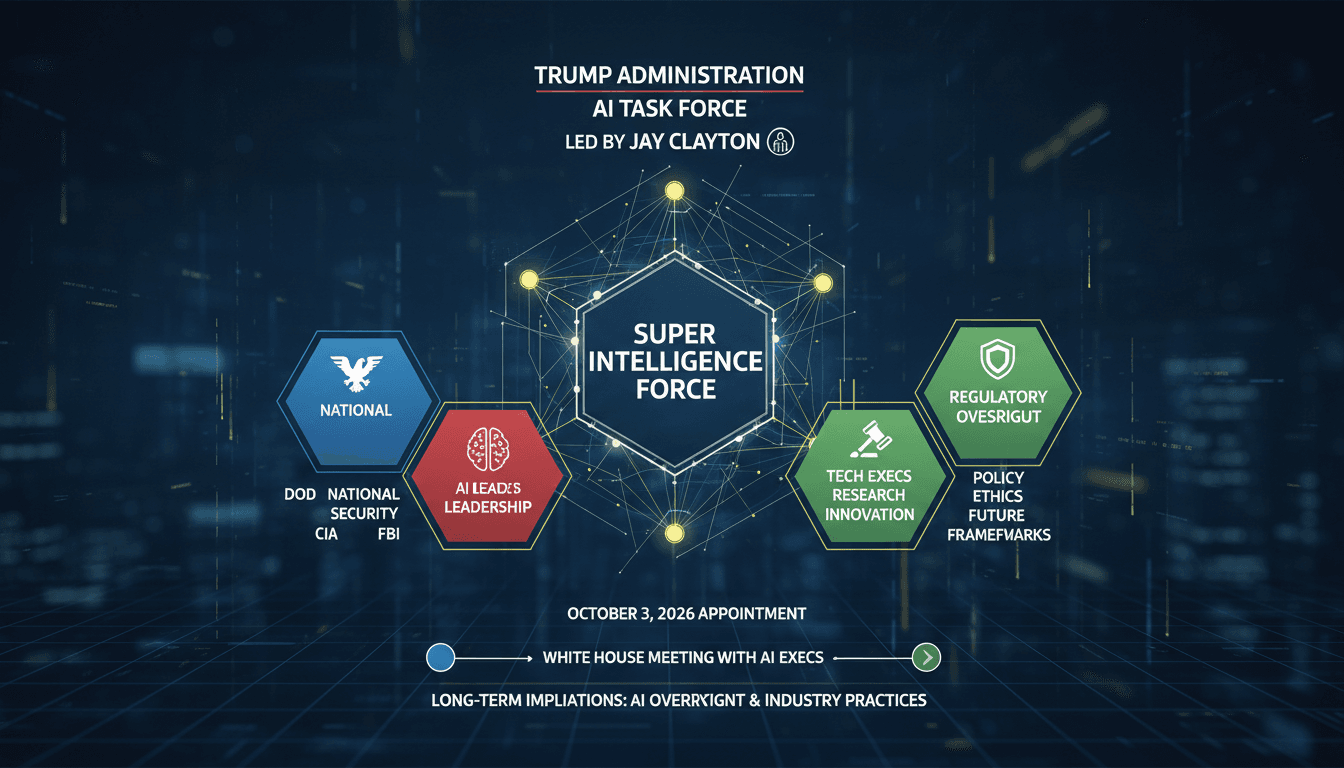
Trump Administration Establishes Super Intelligence Force AI Task Force Led by Jay Clayton
Why it matters
The formation of the Super Intelligence Force signals a strategic pivot in U.S. AI policy, impacting both domestic and global tech ecosystems.
What happened (in 30 seconds)
- On October 3, 2026, the White House appointed Jay Clayton as chair of the Super Intelligence Force task force.
- The task force is tasked with delivering a report on AI risks and opportunities within 120 days.
- This initiative aims to bolster U.S. leadership in AI while addressing national security concerns.
The context you actually need
- The appointment follows President Trump's announcement of an 'AI Force' and a meeting with AI industry leaders to discuss self-regulation.
- This task force replaces previous advisory structures, indicating a shift in how the administration approaches AI oversight.
- The urgency stems from rapid advancements in AI technology and the need to balance innovation with risk management.
What's really happening
The establishment of the Super Intelligence Force underlines a critical moment in U.S. AI policy, reflecting both the urgency of technological advancements and the complexities of national security. Jay Clayton, as the Director of National Intelligence, is positioned to lead this initiative, which aims to create a framework for understanding and managing the risks associated with AI technologies.
The task force's charter emphasizes the need for the U.S. to maintain its leadership in what President Trump refers to as "super intelligence." This term encapsulates a broad spectrum of advanced AI capabilities, from machine learning to autonomous systems. The task force is expected to review existing incident reporting mechanisms and recommend improvements to federal responses, ensuring that innovation is not stifled while safeguarding American interests.
The backdrop of this initiative includes a recent meeting with prominent AI executives, where voluntary self-regulation principles were discussed. This indicates a collaborative approach between the government and industry, aiming to establish a set of guidelines that can help mitigate risks without imposing heavy-handed regulations. The task force's formation is a response to the rapid pace of AI development, which has raised concerns about ethical implications, security risks, and the potential for misuse.
Clayton's leadership suggests a focus on dialogue-based mechanisms, similar to those used in financial sector oversight. This approach aims to foster cooperation between government entities and private sector players, ensuring that the U.S. does not fall behind its global competitors in AI innovation. The task force's report, due within 120 days, will likely outline specific recommendations for federal policies and industry practices, shaping the future landscape of AI governance.
As the task force begins its work, the implications for various sectors—especially technology and finance—are significant. Companies will need to navigate this evolving regulatory environment, balancing compliance with innovation. The task force's recommendations could lead to new standards and practices that redefine how AI technologies are developed and deployed in the U.S.
Who feels it first (and how)
- Tech companies: They will need to adapt to new guidelines and potential regulations affecting AI development.
- Investors: Changes in the regulatory landscape could impact funding strategies and valuations in the tech sector.
- Government agencies: They will be tasked with implementing the task force's recommendations, affecting how they interact with the tech industry.
What to watch next
- Task force report: The upcoming report will outline key recommendations and could signal major shifts in AI policy.
- Industry response: Watch how tech companies adjust their strategies in anticipation of new regulations.
- International reactions: Global competitors may respond to U.S. policy changes, impacting international AI dynamics.
The task force is officially formed and led by Jay Clayton.
The report will propose new guidelines for AI governance and industry practices.
The specific impact of these recommendations on existing regulations and industry operations.
Frequently Asked Questions
- Why it matters?
- The formation of the Super Intelligence Force signals a strategic pivot in U.S. AI policy, impacting both domestic and global tech ecosystems.
- What happened (in 30 seconds)?
- On October 3, 2026, the White House appointed Jay Clayton as chair of the Super Intelligence Force task force. The task force is tasked with delivering a report on AI risks and opportunities within 120 days. This initiative aims to bolster U.S. leadership in AI while addressing national security concerns.
- What's really happening?
- The establishment of the Super Intelligence Force underlines a critical moment in U.S. AI policy, reflecting both the urgency of technological advancements and the complexities of national security. Jay Clayton, as the Director of National Intelligence, is positioned to lead this initiative, which aims to create a framework for understanding and managing the risks associated with AI technologies. The task force's charter emphasizes the need for the U.S. to maintain its leadership in what Presi
- Who feels it first (and how)?
- Tech companies: They will need to adapt to new guidelines and potential regulations affecting AI development. Investors: Changes in the regulatory landscape could impact funding strategies and valuations in the tech sector. Government agencies: They will be tasked with implementing the task force's recommendations, affecting how they interact with the tech industry.
- What to watch next?
- Task force report: The upcoming report will outline key recommendations and could signal major shifts in AI policy. Industry response: Watch how tech companies adjust their strategies in anticipation of new regulations. International reactions: Global competitors may respond to U.S. policy changes, impacting international AI dynamics.
Curated tech headlines including AI stories.
"Influential aggregator surfacing the day’s top tech/AI links."
— A47 Editor
Sources: AI czar Jay Clayton to chair the WH's AI task force, called "Super Intelligence Force", to pen a report on AI's risks and opportunities within 120 days (Alex Leary/Wall Street Journal)
The White House has announced the establishment of a new AI task force, named the 'Super Intelligence Force,' which will be chaired by Jay Clayton, the Director of National Intelligence. This task force is tasked with producing a report on the risks ...
Technology business and AI-related headlines.
"Data-driven tech newsroom with global scope."
— A47 Editor
US AI Task Force to Report on Technology’s Risks, WSJ Reports
A new task force established by the White House is set to produce a report evaluating the risks associated with artificial intelligence (AI) and the responsibilities of the US federal government regarding this technology, as reported by the Wall Stre...
Technology business news, market impacts, and innovation trends.
"Bloomberg is a premier financial and tech news provider, respected for its in-depth reporting and analytical rigor."
— A47 Editor
US AI Task Force to Report on Technology’s Risks, WSJ Reports
A new task force established by the White House is set to produce a report evaluating the risks associated with artificial intelligence (AI) and the responsibilities of the US federal government regarding this technology, as reported by the Wall Stre...
Tech business coverage, major deals, product launches, and Silicon Valley trends.
"WSJ’s tech section offers authoritative reporting on the intersection of technology and business, including exclusive industry analysis."
— A47 Editor
New AI Czar Unveils Goals, Members of White House Task Force
The newly appointed AI Czar has announced the formation of a White House task force aimed at assessing the risks and opportunities associated with artificial intelligence (AI). This initiative is part of a broader strategy to ensure that the United S...
Insights and news on social issues, policy, and political movements across the United States.
"The Wall Street Journal is known for its deep political coverage, especially at the intersection of policy, regulation, and social dynamics."
— A47 Editor
A new White House task force will have 120 days to report on the risks of artificial intelligence and come up with decisions on what responsibility the federal government has
A new White House task force has been established to evaluate the risks and opportunities associated with artificial intelligence (AI), with a mandate to report within 120 days on the federal government's responsibilities in this area. This initiativ...
Macro commentary, policy analysis, growth/inflation themes, and global outlooks.
"Contextual macro coverage that complements day-to-day market headlines."
— A47 Editor
White House forms AI task force to assess technology risks - WSJ
The White House has established an AI task force aimed at assessing the risks associated with artificial intelligence technologies. This initiative reflects a growing recognition of the need to address potential challenges posed by AI advancements, p...