
AfD Achieves Historic Electoral Wins in Eastern Germany
The Vibe
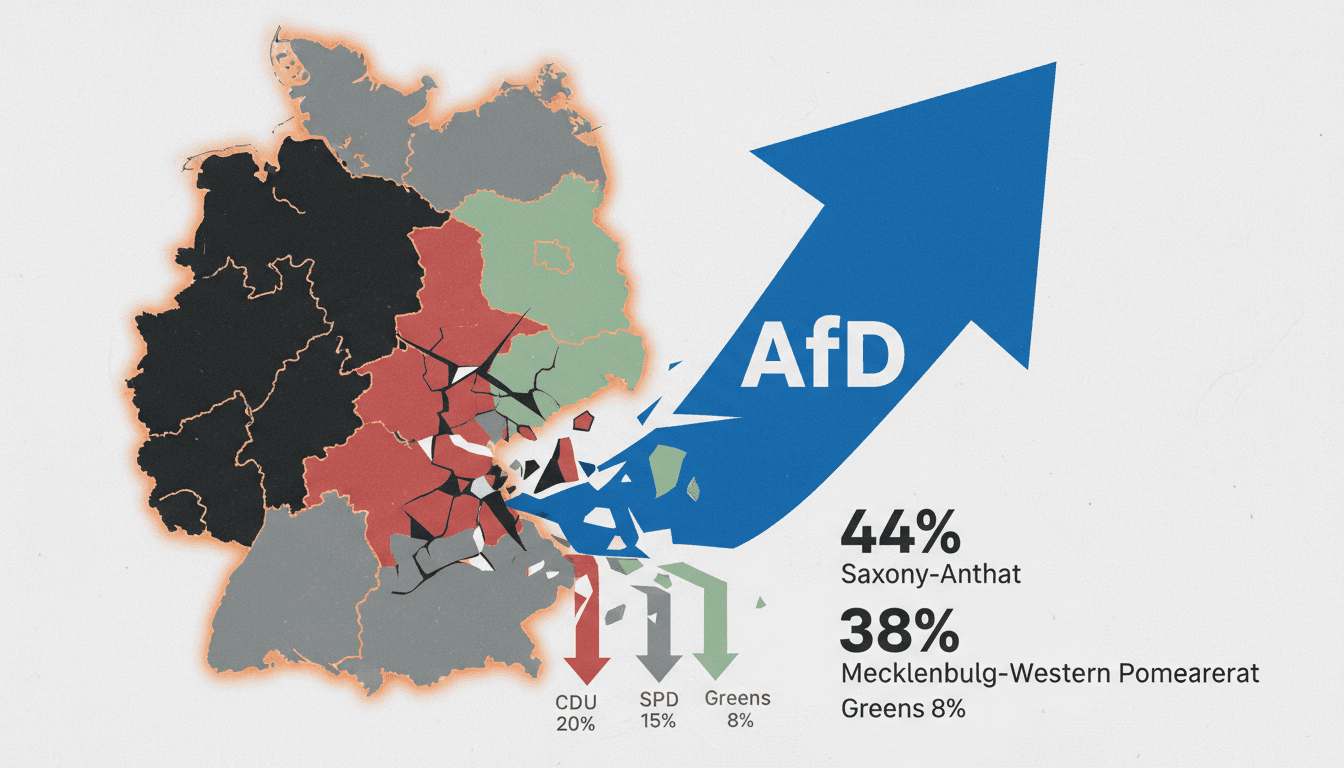
The recent electoral victories of the Alternative für Deutschland (AfD) in eastern Germany reveal a significant erosion of the mainstream political center, reflecting deep voter discontent.
What it signals
This shift indicates a growing polarization in political identity and economic stability. As traditional parties struggle to address pressing issues like immigration and economic stagnation, the rise of far-right sentiments could reshape work cultures and capital flows across Europe.
Why it's happening now
1. Economic Stagnation: The sluggish growth and unpopular reforms under Chancellor Friedrich Merz's coalition have left many feeling neglected, particularly in eastern regions historically affected by deindustrialization.
2. Immigration Concerns: Long-standing grievances over immigration policies have fueled support for the AfD, as voters seek alternatives that promise stricter controls and national prioritization.
3. Political Discontent: The collapse of support for the CDU, which fell below the 5% threshold in key states, reflects a broader disillusionment with established parties and their ability to represent the electorate's interests.
Who it's for (and who it leaves out)
The core beneficiaries of this shift are voters in eastern Germany who feel marginalized by mainstream politics. Conversely, this trend leaves out moderate and progressive voters who may find themselves increasingly isolated in a polarized political environment.
What to watch next
1. Leadership Challenges: Watch for potential leadership changes within the CDU as pressure mounts to respond to the AfD's rise and address internal party discontent.
2. Regional Policy Shifts: Monitor how neighboring EU states react to Germany's political changes, particularly regarding immigration and economic policies, which could influence broader European dynamics.
The AfD has achieved historic electoral success in Saxony-Anhalt and Mecklenburg-Western Pomerania.
The CDU will face increasing pressure to adapt its policies or risk further losses.
The long-term impact of these shifts on Germany's democratic institutions remains to be seen.
Top international stories selected by The Guardian editors.
"The Guardian is known for its progressive editorial stance and in-depth analysis."
— A47 Editor
Rise of the far right in Germany: how worried should we be? – The Latest
German Chancellor Friedrich Merz has vowed to remain in office despite significant electoral defeats for his Christian Democratic Union (CDU) party in recent state elections, where the far-right Alternative für Deutschland (AfD) secured 38% of the vo...
24/7 international news from a French perspective in multiple languages.
"France 24 is viewed as a globally focused outlet with balanced coverage and a European perspective."
— A47 Editor
Merz’s election setback: What it means for Germany?
German Chancellor Friedrich Merz and representatives of the Christian Democratic Union (CDU) faced a significant setback following the party's worst regional election defeat in postwar Germany, falling below the 5% threshold in Mecklenburg-Western Po...
European current affairs, EU politics, and regional developments.
"France 24 is viewed as a globally focused outlet with balanced coverage and a European perspective."
— A47 Editor
Five takeaways from Germany's regional elections after far-right gains
In the recent regional elections in Germany, the ruling Christian Democratic Union (CDU) faced a significant defeat, with Chancellor Friedrich Merz labeling the outcome a 'disaster.' The far-right Alternative für Deutschland (AfD) emerged as the stro...