
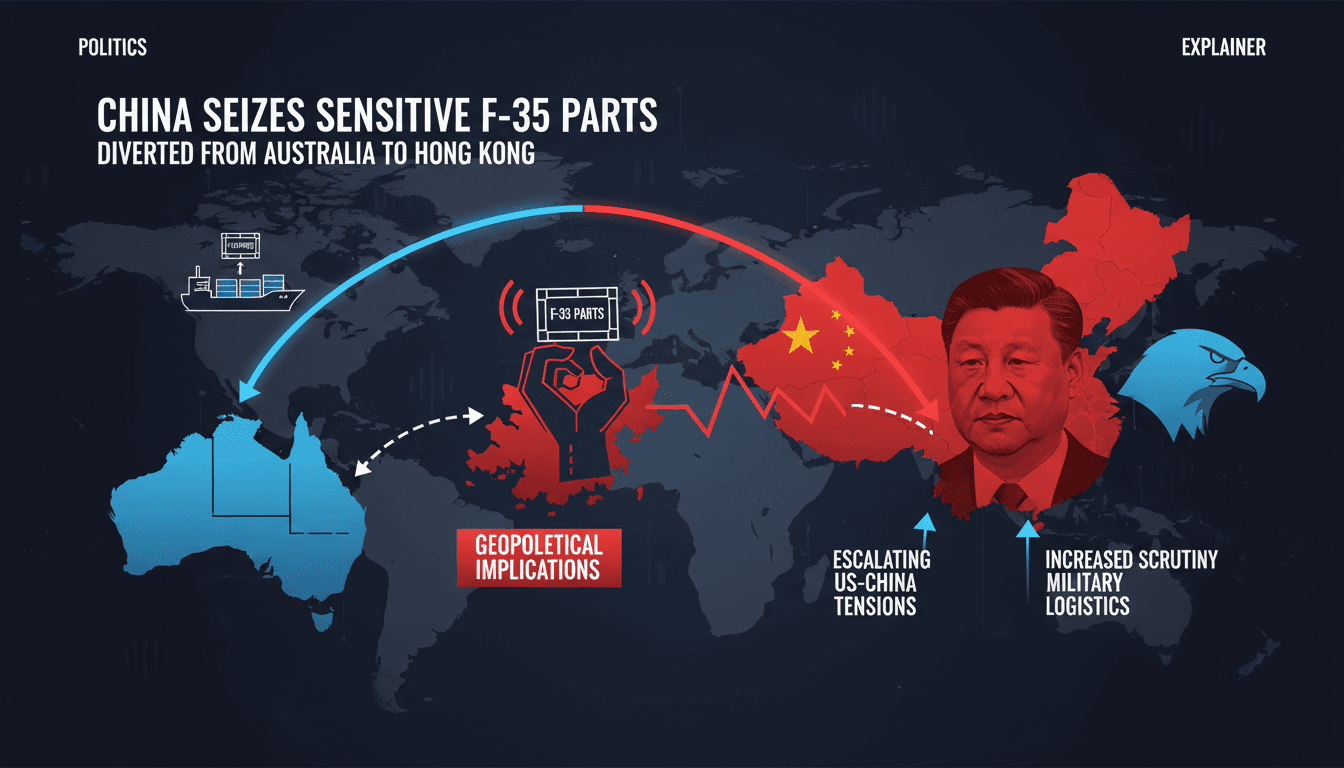
China Seizes Sensitive F-35 Parts Diverted from Australia to Hong Kong
Why it matters
This incident underscores the fragility of military supply chains and the potential for geopolitical tensions to disrupt global markets.
What happened (in 30 seconds)
- In late May 2026, UPS shipped sensitive F-35 parts from Australia to the US, but the shipment was diverted to Hong Kong.
- On September 23, 2026, Bloomberg reported that Chinese authorities seized the parts, which include a cockpit canopy and weapons-bay door.
- Investigations are ongoing by the US and Australian governments, with congressional oversight initiated in response to the incident.
The context you actually need
- The F-35 Lightning II is a fifth-generation stealth fighter, and its components are subject to strict export controls due to their advanced technology.
- Australia operates the F-35 as a close ally of the US, making the diversion of these parts particularly sensitive amid US-China strategic competition.
- The incident coincides with heightened US-China tensions and a state visit by Chinese President Xi Jinping to the US, raising concerns about technology security protocols.
What's really happening
In late May 2026, UPS was tasked with transporting critical components of the F-35 stealth fighter from the Royal Australian Air Force to the United States for inspection and potential repair. The shipment included a cockpit canopy and a weapons-bay door, both integral to the aircraft's operational capabilities. However, the shipment was rerouted through South Korea before arriving in Hong Kong, where Chinese authorities seized the parts.
This incident is emblematic of the broader strategic competition between the US and China, particularly in the realm of military technology. The F-35, developed by Lockheed Martin, is at the forefront of modern aerial warfare, featuring advanced radar-absorbing materials that enhance its stealth capabilities. The seizure of these components raises significant concerns about technology transfer and the security of sensitive military information.
The US Department of Defense and the F-35 Joint Program Office were quick to respond, confirming their awareness of the situation and initiating retrieval efforts. The House Armed Services Committee has also been involved, receiving multiple briefings and maintaining oversight of the incident. Australian officials, while acknowledging the diversion, have downplayed the sensitivity of the parts, stating that they were unserviceable.
The implications of this incident extend beyond military logistics. It highlights the vulnerabilities in global supply chains, particularly those involving sensitive technologies. As nations increasingly prioritize national security over economic cooperation, the potential for similar incidents to disrupt trade and diplomatic relations grows. The timing of the incident, coinciding with high-level diplomatic engagements, raises questions about the effectiveness of existing security protocols and the need for enhanced measures to protect sensitive military technologies.
Moreover, the incident could have ripple effects on defense contracts and international partnerships, as countries reassess their logistics and supply chain strategies in light of potential vulnerabilities. The ongoing investigations by both the US and Australian governments will likely lead to a reevaluation of export controls and security measures surrounding military technology.
Who feels it first (and how)
- Defense contractors: Companies like Lockheed Martin may face increased scrutiny and regulatory changes affecting their operations.
- Government agencies: The US Department of Defense and Australian Defense Ministry will need to enhance oversight and security protocols.
- International trade sectors: Businesses involved in military logistics may experience disruptions and increased compliance costs.
What to watch next
- Investigative outcomes: The results of the US and Australian investigations will clarify the implications for military logistics and export controls.
- Diplomatic responses: Watch for any shifts in US-China relations, particularly regarding technology security and military cooperation.
- Market reactions: Monitor how defense contractors and related sectors respond to potential regulatory changes stemming from this incident.
The parts seized include a cockpit canopy and weapons-bay door from an F-35.
Increased scrutiny on military logistics and export controls will emerge from this incident.
The long-term impact on US-China relations and defense contracts remains uncertain.
Frequently Asked Questions
- Why it matters?
- This incident underscores the fragility of military supply chains and the potential for geopolitical tensions to disrupt global markets.
- What happened (in 30 seconds)?
- In late May 2026, UPS shipped sensitive F-35 parts from Australia to the US, but the shipment was diverted to Hong Kong. On September 23, 2026, Bloomberg reported that Chinese authorities seized the parts, which include a cockpit canopy and weapons-bay door. Investigations are ongoing by the US and Australian governments, with congressional oversight initiated in response to the incident.
- What's really happening?
- In late May 2026, UPS was tasked with transporting critical components of the F-35 stealth fighter from the Royal Australian Air Force to the United States for inspection and potential repair. The shipment included a cockpit canopy and a weapons-bay door, both integral to the aircraft's operational capabilities. However, the shipment was rerouted through South Korea before arriving in Hong Kong, where Chinese authorities seized the parts. This incident is emblematic of the broader strategic com
- Who feels it first (and how)?
- Defense contractors: Companies like Lockheed Martin may face increased scrutiny and regulatory changes affecting their operations. Government agencies: The US Department of Defense and Australian Defense Ministry will need to enhance oversight and security protocols. International trade sectors: Businesses involved in military logistics may experience disruptions and increased compliance costs.
- What to watch next?
- Investigative outcomes: The results of the US and Australian investigations will clarify the implications for military logistics and export controls. Diplomatic responses: Watch for any shifts in US-China relations, particularly regarding technology security and military cooperation. Market reactions: Monitor how defense contractors and related sectors respond to potential regulatory changes stemming from this incident.
Macro commentary, policy analysis, growth/inflation themes, and global outlooks.
"Contextual macro coverage that complements day-to-day market headlines."
— A47 Editor
UPS diverts F-35 parts to Hong Kong, China takes possession - Bloomberg
UPS has diverted parts intended for the F-35 fighter jet to Hong Kong, where they have been taken into possession by China. This incident raises concerns regarding the security and control of sensitive military technology.
RT is a Russian state-funded network covering global events from a Russian perspective.
"RT is widely criticized for promoting pro-Kremlin narratives and is considered by many to be a state propaganda outlet."
— A47 Editor
US-made F-35 fighter parts go missing in shipment blunder
Australia is assisting the United States in investigating the disappearance of F-35 fighter jet parts that were mistakenly sent to Hong Kong instead of their intended destination. This incident has raised concerns regarding the security and integrity...
International coverage from The Guardian's global desks.
"The Guardian is known for its progressive editorial stance and in-depth analysis."
— A47 Editor
Australia investigating how F-35 fighter jet parts bound for US went missing in Hong Kong
The Australian Department of Defence is investigating the unexpected diversion of F-35 fighter jet parts bound for the US to Hong Kong, as confirmed by Acting Prime Minister Richard Marles. This incident raises concerns about the potential exposure o...