
UAE Central Bank Prohibits Bank Melli Iran Transactions Over Compliance Issues
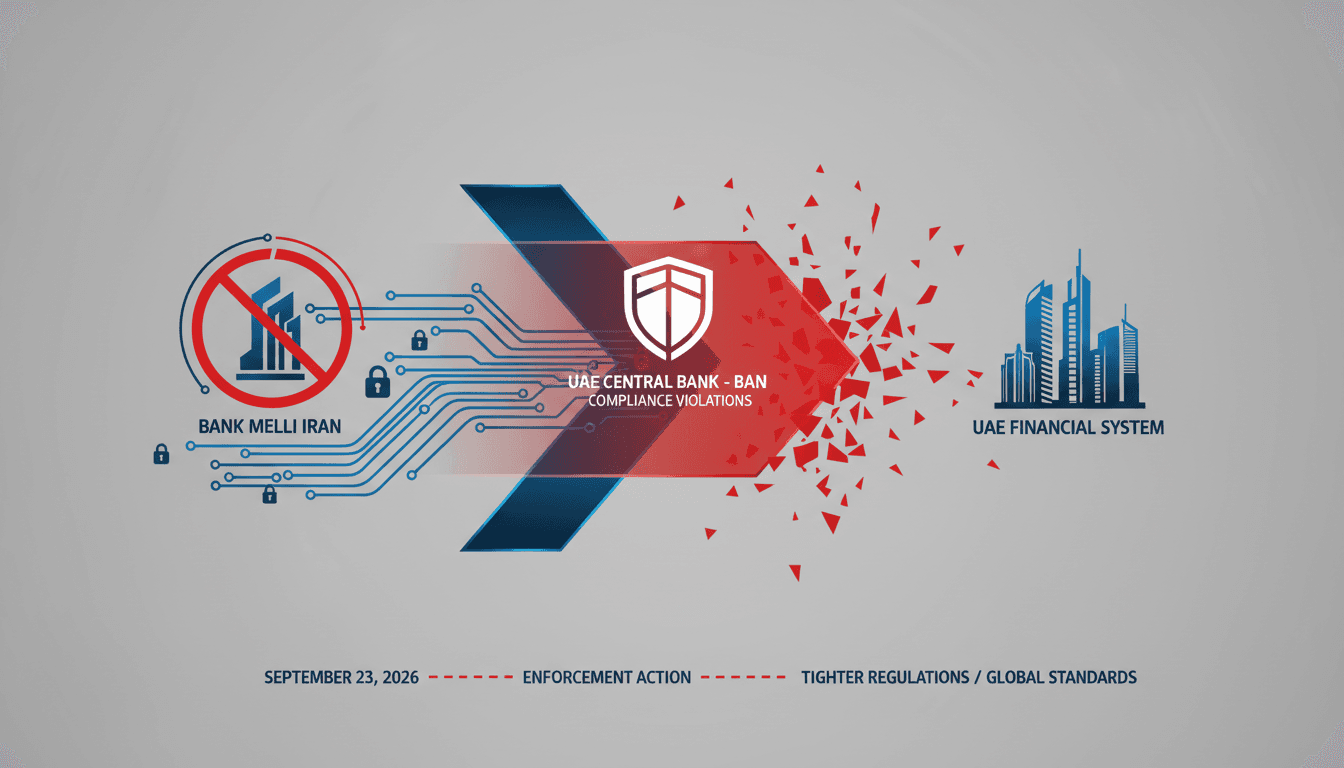
Why it matters
This enforcement action underscores the UAE's commitment to international financial compliance and its geopolitical stance.
What happened (in 30 seconds)
- On September 23, 2026, the Central Bank of the UAE banned all financial transactions by Bank Melli Iran branches in the UAE with Iran.
- The ban follows inspections that revealed violations of anti-money laundering and counter-terrorism financing regulations.
- This measure affects approximately 7 branches of Bank Melli Iran operating in the UAE, including trade finance and fund transfers.
The context you actually need
- Increased regulatory scrutiny: The UAE has ramped up its financial oversight amid rising geopolitical tensions with Iran.
- Suspension of exchanges: In August 2026, the UAE suspended all commercial and financial exchanges with Iran, aligning with global compliance standards.
- Legislative backdrop: The ban is part of the enforcement of updated central bank legislation enacted in 2025 aimed at enhancing financial system integrity.
What's really happening
On September 23, 2026, the Central Bank of the UAE (CBUAE) took decisive action against Bank Melli Iran, a state-owned bank with branches in the UAE, by prohibiting all financial transactions to and from Iran. This ban was enacted under Article (168-1-C) of Federal Decree-Law No. (6) of 2025, which empowers the CBUAE to enforce compliance with anti-money laundering (AML) and counter-terrorism financing (CTF) regulations. Inspections conducted by the CBUAE revealed significant compliance violations, prompting this stringent enforcement measure.
The implications of this ban are multifaceted. First, it aims to protect the integrity of the UAE's financial system, which is crucial for maintaining investor confidence and aligning with international standards. The UAE has positioned itself as a global financial hub, and any lapses in compliance could jeopardize its reputation and economic stability. By taking this action, the CBUAE signals its commitment to uphold rigorous financial regulations and enhance its supervisory framework.
The ban specifically targets cross-border transactions, including trade finance and remittances, which are vital for businesses operating in the region. Approximately seven branches of Bank Melli Iran were affected, indicating a significant disruption for those relying on these financial services. While the immediate impact on UAE residents and local banking services in Dubai appears limited, businesses engaged in trade or financial activities with Iran may face challenges in securing necessary funding or facilitating transactions.
This enforcement action also reflects broader geopolitical dynamics. The UAE's decision to suspend all commercial and financial exchanges with Iran in August 2026 aligns with its strategic interests amid rising tensions in the region. By tightening financial regulations, the UAE aims to mitigate risks associated with illicit financial activities and reinforce its position in the global financial landscape.
As the CBUAE continues to enhance its supervisory measures, the focus will likely remain on ensuring compliance with international standards. This could lead to further regulatory actions against entities deemed non-compliant, impacting various sectors and financial institutions operating within the UAE.
Who feels it first (and how)
- Businesses with ties to Iran: Companies relying on Bank Melli Iran for trade finance or remittances will face immediate disruptions.
- Financial institutions: Banks and financial service providers in the UAE may need to reassess their compliance frameworks and risk exposure.
- Investors: Those with investments linked to Iranian markets may experience volatility and uncertainty.
What to watch next
- Regulatory updates: Keep an eye on any further announcements from the CBUAE regarding compliance measures and potential sanctions.
- Market reactions: Monitor how businesses and financial institutions adapt to this ban and any shifts in trade patterns with Iran.
- Geopolitical developments: Watch for changes in UAE-Iran relations that could influence future financial regulations and compliance requirements.
The ban on transactions by Bank Melli Iran branches is currently in effect.
Further regulatory actions may follow if additional compliance violations are identified.
The long-term impact on UAE-Iran trade relations and the broader regional financial landscape remains uncertain.
Frequently Asked Questions
- Why it matters?
- This enforcement action underscores the UAE's commitment to international financial compliance and its geopolitical stance.
- What happened (in 30 seconds)?
- On September 23, 2026, the Central Bank of the UAE banned all financial transactions by Bank Melli Iran branches in the UAE with Iran. The ban follows inspections that revealed violations of anti-money laundering and counter-terrorism financing regulations. This measure affects approximately 7 branches of Bank Melli Iran operating in the UAE, including trade finance and fund transfers.
- What's really happening?
- On September 23, 2026, the Central Bank of the UAE (CBUAE) took decisive action against Bank Melli Iran, a state-owned bank with branches in the UAE, by prohibiting all financial transactions to and from Iran. This ban was enacted under Article (168-1-C) of Federal Decree-Law No. (6) of 2025, which empowers the CBUAE to enforce compliance with anti-money laundering (AML) and counter-terrorism financing (CTF) regulations. Inspections conducted by the CBUAE revealed significant compliance violatio
- Who feels it first (and how)?
- Businesses with ties to Iran: Companies relying on Bank Melli Iran for trade finance or remittances will face immediate disruptions. Financial institutions: Banks and financial service providers in the UAE may need to reassess their compliance frameworks and risk exposure. Investors: Those with investments linked to Iranian markets may experience volatility and uncertainty.
- What to watch next?
- Regulatory updates: Keep an eye on any further announcements from the CBUAE regarding compliance measures and potential sanctions. Market reactions: Monitor how businesses and financial institutions adapt to this ban and any shifts in trade patterns with Iran. Geopolitical developments: Watch for changes in UAE-Iran relations that could influence future financial regulations and compliance requirements.
Arabic-language economic and business reporting with strong UAE market relevance.
"Emarat Al Youm business coverage often centers UAE property, banking, consumer issues, and economic policy."
— A47 Editor
«المركزي» يفرض جزاءات صارمة بحق فروع بنك ملي إيران في الإمارات «المركزي» يفرض جزاءات صارمة بحق فروع بنك ملي إيران في الإمارات
The Central Bank of the UAE has imposed strict enforcement actions against the branches of Bank Melli Iran operating in the UAE, prohibiting them from conducting any financial transactions to and from Iran. This decision is based on Article 168 of th...
UAE-based English-language newspaper covering regional politics, economics, and global affairs.
"The National reflects Emirati policy perspectives while maintaining international editorial standards."
— A47 Editor
UAE Central Bank bars Bank Melli Iran from conducting transactions
The UAE Central Bank has barred Bank Melli Iran from conducting any financial transactions, a decision that reflects ongoing regulatory scrutiny of foreign banks operating within the UAE. This action is part of a broader effort to enforce compliance ...
Business, markets, economy, and corporate news with strong UAE and regional relevance.
"Emirates 24|7 business coverage tends to center UAE markets, property, regulation, and regional economic developments."
— A47 Editor
Central Bank imposes strict sanctions on branches of Bank Melli Iran operating in UAE
The Central Bank of the UAE has imposed strict sanctions on the UAE branches of Bank Melli Iran, prohibiting all financial transactions to and from Iran, including trade finance and fund transfers. This action follows violations of regulations relate...