
U.S. Media Outlets Sue Trump Administration Over White House Access Ban
Why it matters
This case highlights the ongoing tensions between government and media, impacting how information is disseminated and perceived.
What happened (in 30 seconds)
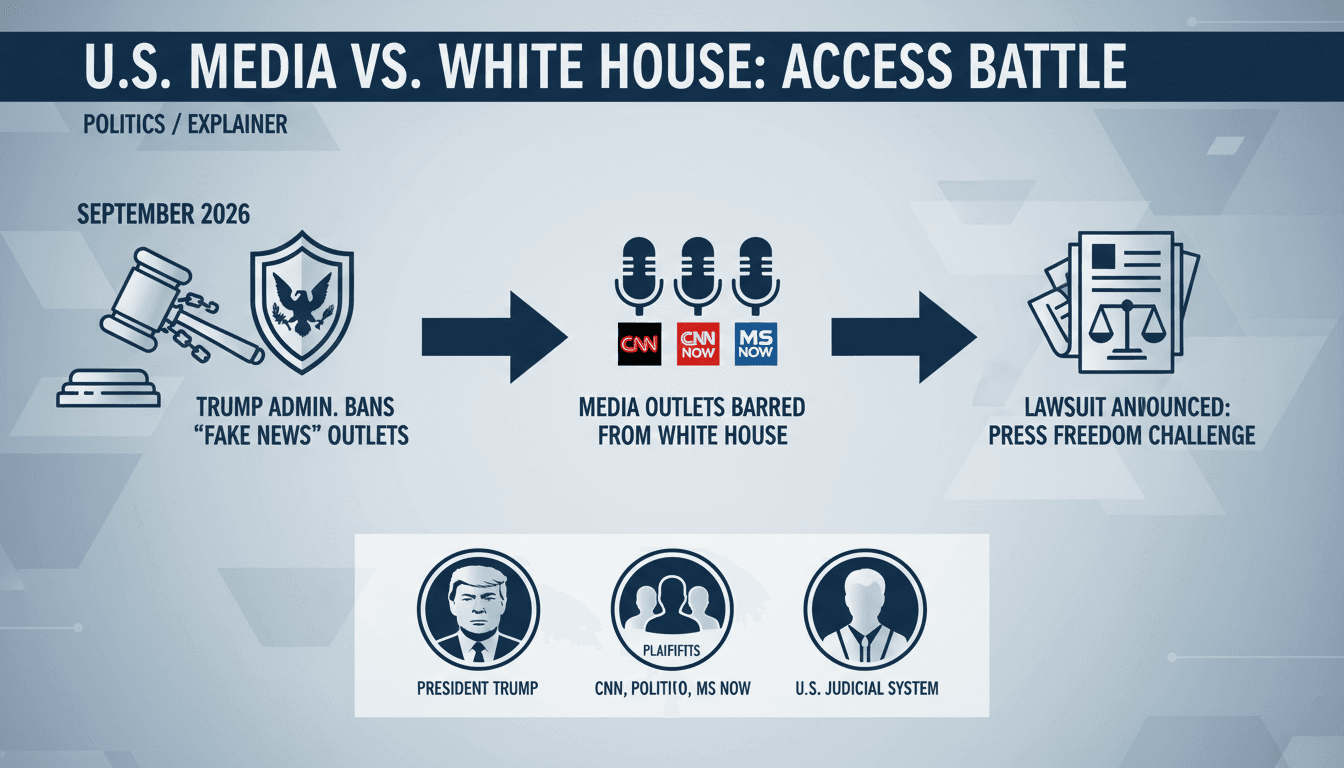
- On September 21, 2026, CNN, Politico, and MS NOW announced a lawsuit against the Trump administration for revoking their White House access.
- The ban, effective September 19-20, was justified by Trump as a response to what he termed "fake news."
- In solidarity, major networks like CBS, ABC, NBC, and Fox News suspended their participation in the White House press pool.
The context you actually need
- Prior incidents of media access restrictions have occurred, including a February 2026 dispute with the Associated Press over terminology.
- Trump's administration has a history of criticizing media outlets, often pursuing legal actions against them for unfavorable coverage.
- The lawsuit alleges viewpoint discrimination, raising significant First Amendment concerns regarding press freedom.
What's really happening
The lawsuit filed by CNN, Politico, and MS NOW against the Trump administration is a critical moment in the ongoing struggle between the media and government. The immediate trigger was the revocation of press credentials for these outlets, which the administration justified as a necessary measure to combat what it labeled as "fiction and lies." This action is not merely a punitive measure; it reflects a broader strategy by the Trump administration to control the narrative and limit dissenting voices in the media landscape.
The First Amendment guarantees freedom of the press, and this lawsuit raises fundamental questions about what constitutes viewpoint discrimination. The plaintiffs argue that the revocation of access is not just a matter of privilege but a direct attack on their ability to report on the government. By framing the ban as a response to false reporting, the administration attempts to position itself as a protector of truth, while critics argue that it undermines the very principles of a free press.
The implications of this lawsuit extend beyond the immediate parties involved. With 49 media organizations filing an amicus brief in support of the plaintiffs, there is a clear indication of widespread concern within the media community about the precedent this case could set. If the courts side with the Trump administration, it could embolden future administrations to impose similar restrictions, effectively chilling journalistic inquiry and limiting public access to information.
Moreover, the solidarity shown by major networks in suspending their participation in the White House press pool underscores the collective recognition of the threat posed to press freedom. This action not only amplifies the stakes of the lawsuit but also signals to the public that the media is willing to stand together against perceived injustices.
As the case unfolds, it will be crucial to monitor the judicial response and the potential ramifications for press access and accountability. The outcome could redefine the relationship between the government and the media, impacting how information is reported and consumed in the United States.
Who feels it first (and how)
- Journalists: Directly affected by access restrictions, impacting their ability to report on government activities.
- Media organizations: Facing potential shifts in operational protocols and access to information.
- Public: As consumers of news, they may experience a reduction in diverse viewpoints and critical reporting.
What to watch next
- Judicial ruling: The outcome of the emergency hearing on September 23, 2026, will set a precedent for future media access disputes.
- Media responses: Watch for further solidarity actions from other media organizations, which could influence public perception and government accountability.
- Public opinion: Shifts in how the public views press freedom and government transparency may emerge as the case progresses.
The lawsuit has been filed and an emergency hearing has occurred.
Increased scrutiny on government-media relations and potential changes in press access policies.
The long-term implications for press freedom and how this case may influence future administrations.
Frequently Asked Questions
- Why it matters?
- This case highlights the ongoing tensions between government and media, impacting how information is disseminated and perceived.
- What happened (in 30 seconds)?
- On September 21, 2026, CNN, Politico, and MS NOW announced a lawsuit against the Trump administration for revoking their White House access. The ban, effective September 19-20, was justified by Trump as a response to what he termed "fake news." In solidarity, major networks like CBS, ABC, NBC, and Fox News suspended their participation in the White House press pool.
- What's really happening?
- The lawsuit filed by CNN, Politico, and MS NOW against the Trump administration is a critical moment in the ongoing struggle between the media and government. The immediate trigger was the revocation of press credentials for these outlets, which the administration justified as a necessary measure to combat what it labeled as "fiction and lies." This action is not merely a punitive measure; it reflects a broader strategy by the Trump administration to control the narrative and limit dissenting vo
- Who feels it first (and how)?
- Journalists: Directly affected by access restrictions, impacting their ability to report on government activities. Media organizations: Facing potential shifts in operational protocols and access to information. Public: As consumers of news, they may experience a reduction in diverse viewpoints and critical reporting.
- What to watch next?
- Judicial ruling: The outcome of the emergency hearing on September 23, 2026, will set a precedent for future media access disputes. Media responses: Watch for further solidarity actions from other media organizations, which could influence public perception and government accountability. Public opinion: Shifts in how the public views press freedom and government transparency may emerge as the case progresses.
Arabic-language reporting on global and regional news.
"BBC Arabic is part of the BBC, generally regarded for editorial standards and broad international coverage."
— A47 Editor
ثلاث مؤسسات إعلامية أمريكية تعتزم مقاضاة إدارة ترامب بعد منعها من دخول البيت الأبيض
Three American media organizations plan to sue the Trump administration after being barred from entering the White House, asserting that the government should not dictate what the press can report or publish. This legal action highlights ongoing tens...
Arabic-language political and world news coverage for UAE readers.
"Emarat Al Youm world coverage usually presents international developments through a UAE and Arab audience lens."
— A47 Editor
وسائل إعلام أميركية تقاضي ترامب.. و4 شبكات إخبارية توقف تغطيتها لأخباره وسائل إعلام أميركية تقاضي ترامب.. و4 شبكات إخبارية توقف تغطيتها لأخباره
American media outlets CNN, MSNBC, and Politico have announced a lawsuit against former President Donald Trump after being barred from entering the White House. This action follows a significant restriction on their ability to report on Trump, raisin...
Arabic-language coverage of political affairs and current events.
"Okaz political coverage typically follows mainstream Saudi framing on national and regional affairs."
— A47 Editor
بسبب منع الصحفيين.. 3 مؤسسات إعلامية تصعّد ضد إدارة ترمب
The Trump administration has escalated tensions with the media by banning CNN, MS NOW, and Politico from accessing the White House, citing their reporting as 'fake news.' This decision, which took effect immediately, has led to a legal challenge from...