
Pope Leo XIV Issues Warnings on AI Ethics During France Visit
Why it matters
Pope Leo XIV's warnings highlight the urgent need for ethical frameworks in AI development, impacting global governance and corporate responsibility.
What happened (in 30 seconds)
- Pope Leo XIV delivered a stark warning about AI during his first visit to France on September 25, 2026.
- President Emmanuel Macron echoed the pontiff's calls for technology to serve humanity, advocating for international cooperation on AI ethics.
- A large Mass is planned in Paris, expected to draw over 500,000 attendees, emphasizing the visit's significance.
The context you actually need
- AI governance is a hot topic globally, with increasing calls for regulation and ethical standards as technology advances.
- Pope Leo XIV's encyclical, "Magnifica humanitas," focuses on the moral implications of AI, marking a pivotal moment in the intersection of faith and technology.
- France's recent legislation on assisted dying and ongoing security concerns in Europe add layers of complexity to the discussions on human rights and technology.
What's really happening
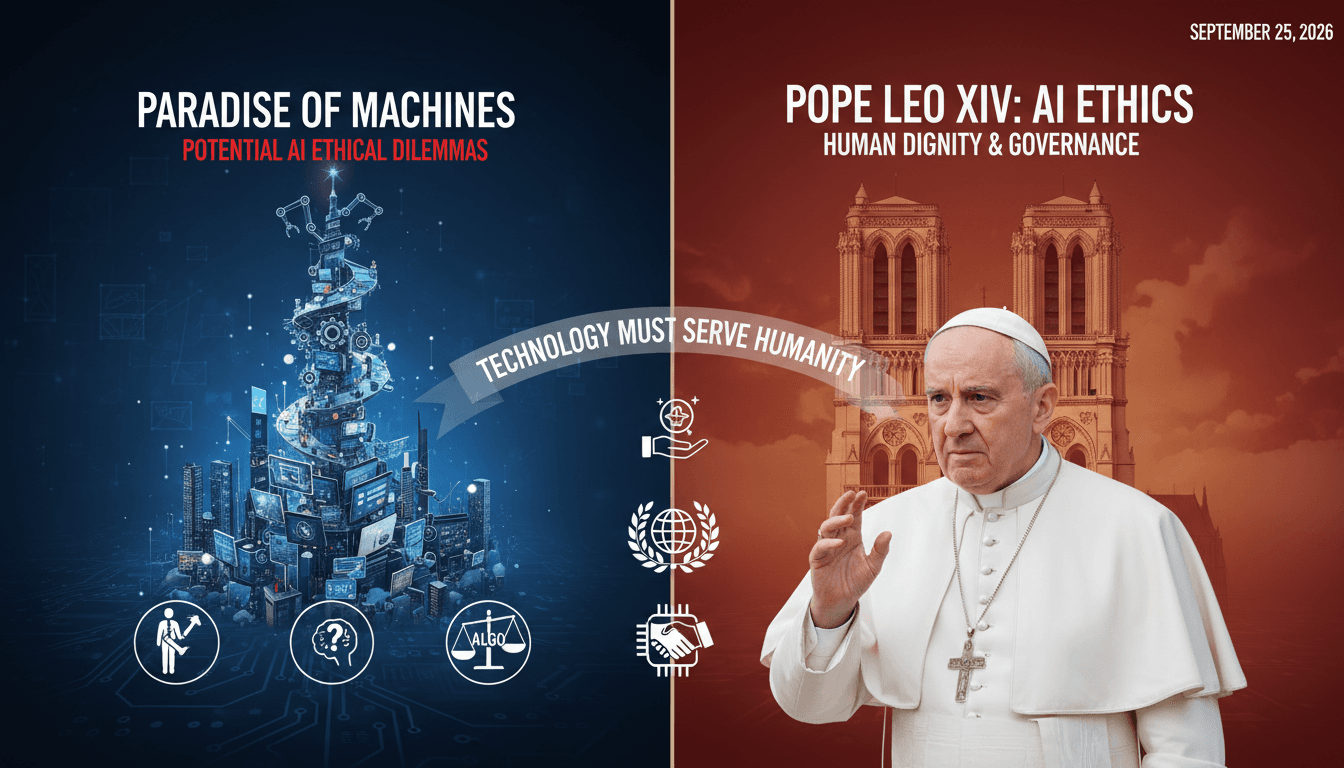
Pope Leo XIV's visit to France marks a significant moment in the ongoing dialogue about artificial intelligence and its implications for humanity. His warnings about a "paradise of machines" reflect a growing concern that unchecked technological advancement could lead to a loss of human dignity and autonomy. This visit is not just a ceremonial event; it is a strategic engagement aimed at influencing global discourse on AI ethics.
The pontiff's emphasis on technology serving humanity rather than dominating it resonates with a broader societal anxiety regarding AI's rapid integration into daily life. As AI systems become more capable, the potential for misuse or unintended consequences increases. This concern is particularly relevant in sectors such as healthcare, finance, and education, where AI's decisions can significantly impact human lives.
Pope Leo XIV's encyclical, "Magnifica humanitas," serves as a foundational document for his papacy, outlining a vision for ethical AI development. By calling for regulation and ethical education, he aims to foster a culture where technology is developed with a focus on human welfare. This approach aligns with the sentiments expressed by leaders like President Macron, who advocates for an international organization to oversee technological progress in a manner that promotes justice and equity.
The backdrop of France's recent legislative changes, particularly regarding assisted dying, adds another layer to the conversation. As societies grapple with the ethical implications of technology in sensitive areas, the intersection of AI and human rights becomes increasingly critical. The pope's visit underscores the need for a collaborative approach to these challenges, bridging the gap between secular governance and religious moral guidance.
In essence, the pope's warnings are a call to action for policymakers, technologists, and society at large to engage in meaningful discussions about the future of AI. The implications of these discussions will shape not only the technological landscape but also the ethical frameworks that govern our interactions with machines.
Who feels it first (and how)
- Tech companies: They will face increased scrutiny and pressure to adopt ethical AI practices.
- Policymakers: They must navigate the complexities of regulating AI while balancing innovation and ethical considerations.
- Educators: They will need to incorporate AI ethics into curricula to prepare future leaders for responsible technology use.
- Healthcare professionals: They may experience shifts in how AI tools are integrated into patient care, impacting decision-making processes.
- General public: Individuals will encounter the effects of AI in their daily lives, influencing everything from job security to personal privacy.
What to watch next
- International AI regulations: Watch for developments in global agreements on AI ethics, which could reshape industry standards.
- Public sentiment: Monitor how public opinion shifts regarding AI's role in society, especially in light of ethical concerns raised by leaders like Pope Leo XIV.
- Corporate responses: Observe how major tech companies adapt their practices in response to calls for ethical AI, potentially influencing market dynamics.
Pope Leo XIV's visit has sparked renewed discussions on AI ethics globally.
Increased collaboration between religious and secular leaders on technology governance will emerge.
The long-term impact of these discussions on AI regulation and public policy remains to be seen.
Frequently Asked Questions
- Why it matters?
- Pope Leo XIV's warnings highlight the urgent need for ethical frameworks in AI development, impacting global governance and corporate responsibility.
- What happened (in 30 seconds)?
- Pope Leo XIV delivered a stark warning about AI during his first visit to France on September 25, 2026. President Emmanuel Macron echoed the pontiff's calls for technology to serve humanity, advocating for international cooperation on AI ethics. A large Mass is planned in Paris, expected to draw over 500,000 attendees, emphasizing the visit's significance.
- What's really happening?
- Pope Leo XIV's visit to France marks a significant moment in the ongoing dialogue about artificial intelligence and its implications for humanity. His warnings about a "paradise of machines" reflect a growing concern that unchecked technological advancement could lead to a loss of human dignity and autonomy. This visit is not just a ceremonial event; it is a strategic engagement aimed at influencing global discourse on AI ethics. The pontiff's emphasis on technology serving humanity rather than
- Who feels it first (and how)?
- Tech companies: They will face increased scrutiny and pressure to adopt ethical AI practices. Policymakers: They must navigate the complexities of regulating AI while balancing innovation and ethical considerations. Educators: They will need to incorporate AI ethics into curricula to prepare future leaders for responsible technology use. Healthcare professionals: They may experience shifts in how AI tools are integrated into patient care, impacting decision-making processes. General publ
- What to watch next?
- International AI regulations: Watch for developments in global agreements on AI ethics, which could reshape industry standards. Public sentiment: Monitor how public opinion shifts regarding AI's role in society, especially in light of ethical concerns raised by leaders like Pope Leo XIV. Corporate responses: Observe how major tech companies adapt their practices in response to calls for ethical AI, potentially influencing market dynamics.
International coverage from The Guardian's global desks.
"The Guardian is known for its progressive editorial stance and in-depth analysis."
— A47 Editor
Pope Leo warns against AI and says technology ‘must remain at service of humans’ during first visit to France – as it happened
During his first visit to France, Pope Leo XIV delivered a significant speech addressing the ethical implications of artificial intelligence (AI), emphasizing that technology should serve humanity. His visit includes formal meetings at the Élysée Pal...
24/7 international news from a French perspective in multiple languages.
"France 24 is viewed as a globally focused outlet with balanced coverage and a European perspective."
— A47 Editor
REPLAY: Pope Leo XIV's address at UNESCO
Pope Leo XIV delivered an address at UNESCO on September 25, 2026, during his visit to France, where he emphasized the importance of peace, culture, and international cooperation in the context of advancing technology and artificial intelligence.
24/7 international news from a French perspective in multiple languages.
"France 24 is viewed as a globally focused outlet with balanced coverage and a European perspective."
— A47 Editor
France: Pope Leo XIV keeps visit focused on faith over politics
Pope Leo XIV's visit to France from September 25 to 28 is marked by a deliberate focus on spiritual matters, as he declined a state dinner and a meeting with President Emmanuel Macron, emphasizing his apostolic mission over political engagements. The...