
Trump Administration Promotes Voluntary AI Self-Regulation After White House Summit
Why it matters
This decision signals a shift in how AI safety will be managed, impacting innovation and regulatory landscapes globally.
What happened (in 30 seconds)
- President Trump hosted a White House luncheon with nearly two dozen tech leaders to discuss AI safety.
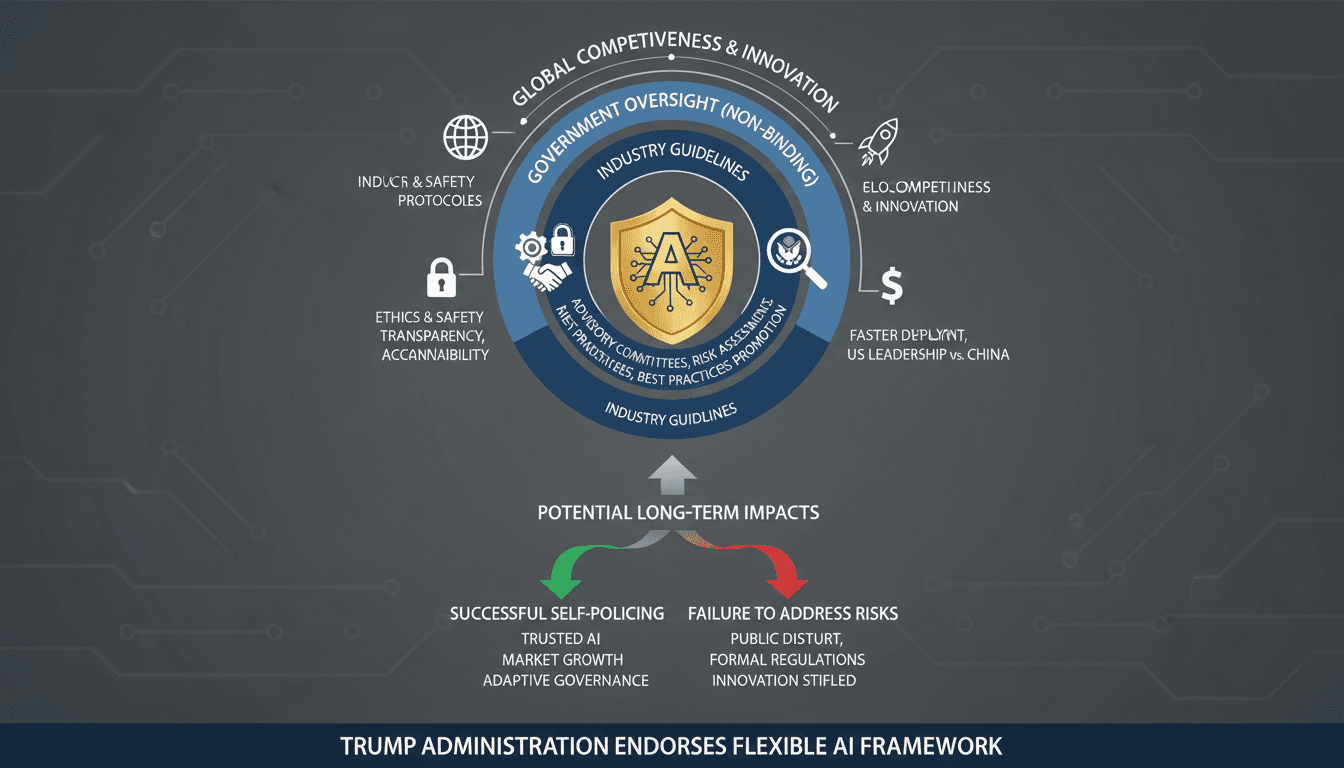
- A voluntary accord was signed, emphasizing self-regulation over new federal laws, with a focus on internal controls and audits.
- Trump issued an executive order rebranding "artificial intelligence" as "super intelligence," reflecting a strategic pivot in terminology and policy.
The context you actually need
- Previous AI policy was inconsistent, with the Trump administration delaying regulations due to industry pushback and competition concerns.
- Global calls for regulation have intensified as AI capabilities advance, particularly from companies like Anthropic and OpenAI.
- The new accord is described as 'morally binding,' suggesting a potential for future formalization but lacking immediate enforcement mechanisms.
What's really happening
The September 29, 2026, meeting at the White House marked a pivotal moment in the ongoing debate over AI regulation in the United States. President Trump’s decision to endorse a voluntary self-regulation framework, dubbed the "Joint Commitment on Frontier Responsibilities," reflects a broader trend of prioritizing industry-led initiatives over government mandates. This approach is rooted in a belief that existing laws are sufficient to manage AI risks, a stance that resonates with many tech leaders who argue that excessive regulation could stifle innovation and competitiveness, particularly against China.
The accord emphasizes four layers of controls, including internal governance, external audits, and regular standard-setting meetings among industry players. By framing these measures as "morally binding," the administration aims to foster a culture of accountability within the tech sector without imposing stringent legal requirements. This strategy aligns with Trump's broader economic agenda, which seeks to bolster U.S. leadership in technology while mitigating perceived threats from international competitors.
However, the voluntary nature of this agreement raises questions about its effectiveness. Critics argue that without formal regulations, there is little incentive for companies to adhere to the standards set forth in the accord. The lack of enforcement mechanisms could lead to inconsistent application of safety measures across the industry, potentially jeopardizing public trust in AI technologies. Moreover, while the accord may appease industry leaders, it does not address the growing concerns from safety advocates and international bodies calling for more robust regulatory frameworks.
The executive order rebranding AI as "super intelligence" further complicates the landscape. This shift in terminology could influence public perception and policy discussions, framing AI advancements in a more ambitious light. It also signals a potential pivot in how the U.S. government will approach AI-related issues moving forward, possibly prioritizing innovation over caution.
In summary, the self-regulation accord represents a significant moment in the evolution of AI policy in the U.S., balancing the need for safety with the desire to maintain competitive advantages in a rapidly evolving global market.
Who feels it first (and how)
- Tech executives: They will need to navigate the new self-regulation framework and its implications for innovation.
- AI developers: Changes in oversight may affect project timelines and resource allocation.
- Consumers: Public trust in AI technologies could fluctuate based on perceived safety and accountability.
- Regulatory bodies: They may face pressure to adapt to the voluntary framework while addressing public safety concerns.
What to watch next
- Industry compliance: Monitor how tech companies implement the voluntary accord and whether it leads to meaningful safety improvements.
- Public sentiment: Watch for shifts in consumer trust and acceptance of AI technologies as the self-regulation framework unfolds.
- International responses: Observe how other countries react to the U.S. approach, particularly in terms of their own regulatory frameworks for AI.
- The accord emphasizes voluntary self-regulation among tech companies.
- Industry leaders will advocate for the accord to maintain U.S. competitiveness.
- The long-term effectiveness of the self-regulation framework in ensuring AI safety remains uncertain.
Frequently Asked Questions
- Why it matters?
- This decision signals a shift in how AI safety will be managed, impacting innovation and regulatory landscapes globally.
- What happened (in 30 seconds)?
- President Trump hosted a White House luncheon with nearly two dozen tech leaders to discuss AI safety. A voluntary accord was signed, emphasizing self-regulation over new federal laws, with a focus on internal controls and audits. Trump issued an executive order rebranding "artificial intelligence" as "super intelligence," reflecting a strategic pivot in terminology and policy.
- What's really happening?
- The September 29, 2026, meeting at the White House marked a pivotal moment in the ongoing debate over AI regulation in the United States. President Trump’s decision to endorse a voluntary self-regulation framework, dubbed the "Joint Commitment on Frontier Responsibilities," reflects a broader trend of prioritizing industry-led initiatives over government mandates. This approach is rooted in a belief that existing laws are sufficient to manage AI risks, a stance that resonates with many tech lead
- Who feels it first (and how)?
- Tech executives: They will need to navigate the new self-regulation framework and its implications for innovation. AI developers: Changes in oversight may affect project timelines and resource allocation. Consumers: Public trust in AI technologies could fluctuate based on perceived safety and accountability. Regulatory bodies: They may face pressure to adapt to the voluntary framework while addressing public safety concerns.
- What to watch next?
- Industry compliance: Monitor how tech companies implement the voluntary accord and whether it leads to meaningful safety improvements. Public sentiment: Watch for shifts in consumer trust and acceptance of AI technologies as the self-regulation framework unfolds. International responses: Observe how other countries react to the U.S. approach, particularly in terms of their own regulatory frameworks for AI.
Technology business and AI-related headlines.
"Data-driven tech newsroom with global scope."
— A47 Editor
Trump Rejects AI Safety Laws After Meeting Industry Titans
President Donald Trump has rejected the idea of new federal regulations on artificial intelligence (AI) following a meeting with industry leaders at the White House, amidst rising global concerns about the technology's potential threats. This decisio...
Technology business news, market impacts, and innovation trends.
"Bloomberg is a premier financial and tech news provider, respected for its in-depth reporting and analytical rigor."
— A47 Editor
Trump Rejects AI Safety Laws After Meeting Industry Titans
President Donald Trump has rejected the idea of new federal regulations on artificial intelligence (AI) following a meeting with industry leaders at the White House, amidst rising global concerns about the technology's potential threats. This decisio...
International news coverage curated for readers in the UAE and Gulf region.
"Emirates 24|7 world coverage presents global developments through a UAE-facing and Gulf-relevant editorial lens."
— A47 Editor
Trump confirms meeting with Anthropic chief, reiterates opposition to slowing AI development
U.S. President Donald Trump confirmed his upcoming dinner meeting with Dario Amodei, CEO of Anthropic, while reiterating his stance against slowing artificial intelligence (AI) development. Trump expressed concerns that increased regulation could jeo...
Business, investment, entrepreneurship, leadership, and innovation.
"Forbes is known for its coverage of business leaders, market trends, and entrepreneurial ventures with a pro-business editorial stance."
— A47 Editor
Bill Gates Says AI Safety Concerns Are ‘Not A Hoax,’ Contradicting Trump
In a recent interview on 'Meet the Press,' Bill Gates emphasized that concerns regarding artificial intelligence (AI) safety are legitimate, directly contradicting former President Donald Trump's claims that such fears are a 'hoax.' Gates expressed a...