
US Completes Military Withdrawal from Iraq Ending Operation Inherent Resolve
Why it matters
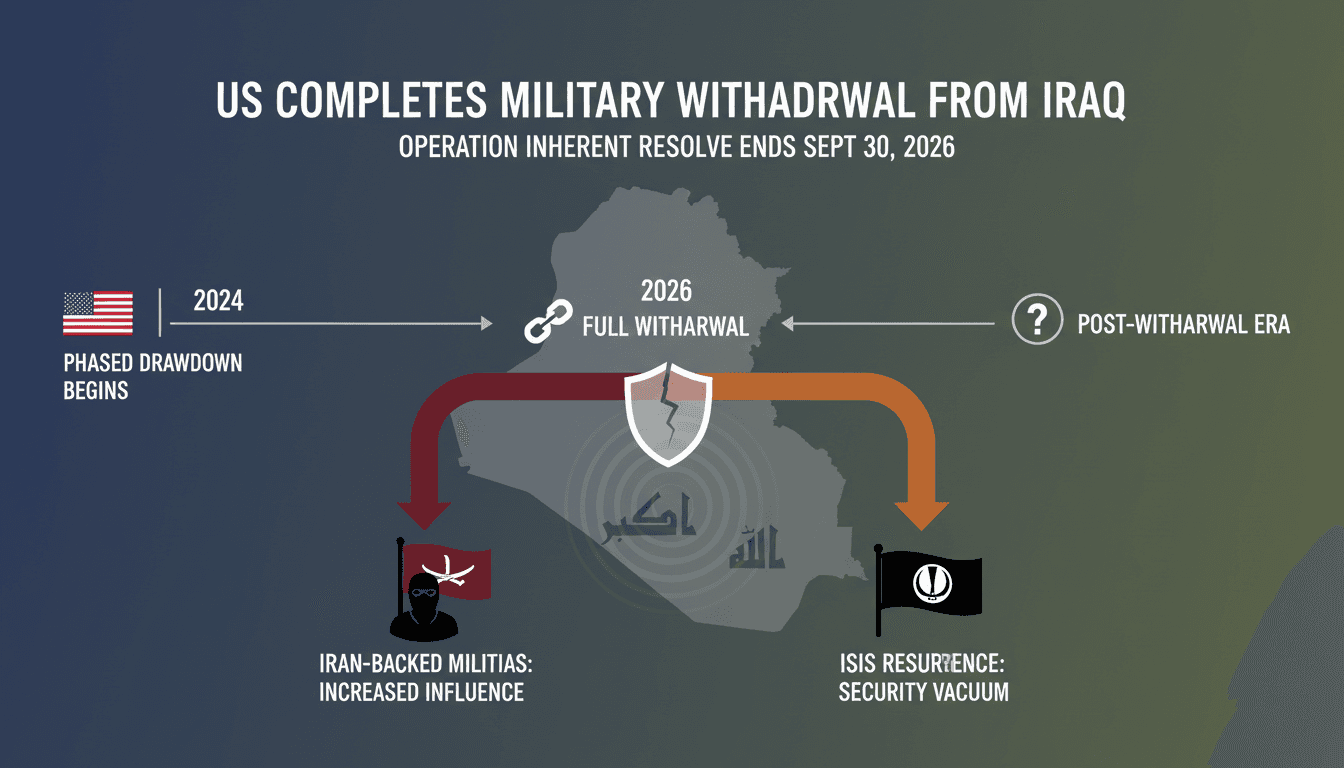
The withdrawal raises concerns about a resurgence of militant groups, which could destabilize the Middle East and affect global economic conditions.
What happened (in 30 seconds)
- US forces completed their withdrawal from Iraq on September 30, 2026, concluding a phased drawdown initiated in 2024.
- Iraqi officials express alarm over the potential security vacuum that may empower Iran-backed militias and allow ISIS remnants to regroup.
- Prime Minister Ali al-Zaidi declared a new era of sovereignty while delaying militia disarmament until June 2027.
The context you actually need
- The US-led invasion of Iraq in 2003 resulted in a prolonged military presence, with forces returning in 2014 to combat ISIS.
- A 2024 bilateral agreement initiated the phased withdrawal, which was completed amid ongoing tensions with Iran.
- Iran has long sought to expel US forces from the region, leveraging its network of militias to assert influence in Iraq.
What's really happening
The completion of the US military withdrawal from Iraq on September 30, 2026, marks a significant turning point in the region's geopolitical landscape. This exit concludes Operation Inherent Resolve, which had been active for over 12 years, and follows a phased drawdown that began under President Biden and was finalized under President Trump. The withdrawal is seen as a fulfillment of a bilateral agreement aimed at reducing US military presence in the Middle East, a strategy that reflects a broader shift in US foreign policy priorities.
However, the implications of this withdrawal are profound. Iraqi officials and analysts are increasingly concerned about the potential for a security vacuum that could embolden Iran-backed militias, such as the Islamic Resistance in Iraq. These groups may seek to fill the power void left by the US, potentially leading to increased violence and instability. The absence of US intelligence and surveillance capabilities could also allow remnants of the Islamic State (ISIS) to regroup, posing a renewed threat to Iraqi security and regional stability.
Prime Minister Ali al-Zaidi's declaration of a new era of sovereignty, coupled with the announcement of "Sovereignty Days" holidays, underscores the Iraqi government's attempt to frame the withdrawal as a victory. However, the delayed disarmament of militias until June 2027 indicates the complexities of managing these armed groups, which have significant influence in Iraqi politics and society. The 90-day attack moratorium announced by al-Zaidi reflects an effort to stabilize the situation, but the effectiveness of this approach remains uncertain.
Iran's portrayal of the US exit as a triumph for its "axis of resistance" further complicates the dynamics in Iraq. The Iranian government has long sought to diminish US influence in the region, and the withdrawal could be seen as a strategic victory for Tehran. This shift may lead to increased Iranian involvement in Iraqi affairs, potentially exacerbating sectarian tensions and complicating the already fragile security landscape.
As the situation unfolds, the potential for increased violence and instability in Iraq could have ripple effects throughout the region, impacting global oil markets and investor sentiment. The interconnectedness of the Middle East means that developments in Iraq will likely influence economic conditions in neighboring countries, including Gulf states like Dubai, which could face heightened risks and uncertainties.
Who feels it first (and how)
- Iraqi civilians: Increased risk of violence and instability in daily life.
- Regional investors: Heightened uncertainty may affect investment decisions and market confidence.
- Oil market stakeholders: Fluctuations in oil prices due to potential instability could impact global energy markets.
What to watch next
- Militia activity: Monitor any escalations in violence or attempts by Iran-backed groups to assert control in the absence of US forces.
- ISIS resurgence: Watch for signs of regrouping or increased activity from ISIS, which could threaten regional security.
- Iraqi government stability: Assess the effectiveness of Prime Minister al-Zaidi's strategies in maintaining order and sovereignty amid rising tensions.
The US has completed its withdrawal from Iraq.
Iran-backed militias will seek to increase their influence in Iraq.
The long-term impact on regional stability and security dynamics remains uncertain.
Frequently Asked Questions
- Why it matters?
- The withdrawal raises concerns about a resurgence of militant groups, which could destabilize the Middle East and affect global economic conditions.
- What happened (in 30 seconds)?
- US forces completed their withdrawal from Iraq on September 30, 2026, concluding a phased drawdown initiated in 2024. Iraqi officials express alarm over the potential security vacuum that may empower Iran-backed militias and allow ISIS remnants to regroup. Prime Minister Ali al-Zaidi declared a new era of sovereignty while delaying militia disarmament until June 2027.
- What's really happening?
- The completion of the US military withdrawal from Iraq on September 30, 2026, marks a significant turning point in the region's geopolitical landscape. This exit concludes Operation Inherent Resolve, which had been active for over 12 years, and follows a phased drawdown that began under President Biden and was finalized under President Trump. The withdrawal is seen as a fulfillment of a bilateral agreement aimed at reducing US military presence in the Middle East, a strategy that reflects a broa
- Who feels it first (and how)?
- Iraqi civilians: Increased risk of violence and instability in daily life. Regional investors: Heightened uncertainty may affect investment decisions and market confidence. Oil market stakeholders: Fluctuations in oil prices due to potential instability could impact global energy markets.
- What to watch next?
- Militia activity: Monitor any escalations in violence or attempts by Iran-backed groups to assert control in the absence of US forces. ISIS resurgence: Watch for signs of regrouping or increased activity from ISIS, which could threaten regional security. Iraqi government stability: Assess the effectiveness of Prime Minister al-Zaidi's strategies in maintaining order and sovereignty amid rising tensions.
European coverage of Middle East politics and security issues.
"France 24 offers international reporting with a European editorial perspective."
— A47 Editor
US forces leave Iraq, raising fears of Iran-backed militias amid power vacuum
US forces are completing their withdrawal from Iraq, marking the end of a military presence that has lasted over two decades. This pullout, agreed upon under former President Joe Biden, raises concerns about a potential security vacuum that could be ...
Regional coverage and analysis focused on politics, diplomacy, and business across the Middle East.
"Al-Monitor is known for analytical reporting on Middle East politics and policy developments."
— A47 Editor
US forces exit Iraq, emboldening Iran's proxies and Islamic State
US forces have completed their withdrawal from Iraq, marking the end of a military presence that has lasted over two decades. This exit, celebrated by Tehran and its allies, raises concerns about a potential security vacuum that could embolden Irania...
English-language news from Qatar covering domestic and regional affairs.
"Gulf Times reflects Qatari perspectives on regional developments."
— A47 Editor
US forces exit Iraq after two decades, leaving opening for Iran
US forces have completed their withdrawal from Iraq after two decades, marking the end of a military presence that resulted in the deaths of approximately 4,500 American troops. This exit is seen as a significant shift in the geopolitical landscape, ...
News from the United States including domestic politics, society, and culture.
"Sky News is often seen as a center-right outlet in the UK, known for its rolling news coverage and emphasis on breaking stories and political affairs."
— A47 Editor
US forces to leave last bases in Iraq despite fears Iran will exploit withdrawal
US forces are preparing to withdraw from their last bases in Iraq, marking the end of a military presence that has lasted over two decades and resulted in the deaths of 4,500 American soldiers. This decision comes amid concerns that Iran may take adv...
International news, politics, and culture.
"Sky News is a UK-based 24-hour channel known for fast-breaking news and political coverage."
— A47 Editor
US forces to leave last bases in Iraq despite fears Iran will exploit withdrawal
US forces are preparing to withdraw from their last bases in Iraq, marking the end of a military presence that has lasted over two decades and resulted in the deaths of 4,500 American soldiers. This decision comes amid concerns that Iran may take adv...