
Evan Gershkovich Reveals Details of FSB Sting Operation Leading to His Arrest and Detention
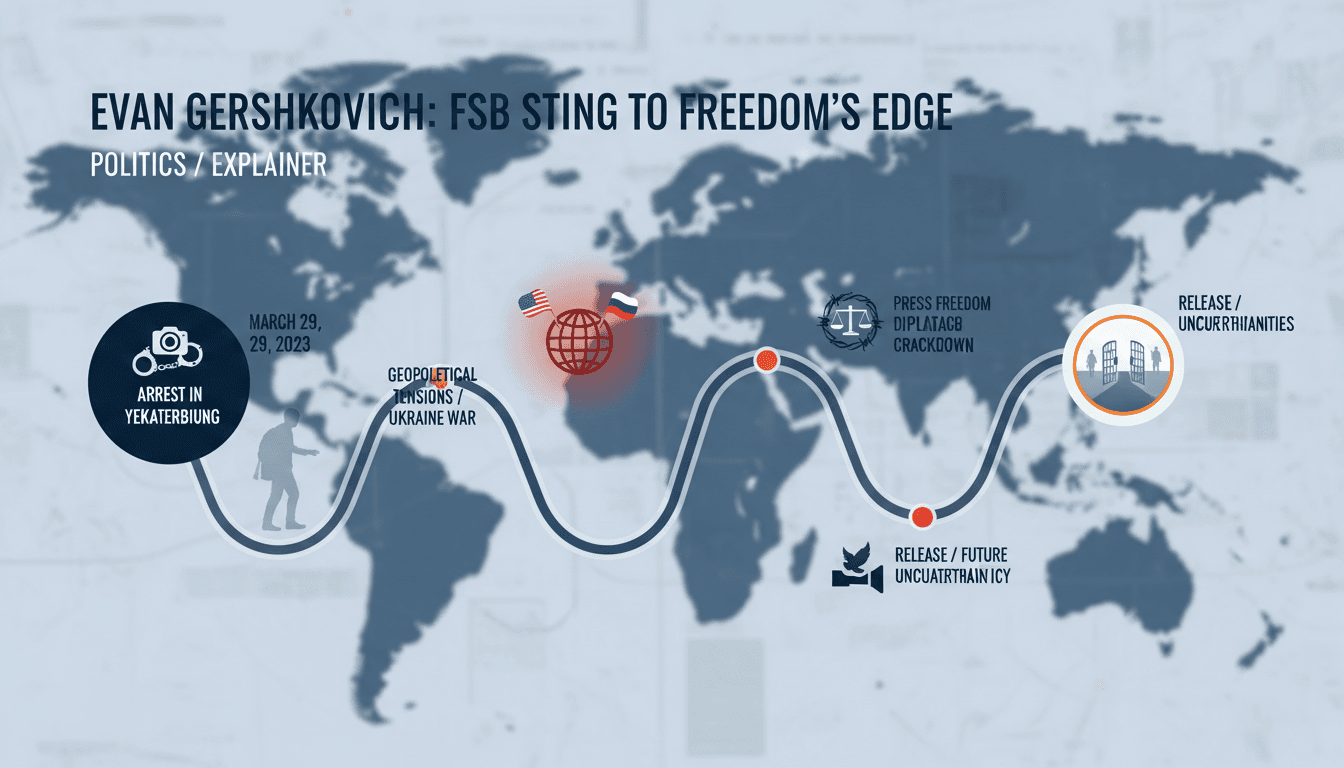
Why it matters
The arrest of journalists like Evan Gershkovich highlights the increasing risks faced by foreign media in authoritarian regimes, impacting global press freedom.
What happened (in 30 seconds)
- On March 29, 2023, US journalist Evan Gershkovich was detained by Russia's FSB on fabricated espionage charges.
- He was held for 16 months in Lefortovo Prison before being released in a multi-nation prisoner swap on August 1, 2024.
- Gershkovich described his arrest as a carefully orchestrated sting operation, revealing the geopolitical leverage at play.
The context you actually need
- Post-2022 invasion of Ukraine, Russia intensified restrictions on foreign journalists, creating a hostile environment for reporting.
- Gershkovich's case aligns with a pattern of detaining Western nationals as leverage in international disputes, raising concerns about press freedom.
- The US government and media organizations rallied around Gershkovich, amplifying calls for his release and condemning Russia's actions.
What's really happening
Evan Gershkovich's arrest is emblematic of a broader strategy employed by the Russian government to control narratives and leverage foreign nationals for political gain. Following the 2022 invasion of Ukraine, Moscow has increasingly targeted foreign journalists, viewing them as potential threats to state security. Gershkovich, who had been reporting on military-industrial topics, was seen as a valuable pawn in this geopolitical chess game.
The FSB's operation to detain Gershkovich was meticulously planned. Agents used a pre-arranged phrase to immobilize him in a restaurant, indicating a high level of coordination. This method of entrapment serves a dual purpose: it not only removes a foreign journalist from the field but also sends a chilling message to others about the risks of reporting in Russia. The fabricated espionage charges—alleging that he was collecting secrets on tank production for the CIA—were designed to justify his detention and bolster the Kremlin's narrative of external threats.
During his 16-month imprisonment, Gershkovich noted the absence of torture or interrogation, which he interpreted as confirmation of his role as a bargaining chip rather than a genuine espionage suspect. This reflects a strategic shift in how authoritarian regimes handle dissent and foreign scrutiny, opting for hostage diplomacy over traditional punitive measures.
The international response to Gershkovich's detention was significant. US officials, including President Biden, publicly prioritized his case, which amplified media coverage and international condemnation of Russia's actions. However, despite the outcry, Russia faced no additional sanctions directly tied to the arrest, indicating a complex interplay of diplomatic relations and the limits of international pressure.
Gershkovich's eventual release in a large-scale prisoner swap involving multiple nations underscores the transactional nature of modern diplomacy. While his freedom was celebrated, it also raised ethical questions about the implications of releasing convicted operatives in exchange for hostages. This incident not only highlights the precarious position of journalists in conflict zones but also serves as a reminder of the broader geopolitical stakes at play.
Who feels it first (and how)
- Journalists: Increased risks and potential for detention in authoritarian countries.
- Media organizations: Heightened scrutiny and pressure to ensure the safety of their correspondents.
- Governments: Need to navigate complex diplomatic relations while advocating for citizens abroad.
- International travelers: Greater awareness of geopolitical risks when traveling to high-tension regions.
What to watch next
- Future detentions of foreign journalists: Monitoring patterns of arrests can indicate shifts in press freedom and state control.
- International diplomatic negotiations: Observing how countries respond to similar incidents can reveal the effectiveness of diplomatic pressure.
- Public sentiment towards media: Tracking changes in public opinion regarding journalists can provide insights into the evolving landscape of press freedom.
Gershkovich was detained on espionage charges that were widely rejected as fabricated.
The trend of detaining foreign nationals for leverage in geopolitical disputes will continue.
The long-term impact on press freedom in Russia and other authoritarian regimes remains uncertain.
Frequently Asked Questions
- Why it matters?
- The arrest of journalists like Evan Gershkovich highlights the increasing risks faced by foreign media in authoritarian regimes, impacting global press freedom.
- What happened (in 30 seconds)?
- On March 29, 2023, US journalist Evan Gershkovich was detained by Russia's FSB on fabricated espionage charges. He was held for 16 months in Lefortovo Prison before being released in a multi-nation prisoner swap on August 1, 2024. Gershkovich described his arrest as a carefully orchestrated sting operation, revealing the geopolitical leverage at play.
- What's really happening?
- Evan Gershkovich's arrest is emblematic of a broader strategy employed by the Russian government to control narratives and leverage foreign nationals for political gain. Following the 2022 invasion of Ukraine, Moscow has increasingly targeted foreign journalists, viewing them as potential threats to state security. Gershkovich, who had been reporting on military-industrial topics, was seen as a valuable pawn in this geopolitical chess game. The FSB's operation to detain Gershkovich was meticulo
- Who feels it first (and how)?
- Journalists: Increased risks and potential for detention in authoritarian countries. Media organizations: Heightened scrutiny and pressure to ensure the safety of their correspondents. Governments: Need to navigate complex diplomatic relations while advocating for citizens abroad. International travelers: Greater awareness of geopolitical risks when traveling to high-tension regions.
- What to watch next?
- Future detentions of foreign journalists: Monitoring patterns of arrests can indicate shifts in press freedom and state control. International diplomatic negotiations: Observing how countries respond to similar incidents can reveal the effectiveness of diplomatic pressure. Public sentiment towards media: Tracking changes in public opinion regarding journalists can provide insights into the evolving landscape of press freedom.
International coverage of politics, culture, and current affairs.
"BBC News is widely regarded as a reputable international news organization, known for its impartial tone and public service mandate."
— A47 Editor
'I was lured into a trap': Evan Gershkovich on moment that led to 16 months in Russian jail
Evan Gershkovich, a US journalist, described his realization of being a pawn in a larger geopolitical game during his 16-month imprisonment in Russia, where he was not subjected to interrogation or torture by FSB agents.
Global political, business, and cultural coverage from WSJ international desks.
"The Wall Street Journal offers extensive international reporting with a reputation for financial insight and a center-right editorial stance."
— A47 Editor
How Evan Gershkovich Kept Reporting From Inside Russia’s Prison System
Evan Gershkovich, a reporter for The Wall Street Journal, discusses his experiences of arrest and imprisonment in Moscow's Lefortovo prison during an interview with Editor in Chief Emma Tucker. He reflects on the challenges faced while reporting in R...
U.S. business news, corporate developments, and economy.
"The Wall Street Journal is respected for deep financial and economic reporting with a center-right editorial perspective."
— A47 Editor
How Evan Gershkovich Kept Reporting From Inside Russia’s Prison System
Evan Gershkovich, a reporter for The Wall Street Journal, discusses his experiences following his arrest and imprisonment in Moscow's Lefortovo prison during an interview with Editor in Chief Emma Tucker. The conversation sheds light on the challenge...