
California Implements Comprehensive AI Workplace Protections
Why it matters
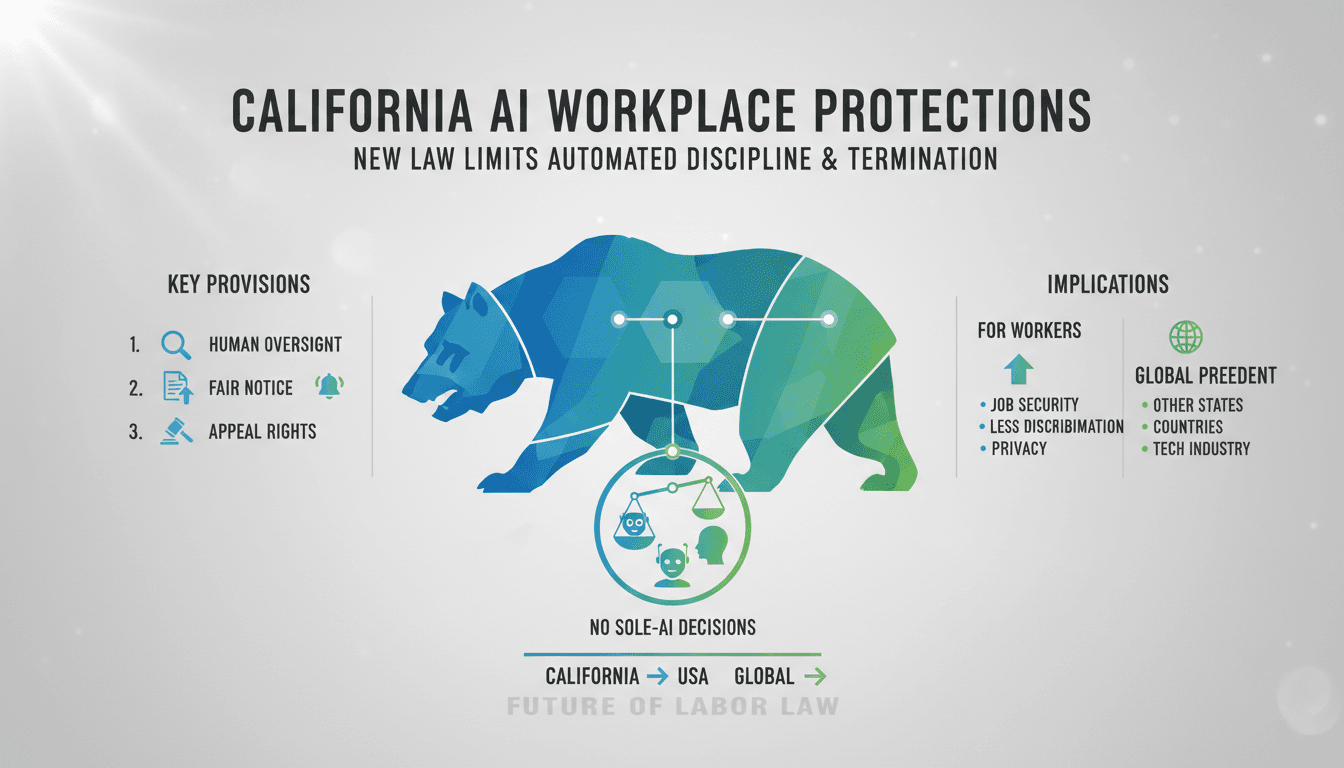
California's legislation sets a precedent that may influence labor standards and corporate policies globally.
What happened (in 30 seconds)
- On September 30, 2026, California Governor Gavin Newsom signed a comprehensive package of AI worker protection laws.
- Key provisions include banning automated firings, requiring human review for disciplinary actions, and prohibiting AI surveillance in bathrooms.
- These laws respond to rising worker concerns over job displacement and discrimination amid rapid AI development.
The context you actually need
- Workers have expressed fears about AI-driven job losses and bias in automated decisions, particularly in industries like warehousing and healthcare.
- Other states have enacted narrower AI workplace measures, but California's laws are the most comprehensive to date.
- The federal government has largely remained hands-off, prompting California to take the lead in regulating AI's impact on employment.
What's really happening
On September 30, 2026, California made history by enacting a series of laws aimed at protecting workers from the unchecked rise of artificial intelligence in the workplace. The legislation, spearheaded by Governor Gavin Newsom, includes several key components designed to address the growing concerns among workers about job security, discrimination, and invasive surveillance practices.
The most significant of these laws is the No Robo Bosses Act (SB 947), which mandates that employers cannot rely solely on automated systems for disciplinary actions or terminations. This means that if an employee is facing disciplinary action or potential termination due to an AI decision, a human must review the case and provide a written notice to the affected worker. This provision aims to ensure that workers have a fair chance to contest decisions made by algorithms that may not fully understand the nuances of human behavior or workplace dynamics.
Additionally, the legislation prohibits the use of AI tools that predict emotional states or collect neural data, addressing concerns about privacy and the potential for discrimination based on inferred emotional conditions. The laws also require employers to disclose any layoffs caused by AI systems, ensuring transparency in how technology impacts employment.
Another critical aspect of the new regulations is the ban on AI surveillance in workplace bathrooms, a move that underscores the growing pushback against invasive monitoring practices that have become more common with the rise of AI technologies. This provision reflects a broader societal concern about privacy and the ethical implications of using AI in everyday work environments.
While these laws are a significant step forward for worker protections, they are not without limitations. Enforcement will primarily rely on government action, and there is no private right of action for workers who feel their rights have been violated. This could limit the effectiveness of the laws in holding employers accountable for non-compliance.
The legislation is also a response to advocacy from labor unions and worker groups, who have been vocal about the need for stronger protections in the face of rapid technological advancements. As California is home to many major AI developers, the state’s proactive approach may serve as a model for other states and even influence federal regulations in the future.
Who feels it first (and how)
- Tech workers in California may see immediate changes in workplace policies and practices.
- Labor unions will likely leverage these laws to advocate for stronger protections across various sectors.
- Employers in industries heavily reliant on AI, such as logistics and healthcare, will need to adapt their practices to comply with the new regulations.
What to watch next
- Implementation challenges: Monitor how employers adapt to these laws and the potential for compliance issues.
- Legislative ripple effects: Watch for similar laws being proposed in other states as California sets a precedent.
- Worker advocacy movements: Keep an eye on how labor unions and worker groups respond to these changes and push for further protections.
California is the first state to enact comprehensive AI workplace protections.
Other states may follow California's lead in implementing similar regulations.
The long-term impact on employment rates and workplace dynamics as AI continues to evolve.
Frequently Asked Questions
- Why it matters?
- California's legislation sets a precedent that may influence labor standards and corporate policies globally.
- What happened (in 30 seconds)?
- On September 30, 2026, California Governor Gavin Newsom signed a comprehensive package of AI worker protection laws. Key provisions include banning automated firings, requiring human review for disciplinary actions, and prohibiting AI surveillance in bathrooms. These laws respond to rising worker concerns over job displacement and discrimination amid rapid AI development.
- What's really happening?
- On September 30, 2026, California made history by enacting a series of laws aimed at protecting workers from the unchecked rise of artificial intelligence in the workplace. The legislation, spearheaded by Governor Gavin Newsom, includes several key components designed to address the growing concerns among workers about job security, discrimination, and invasive surveillance practices. The most significant of these laws is the No Robo Bosses Act (SB 947), which mandates that employers cannot rel
- Who feels it first (and how)?
- Tech workers in California may see immediate changes in workplace policies and practices. Labor unions will likely leverage these laws to advocate for stronger protections across various sectors. Employers in industries heavily reliant on AI, such as logistics and healthcare, will need to adapt their practices to comply with the new regulations.
- What to watch next?
- Implementation challenges: Monitor how employers adapt to these laws and the potential for compliance issues. Legislative ripple effects: Watch for similar laws being proposed in other states as California sets a precedent. Worker advocacy movements: Keep an eye on how labor unions and worker groups respond to these changes and push for further protections.
News and features on AI from The Guardian.
"Progressive-leaning international outlet with critical AI coverage."
— A47 Editor
California’s new laws target workers’ biggest fear of AI taking their jobs
California has enacted new laws aimed at protecting workers from the potential job displacement caused by artificial intelligence (AI). Governor Gavin Newsom signed legislation that prohibits employers from solely relying on AI for decisions related ...
UK and international business news, economics, and corporate coverage.
"The Guardian’s business section covers finance and markets with a progressive editorial tone."
— A47 Editor
California’s new laws target workers’ biggest fear of AI taking their jobs
California has enacted new laws aimed at protecting workers from the potential job displacement caused by artificial intelligence (AI). Governor Gavin Newsom signed legislation that prohibits employers from solely relying on AI for decisions related ...
Tech culture, product news, and critical takes on the tech industry's social impact.
"The Guardian's tech coverage blends mainstream news, critical analysis, and cultural commentary on emerging technologies and digital trends."
— A47 Editor
California’s new laws target workers’ biggest fear of AI taking their jobs
California has enacted new laws aimed at protecting workers from the potential job displacement caused by artificial intelligence (AI). Governor Gavin Newsom signed legislation that prohibits employers from solely relying on AI for decisions related ...
Global business headlines with AI angles.
"General business outlet that frequently covers AI."
— A47 Editor
California Adds New AI Protections For Workers. Employers Can't Let Algorithms Make Firing Decisions Alone.
California has enacted new legislation that prohibits employers from relying solely on artificial intelligence (AI) for firing or disciplining workers, as part of a broader effort to enhance worker protections in the face of advancing technology. Thi...
Consumer tech news, reviews, and buying guides for gadgets and electronics.
"TechRadar is known for comprehensive buying advice, hardware reviews, and consumer tech news targeted at mainstream audiences."
— A47 Editor
California Governor Gavin Newsom signs 'No Robo Bosses Act' — so an AI can no longer fire you on its own
California Governor Gavin Newsom has signed the 'No Robo Bosses Act', which mandates that human verification is required before any automated decisions to discipline or terminate employees can be enacted. This legislation aims to protect workers from...