
Flydubai FZ1073 cockpit incident leads to multinational terrorism investigation
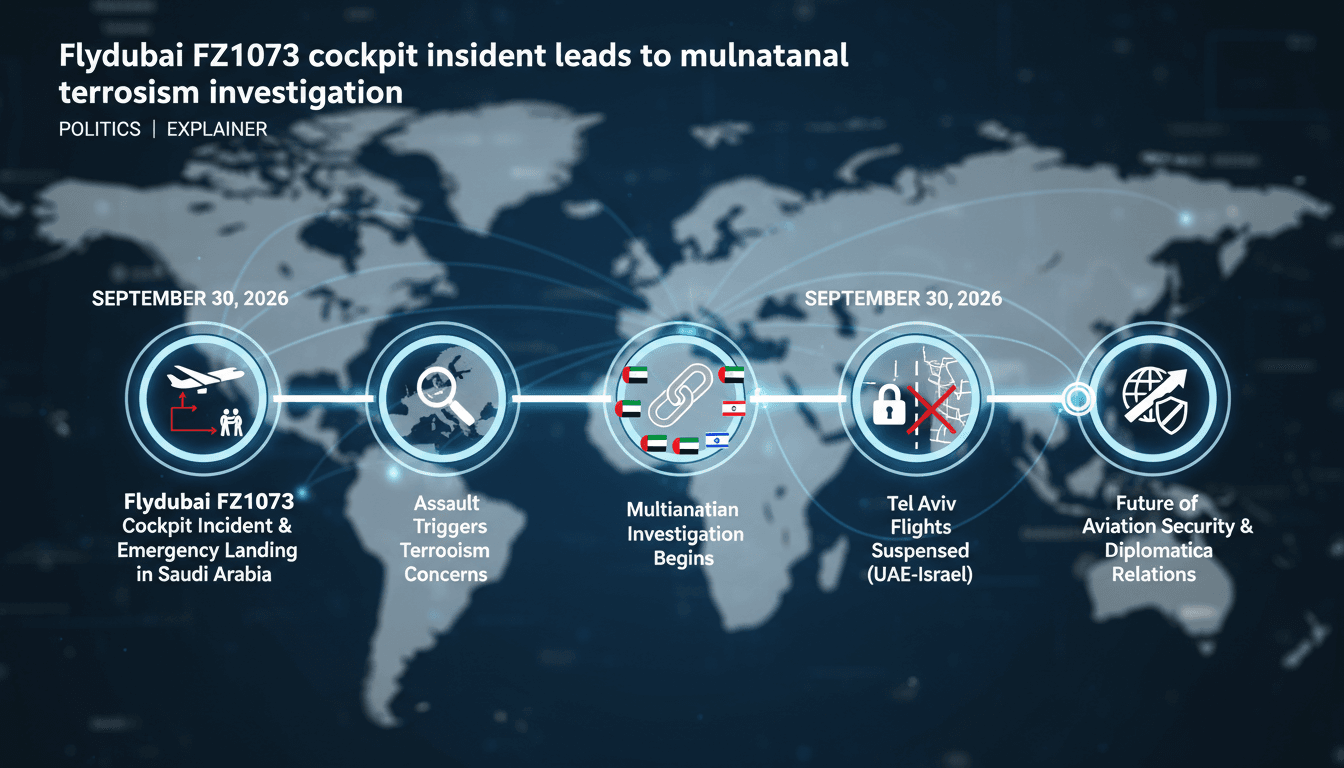
Why it matters
This incident raises significant concerns about cockpit security and the potential for terrorism in commercial aviation.
What happened (in 30 seconds)
- On September 30, 2026, Flydubai flight FZ1073 experienced a cockpit incident, leading to an emergency landing in Saudi Arabia.
- The co-pilot allegedly assaulted the captain with a crash axe, prompting immediate intervention from passengers and crew.
- All 172 passengers and crew were unharmed, but operations to Tel Aviv have been suspended pending investigation.
The context you actually need
- Flydubai has been operating flights between Dubai and Tel Aviv since the normalization of relations in 2020, making this incident particularly sensitive.
- Regional security dynamics are already complex, with ongoing cooperation between Gulf states and Israel in aviation and other sectors.
- The UAE and Saudi Arabia's involvement in the investigation highlights the seriousness of the incident and the potential implications for international relations.
What's really happening
On September 30, 2026, Flydubai flight FZ1073 took off from Dubai International Airport en route to Ben Gurion Airport in Tel Aviv. The flight was operating under routine conditions until a severe incident occurred mid-flight. The co-pilot, an Omani national, allegedly attacked the captain, Smit Machchhar, using a crash axe in a shocking breach of cockpit security. This assault was not only a physical attack but also an attempt to seize control of the aircraft, which could have led to catastrophic consequences.
The captain managed to open the cockpit door, allowing passengers and crew to intervene and restrain the co-pilot. Deadheading pilots on board successfully landed the aircraft at Tabuk Airport in Saudi Arabia, ensuring the safety of all 172 individuals on board. Following the incident, the UAE Attorney General's Office launched a formal investigation into the circumstances surrounding the attack, focusing on potential terrorist motives and prior planning.
Saudi authorities quickly confirmed the co-pilot's role as the assailant, and by October 2, the UAE Attorney General characterized the event as an attempted terrorist act. This classification has significant implications, as it suggests that the incident may not have been an isolated case of mental instability but rather part of a broader threat to aviation security.
The immediate aftermath saw Flydubai suspend all operations to Tel Aviv at the request of authorities, reflecting the heightened security concerns. Israeli officials, including Prime Minister Netanyahu, have expressed their commitment to participating in the investigation, indicating the seriousness with which this incident is being treated at the highest levels of government.
The incident has triggered a multi-national investigation involving cooperation from UAE, Saudi Arabia, Israel, and Oman, emphasizing the collaborative effort required to address potential threats to aviation safety. The focus remains on understanding the motives behind the attack and ensuring that such incidents do not recur, which could have far-reaching implications for air travel in the region.
Who feels it first (and how)
- Frequent travelers to Israel: They may face disruptions in flight availability and increased security measures.
- Airline operators: Companies like Flydubai may experience operational changes and heightened scrutiny.
- Aviation security agencies: They will need to reassess and potentially enhance security protocols across the industry.
What to watch next
- Investigation outcomes: The findings from the UAE and Saudi investigations will be crucial in determining the nature of the attack and any potential security lapses.
- Changes in aviation security policies: Expect new regulations or enhanced security measures in response to this incident, particularly for flights in and out of the Middle East.
- Market reactions: Monitor how airlines adjust their routes and operations in response to safety concerns and passenger demand.
All passengers and crew on flight FZ1073 were unharmed.
Enhanced security measures will be implemented across airlines operating in the region.
The full motives behind the co-pilot's actions and any potential links to broader terrorist networks.
Frequently Asked Questions
- Why it matters?
- This incident raises significant concerns about cockpit security and the potential for terrorism in commercial aviation.
- What happened (in 30 seconds)?
- On September 30, 2026, Flydubai flight FZ1073 experienced a cockpit incident, leading to an emergency landing in Saudi Arabia. The co-pilot allegedly assaulted the captain with a crash axe, prompting immediate intervention from passengers and crew. All 172 passengers and crew were unharmed, but operations to Tel Aviv have been suspended pending investigation.
- What's really happening?
- On September 30, 2026, Flydubai flight FZ1073 took off from Dubai International Airport en route to Ben Gurion Airport in Tel Aviv. The flight was operating under routine conditions until a severe incident occurred mid-flight. The co-pilot, an Omani national, allegedly attacked the captain, Smit Machchhar, using a crash axe in a shocking breach of cockpit security. This assault was not only a physical attack but also an attempt to seize control of the aircraft, which could have led to catastroph
- Who feels it first (and how)?
- Frequent travelers to Israel: They may face disruptions in flight availability and increased security measures. Airline operators: Companies like Flydubai may experience operational changes and heightened scrutiny. Aviation security agencies: They will need to reassess and potentially enhance security protocols across the industry.
- What to watch next?
- Investigation outcomes: The findings from the UAE and Saudi investigations will be crucial in determining the nature of the attack and any potential security lapses. Changes in aviation security policies: Expect new regulations or enhanced security measures in response to this incident, particularly for flights in and out of the Middle East. Market reactions: Monitor how airlines adjust their routes and operations in response to safety concerns and passenger demand.
English-language coverage focused on UAE news, government updates, and domestic affairs.
"Emirates 24|7 reflects a mainstream UAE editorial perspective with strong emphasis on official and domestic developments."
— A47 Editor
Flydubai CEO: A full official investigation of flight FZ1073 is currently underway
Flydubai flight FZ1073, traveling from Dubai to Tel Aviv, was diverted to Tabuk Airport in Saudi Arabia on September 30 due to a serious security incident in the cockpit, where the co-pilot allegedly stabbed the captain. All 172 passengers and crew m...
UAE-based English-language newspaper covering regional politics, economics, and global affairs.
"The National reflects Emirati policy perspectives while maintaining international editorial standards."
— A47 Editor
Flydubai chief praises crew and passengers after mid-air emergency on Tel Aviv-bound flight
A Flydubai flight from Dubai to Tel Aviv was forced to make an emergency landing in Saudi Arabia after the co-pilot allegedly stabbed the captain, leading to a rapid descent and intervention by passengers to restrain the attacker. All 172 passengers ...
Comprehensive coverage of global events, politics, and international issues.
"NBC News is a mainstream outlet known for comprehensive national and international coverage with a centrist to slightly left-leaning editorial tone."
— A47 Editor
New video of hero passengers from plane attack
A new video has emerged showcasing the bravery of Israeli passengers aboard a FlyDubai flight who intervened to subdue a co-pilot attempting to crash the plane after allegedly stabbing the pilot. The incident prompted an emergency landing in Saudi Ar...
English-language digital publication covering business, politics, technology, and current affairs.
"The Arabian Post mixes original and syndicated-style coverage with a broad regional and global business-news orientation."
— A47 Editor
Drama In The Skies: The Flight That Nearly Became A Catastrophe
A Flydubai flight from Dubai to Tel Aviv faced a severe crisis when the co-pilot allegedly stabbed the captain mid-flight, resulting in a rapid descent of over 17,000 feet. Passengers reported chaos and fear as they rushed to assist the crew, ultimat...