
Cornell University Day Hall Vandalized Amid Protests Over Fraternity Rape Allegations
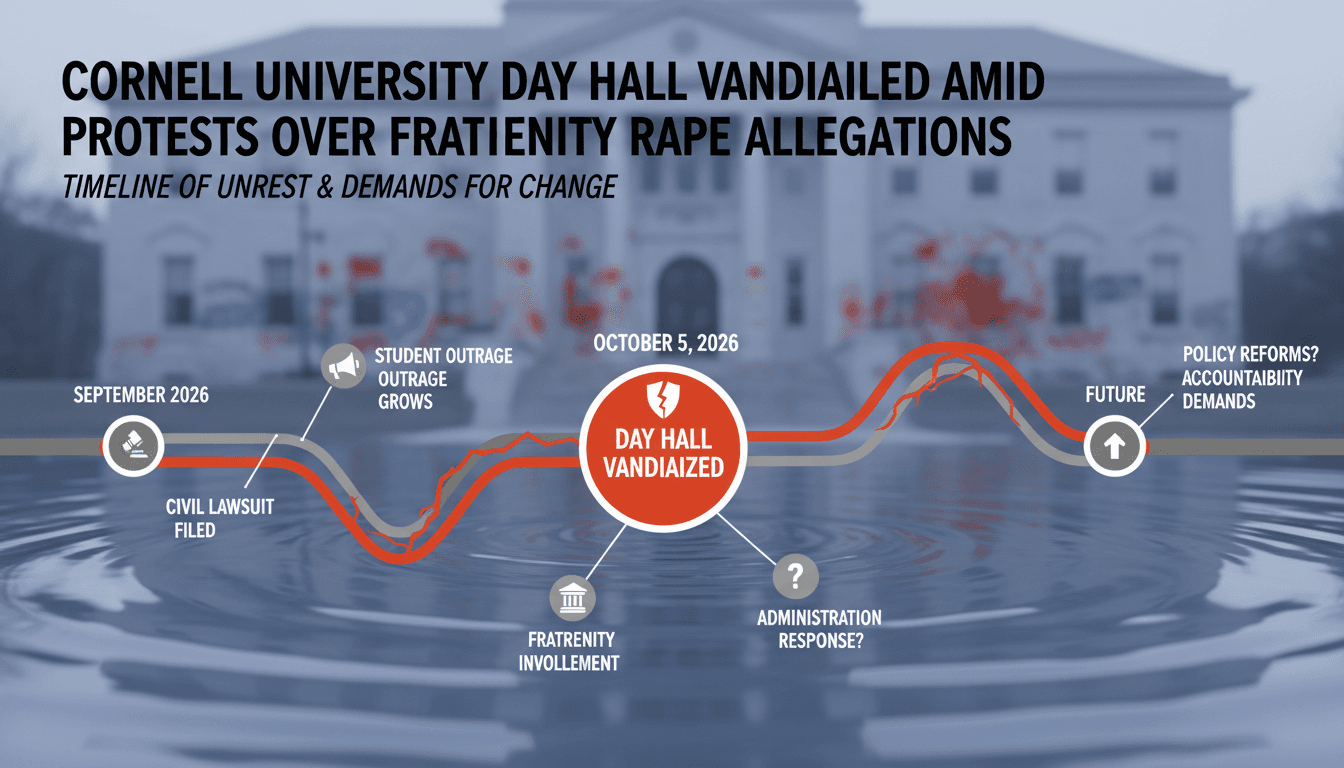
Why it matters
This incident highlights the growing demand for accountability in educational institutions regarding sexual assault cases.
What happened (in 30 seconds)
- On October 5, 2026, anonymous activists vandalized Day Hall at Cornell University, protesting the administration's handling of a gang rape allegation.
- The protest was fueled by a civil lawsuit filed by Jane Doe against seven Chi Phi fraternity members, alleging systemic failures in addressing sexual violence.
- Cornell's response includes an ongoing investigation and an independent review of its handling of the case, amid calls for the abolition of Greek life.
The context you actually need
- The allegations stem from an incident on October 19, 2024, where Jane Doe claimed she was assaulted after being pressured to consume drugs and alcohol at a fraternity party.
- Initial investigations resulted in limited sanctions, with only two expulsions and two suspensions, leading to widespread dissatisfaction among students and activists.
- The university's handling of the case has drawn criticism for perceived leniency towards the accused and harsher treatment of protesters, prompting renewed calls for reform.
What's really happening
The vandalism at Cornell University is a manifestation of deep-seated frustrations regarding how institutions handle sexual violence allegations. The incident is not isolated; it reflects a broader cultural shift where students are increasingly unwilling to accept perceived injustices, particularly in cases involving sexual assault.
The October 5 vandalism was a strategic act of protest, occurring just before a planned rally aimed at demanding justice for Jane Doe and systemic reforms within the university. Activists targeted Day Hall, the administrative heart of Cornell, to draw attention to their grievances. The slogans spray-painted on the building—such as "Smash the patriarchy"—underscore a growing sentiment among students that traditional power structures are failing to protect victims and hold perpetrators accountable.
The backdrop of this protest is a civil lawsuit filed in September 2026, which accuses the Chi Phi fraternity, the university, and specific individuals of misconduct related to the 2024 gang rape allegations. The lawsuit has intensified scrutiny on Cornell's response, leading to a reopened investigation and the appointment of a special prosecutor by New York Governor Kathy Hochul. This indicates a shift towards greater accountability, as state officials are now involved in reviewing the case.
The university's initial response to the allegations—resulting in minimal sanctions—has been criticized as inadequate. This has fueled a narrative that the institution prioritizes its reputation over the safety and well-being of its students. The activists' actions are a direct challenge to this narrative, aiming to force the administration to confront its failures and implement meaningful changes.
As the situation unfolds, the demand for the abolition of Greek life at Cornell is gaining traction. Student groups argue that fraternities and sororities perpetuate a culture that enables sexual violence and protects offenders. This call for reform is not just about one incident; it reflects a broader movement across campuses nationwide, where students are advocating for systemic changes in how sexual assault cases are handled.
The ongoing investigation into the vandalism and the independent review of the university's handling of the original case will likely influence future policies regarding sexual violence on campus. The outcome of these processes could set a precedent for how universities across the country address similar allegations, potentially leading to more stringent regulations and a shift in campus culture.
Who feels it first (and how)
- Students: Directly impacted by campus policies and safety measures.
- University Administrators: Facing pressure to reform policies and address student concerns.
- Greek Life Organizations: Potentially facing abolition or stricter regulations.
- Local Community: Engaged in discussions about campus safety and institutional accountability.
What to watch next
- Outcomes of the independent review: This will determine if Cornell's policies will change and how they address sexual violence.
- Student-led initiatives: Watch for the emergence of new student organizations advocating for reform and accountability.
- Legislative changes: Monitor any new laws or regulations proposed at the state level regarding sexual assault on college campuses.
The vandalism was a protest against Cornell's handling of sexual violence allegations.
Increased scrutiny on Greek life and potential reforms in university policies regarding sexual assault.
The long-term impact of these events on campus culture and student safety.
Frequently Asked Questions
- Why it matters?
- This incident highlights the growing demand for accountability in educational institutions regarding sexual assault cases.
- What happened (in 30 seconds)?
- On October 5, 2026, anonymous activists vandalized Day Hall at Cornell University, protesting the administration's handling of a gang rape allegation. The protest was fueled by a civil lawsuit filed by Jane Doe against seven Chi Phi fraternity members, alleging systemic failures in addressing sexual violence. Cornell's response includes an ongoing investigation and an independent review of its handling of the case, amid calls for the abolition of Greek life.
- What's really happening?
- The vandalism at Cornell University is a manifestation of deep-seated frustrations regarding how institutions handle sexual violence allegations. The incident is not isolated; it reflects a broader cultural shift where students are increasingly unwilling to accept perceived injustices, particularly in cases involving sexual assault. The October 5 vandalism was a strategic act of protest, occurring just before a planned rally aimed at demanding justice for Jane Doe and systemic reforms within t
- Who feels it first (and how)?
- Students: Directly impacted by campus policies and safety measures. University Administrators: Facing pressure to reform policies and address student concerns. Greek Life Organizations: Potentially facing abolition or stricter regulations. Local Community: Engaged in discussions about campus safety and institutional accountability.
- What to watch next?
- Outcomes of the independent review: This will determine if Cornell's policies will change and how they address sexual violence. Student-led initiatives: Watch for the emergence of new student organizations advocating for reform and accountability. Legislative changes: Monitor any new laws or regulations proposed at the state level regarding sexual assault on college campuses.
Global news coverage with extensive reporting on Middle Eastern conflicts and geopolitics.
"Al Jazeera is a Qatar-based broadcaster known for wide regional coverage and alternative perspectives."
— A47 Editor
‘Smash the patriarchy’: Activists graffiti Cornell hall over gang rape case
Activists at Cornell University have expressed their outrage over recent allegations of gang rape involving a fraternity by vandalizing a campus building with graffiti that reads ‘Smash the patriarchy.’ This act of protest reflects the growing frustr...
Comprehensive coverage of Middle Eastern and global issues.
"Al Jazeera is a prominent voice from the Global South, especially the Middle East, with an emphasis on underreported stories."
— A47 Editor
‘Smash the patriarchy’: Activists graffiti Cornell hall over gang rape case
Activists at Cornell University have expressed their outrage over recent allegations of gang rape involving a fraternity by vandalizing a campus building with graffiti that reads ‘Smash the patriarchy.’ This act of protest reflects the growing frustr...
24/7 international news from a French perspective in multiple languages.
"France 24 is viewed as a globally focused outlet with balanced coverage and a European perspective."
— A47 Editor
Woman at centre of Cornell gang rape lawsuit targeted with threats, lawyer says
A woman has alleged that she was drugged and gang-raped by seven male students at a Cornell University fraternity house, and her lawyer has reported that she has received threats following her lawsuit. This incident has prompted Cornell's president t...
Top international stories selected by The Guardian editors.
"The Guardian is known for its progressive editorial stance and in-depth analysis."
— A47 Editor
‘Sadness, cynicism and deep disappointment’: the Cornell gang-rape case and the failure of #MeToo
A former Cornell University student has alleged that she was gang-raped by members of the Chi Phi fraternity during the fall semester of 2024, coinciding with a period known as the 'red zone' for increased sexual assaults on campuses. This allegation...