
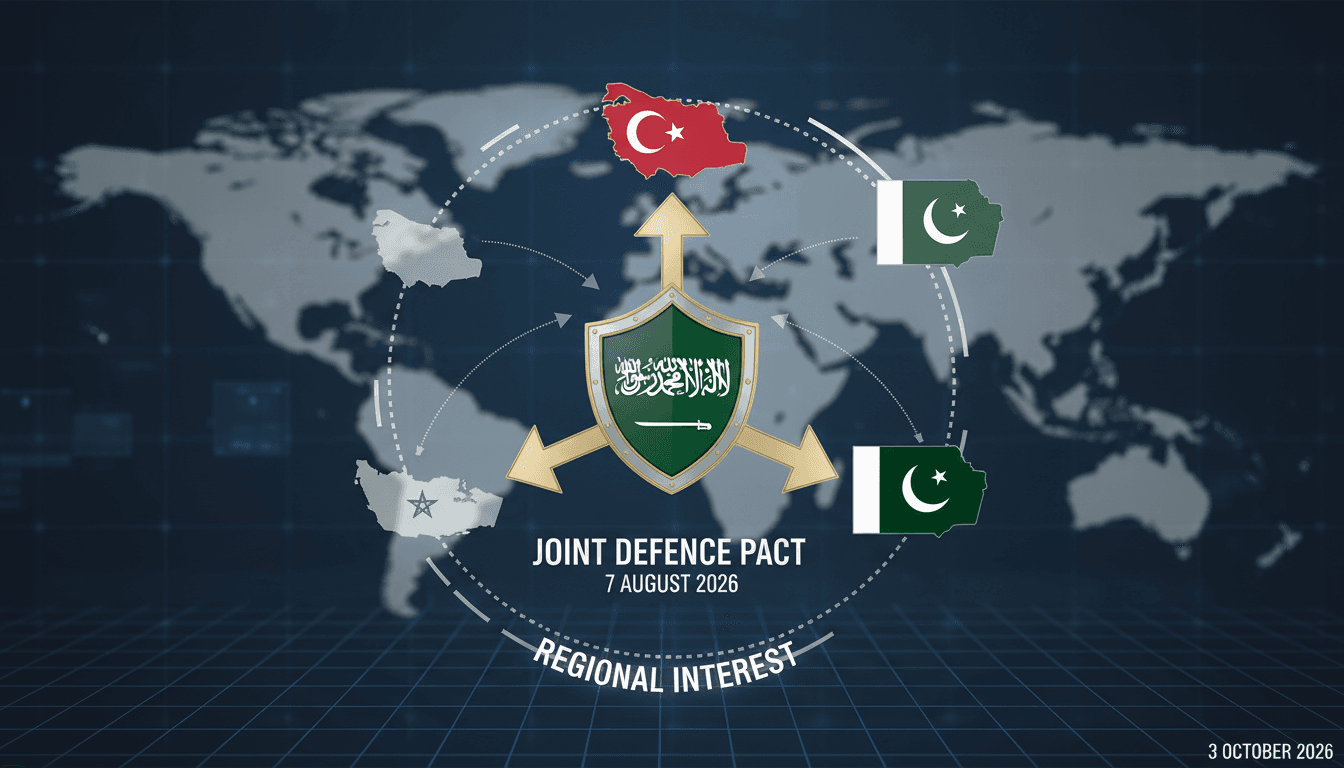
Saudi Arabia, Turkey, and Pakistan Expand Joint Defence Pact with Regional Interest
The Vibe
A new trilateral defense pact among Saudi Arabia, Turkey, and Pakistan signals a shift towards collaborative security arrangements in the Muslim world.
What it signals
This agreement reflects a growing trend of regional cooperation that prioritizes collective security over individual national interests. As geopolitical tensions rise, particularly in the Middle East, countries are increasingly seeking partnerships that enhance their military capabilities and deter external threats. This shift could redefine power dynamics and influence economic relationships among nations, impacting trade and investment flows.
Why it's happening now
1. The backdrop of regional instability, including ongoing conflicts and threats from groups like the Houthis, has heightened the urgency for collective defense mechanisms.
2. The historical context of bilateral defense ties, such as the 2025 Saudi-Pakistan Strategic Mutual Defence Agreement, has laid the groundwork for this trilateral collaboration.
3. A growing interest from other nations to join the pact indicates a broader desire among Muslim-majority states to unify against common threats, reflecting a shift towards minilateral security arrangements.
Who it's for (and who it leaves out)
The primary beneficiaries are the signatory nations—Saudi Arabia, Turkey, and Pakistan—who stand to enhance their military cooperation and regional influence. However, this agreement may marginalize countries outside this alliance, particularly those with strained relations with the signatories.
What to watch next
1. The development of institutional mechanisms for the pact, which will determine how effectively it can expand to include new members.
2. The reactions from non-signatory states, particularly Iran, which could influence regional stability and economic partnerships.
The Mecca Joint Defence Agreement has been formally established among three nations.
Additional countries will seek to join the pact as institutional mechanisms are developed.
The long-term impact on existing alliances and regional trade routes remains to be seen.
Arabic-language coverage of international news and geopolitics.
"RT Arabic is a Russian state-funded outlet often criticized for promoting Kremlin-aligned narratives."
— A47 Editor
بعض الدول عينها على "اتفاقية مكة" بين السعودية وتركيا وباكستان
Pakistani Deputy Prime Minister and Foreign Minister Muhammad Ishaq Dar revealed that several countries have expressed interest in joining the Makkah Agreement for mutual defense signed between Saudi Arabia, Turkey, and Pakistan. This agreement aims ...
Arabic-language coverage of Saudi, regional, and international affairs.
"Al Bilad offers mainstream Saudi newspaper coverage across domestic and broader Arab topics."
— A47 Editor
باكستان: اجتماع في الرياض للجنة الدفاع السياسي والإستراتيجي لاتفاق مكة
Pakistan's Foreign Minister, Muhammad Ishaq Dar, announced that the countries involved in the Makkah Agreement will hold a meeting of the Political and Strategic Defense Committee in Riyadh, Saudi Arabia. He also mentioned that over six countries are...
Arabic-language coverage of political affairs and current events.
"Okaz political coverage typically follows mainstream Saudi framing on national and regional affairs."
— A47 Editor
وزير خارجية باكستان: اجتماع طارئ لـ«اتفاقية مكة» لبحث هجمات الحوثي
Pakistani Foreign Minister Ishaq Dar announced that Riyadh will host an emergency meeting of the Strategic Political Defense Committee under the Mecca Agreement, involving Saudi Arabia, Turkey, and Pakistan. The meeting, scheduled for next week, will...