
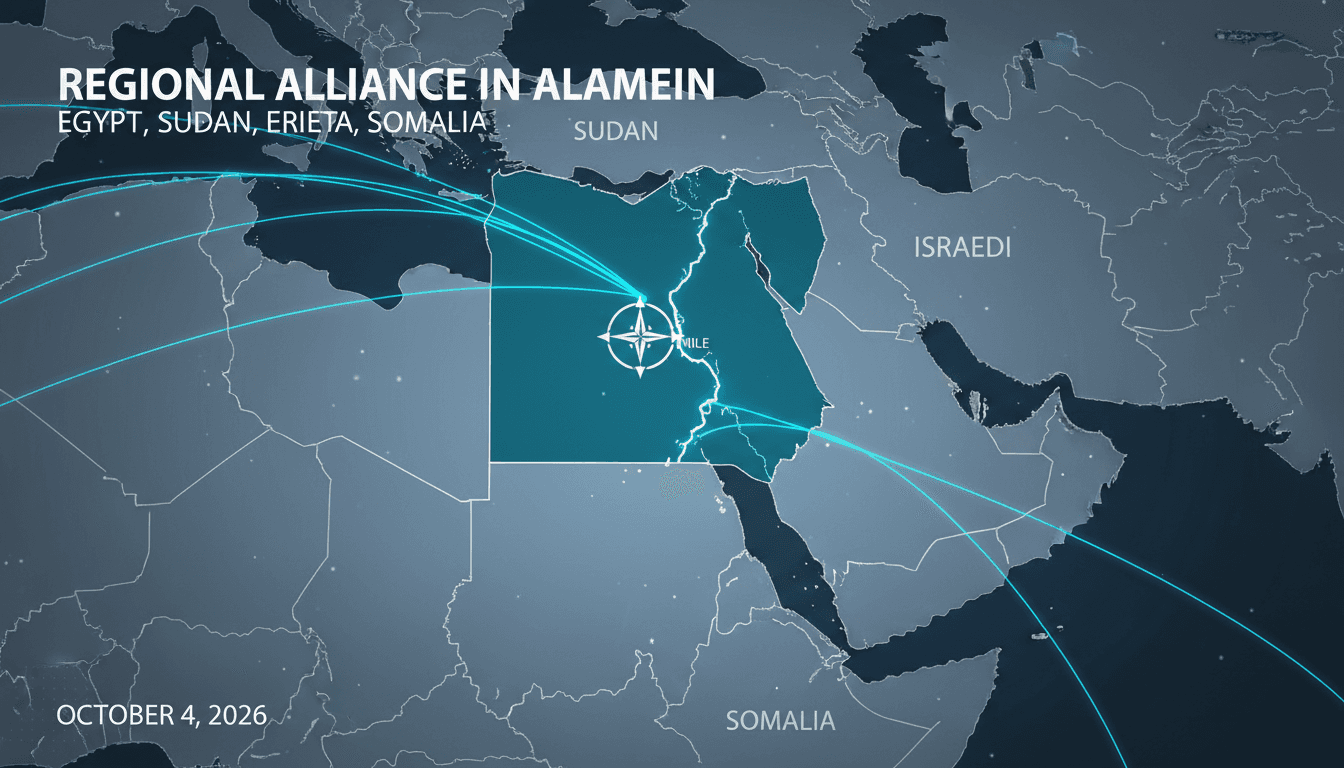
Egypt, Sudan, Eritrea and Somalia Form Regional Alliance in Alamein
Why it matters
This alliance signals a shift towards coordinated governance in a region fraught with disputes over vital resources.
What happened (in 30 seconds)
- Leaders convened on October 4, 2026, in New Alamein, Egypt, to issue a joint declaration.
- The declaration focuses on Red Sea governance, Nile water security, and territorial integrity in Sudan and Somalia.
- No formal military alliance was established, but a framework for ongoing consultations was agreed upon.
The context you actually need
- Longstanding tensions exist in the Horn of Africa, particularly over the Grand Ethiopian Renaissance Dam and maritime access.
- Egypt has increased military cooperation with Sudan, Eritrea, and Somalia, including deploying 15,000 troops to Somalia for peacekeeping.
- Ethiopia's role remains contentious, as it has accused the three nations of supporting opposition groups, which they deny.
What's really happening
The joint declaration from the leaders of Egypt, Sudan, Eritrea, and Somalia marks a significant step towards regional cooperation in a context of ongoing disputes and internal conflicts. The meeting, hosted by Egyptian President Abdel Fattah El Sisi, was attended by key figures including Sudan's Gen Abdel Fattah Al Burhan, Eritrean President Isaias Afwerki, and Somali President Hassan Sheikh Mohamud. The absence of Ethiopia and Israel in the discussions highlights the delicate nature of regional politics, particularly concerning the Nile River and Red Sea governance.
The declaration emphasizes the importance of territorial integrity and the rejection of external influences, particularly in Sudan and Somalia. By affirming support for Sudan's unity and opposing the recognition of Somaliland, the leaders are attempting to stabilize their borders and mitigate the risks of fragmentation. The focus on Red Sea governance indicates a shared interest in controlling maritime routes, which are crucial for trade and security.
Egypt's military presence in Somalia, with an estimated 15,000 troops deployed as part of African Union peacekeeping efforts, underscores its commitment to regional stability. This military cooperation is not merely about peacekeeping; it reflects a strategic alignment among these nations to counter perceived threats from Ethiopia, which has been accused of pursuing aggressive policies in the region.
The framework for periodic consultations established by the joint declaration suggests a long-term commitment to dialogue and cooperation. However, the lack of a formal military alliance indicates that while these nations are willing to collaborate, they are also cautious about entangling themselves in deeper military commitments that could escalate tensions with Ethiopia.
The underlying incentive for this alliance is the need for collective security and resource management in a region where water scarcity and territorial disputes are prevalent. As climate change exacerbates these issues, the need for coordinated governance becomes even more pressing. The leaders' rejection of unilateral actions that harm downstream Nile water users reflects a growing awareness of the interconnectedness of their challenges.
In summary, this joint declaration is not just a diplomatic gesture; it represents a strategic pivot towards regional cooperation in the face of shared challenges. The implications of this alliance could resonate beyond the immediate region, affecting global shipping routes and international relations.
Who feels it first (and how)
- Governments in Egypt, Sudan, Eritrea, and Somalia will need to navigate new diplomatic dynamics.
- Military sectors may see increased collaboration and resource allocation for joint operations.
- Local populations in Sudan and Somalia could experience shifts in security and governance as stability efforts take shape.
- Global shipping companies may need to adjust routes or strategies based on changes in Red Sea governance.
What to watch next
- Follow-up consultations: The effectiveness of the agreed-upon framework for periodic summits will indicate the alliance's durability.
- Ethiopia's response: How Ethiopia reacts to this alliance could escalate or de-escalate regional tensions.
- Military developments: Any changes in military deployments or engagements in Somalia could signal shifts in regional security dynamics.
The joint declaration was issued on October 4, 2026, in New Alamein, Egypt.
The alliance will influence regional governance and resource management discussions.
The long-term impact on Ethiopia's policies and regional stability remains uncertain.
Frequently Asked Questions
- Why it matters?
- This alliance signals a shift towards coordinated governance in a region fraught with disputes over vital resources.
- What happened (in 30 seconds)?
- Leaders convened on October 4, 2026, in New Alamein, Egypt, to issue a joint declaration. The declaration focuses on Red Sea governance, Nile water security, and territorial integrity in Sudan and Somalia. No formal military alliance was established, but a framework for ongoing consultations was agreed upon.
- What's really happening?
- The joint declaration from the leaders of Egypt, Sudan, Eritrea, and Somalia marks a significant step towards regional cooperation in a context of ongoing disputes and internal conflicts. The meeting, hosted by Egyptian President Abdel Fattah El Sisi, was attended by key figures including Sudan's Gen Abdel Fattah Al Burhan, Eritrean President Isaias Afwerki, and Somali President Hassan Sheikh Mohamud. The absence of Ethiopia and Israel in the discussions highlights the delicate nature of regiona
- Who feels it first (and how)?
- Governments in Egypt, Sudan, Eritrea, and Somalia will need to navigate new diplomatic dynamics. Military sectors may see increased collaboration and resource allocation for joint operations. Local populations in Sudan and Somalia could experience shifts in security and governance as stability efforts take shape. Global shipping companies may need to adjust routes or strategies based on changes in Red Sea governance.
- What to watch next?
- Follow-up consultations: The effectiveness of the agreed-upon framework for periodic summits will indicate the alliance's durability. Ethiopia's response: How Ethiopia reacts to this alliance could escalate or de-escalate regional tensions. Military developments: Any changes in military deployments or engagements in Somalia could signal shifts in regional security dynamics.
UAE-based English-language newspaper covering regional politics, economics, and global affairs.
"The National reflects Emirati policy perspectives while maintaining international editorial standards."
— A47 Editor
Leaders of Egypt, Sudan, Eritrea and Somalia signal new regional alliance
Leaders from Egypt, Sudan, Eritrea, and Somalia have convened to signal the formation of a new regional alliance aimed at enhancing cooperation and addressing mutual challenges. This development marks a significant step in regional diplomacy, as thes...
Global news coverage with extensive reporting on Middle Eastern conflicts and geopolitics.
"Al Jazeera is a Qatar-based broadcaster known for wide regional coverage and alternative perspectives."
— A47 Editor
Four African leaders issue joint declaration as Ethiopia war escalates
Four African leaders, including those from Egypt, Eritrea, Somalia, and Sudan, have issued a joint declaration amid the escalating conflict in Ethiopia, emphasizing the need for dialogue to resolve the ongoing civil war in Sudan. This collaborative e...
English-language reporting on Saudi politics, policy, and society.
"Saudi Gazette reflects mainstream Saudi institutional perspectives."
— A47 Editor
Egypt to host four-way summit with Eritrea, Somalia and Sudan amid regional tensions
Egypt is set to host a four-way summit in New Alamein on Sunday, bringing together leaders from Eritrea, Somalia, and Sudan to discuss regional developments amid escalating tensions linked to the ongoing conflict in northern Ethiopia. The summit aims...