
Trump Administration Launches Super Intelligence Force to Oversee AI Policy
Why it matters
This rebranding reflects a significant pivot in U.S. federal policy towards advanced AI, impacting industry standards and regulatory frameworks.
What happened (in 30 seconds)
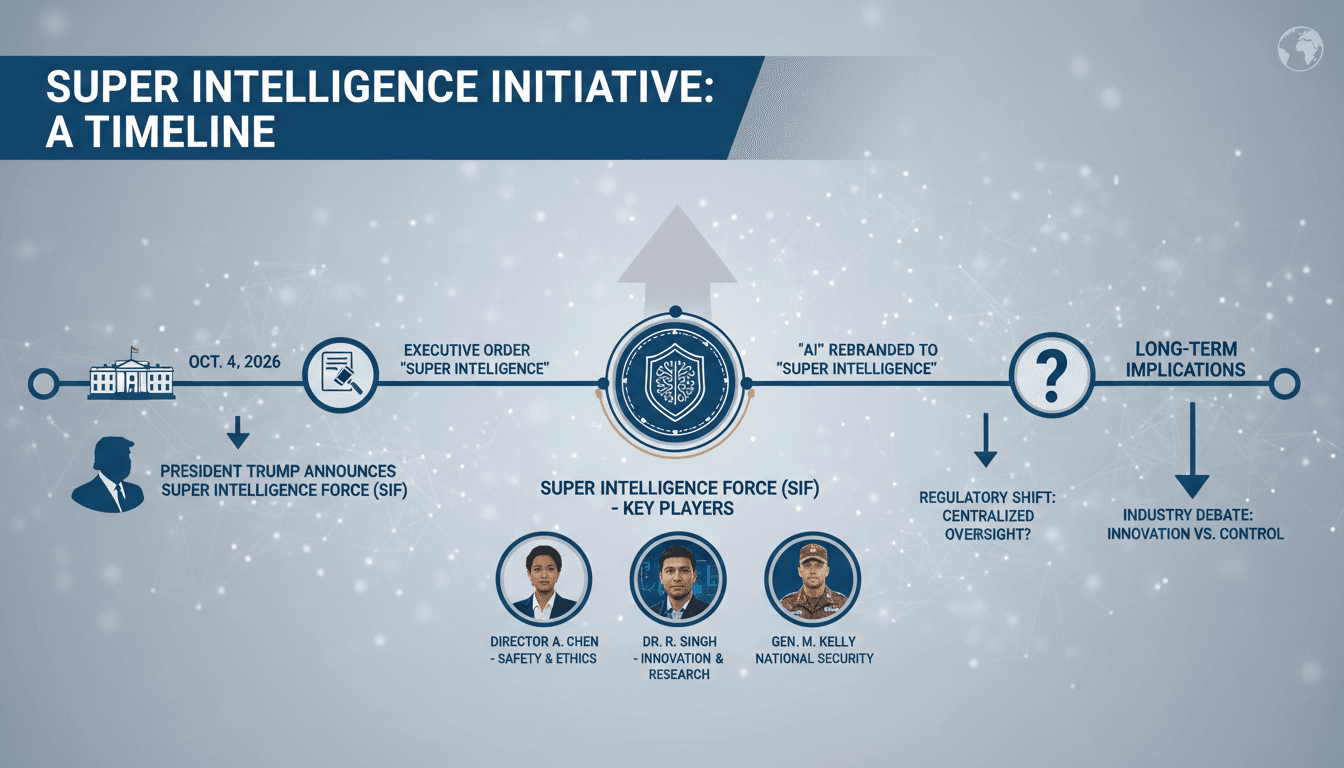
- On October 4, 2026, President Trump announced the formation of the Super Intelligence Force (SIF) to oversee advanced AI policy.
- An executive order issued on September 29, 2026, mandated the use of 'Super Intelligence' terminology in federal communications, replacing 'artificial intelligence.'
- Elon Musk confirmed plans to rename SpaceXAI to SpaceXSI, aligning with the new terminology and signaling industry compliance.
The context you actually need
- The rebrand follows a meeting where tech leaders signed a voluntary accord on AI safety, indicating industry pressure for regulatory clarity.
- The SIF is tasked with a 120-day review to develop recommendations on AI risks and opportunities, highlighting urgency in addressing technological maturity.
- Critics argue that changing terminology does not resolve fundamental issues in AI regulation and oversight, suggesting a need for more decentralized models.
What's really happening
The Trump Administration's rebranding of artificial intelligence to 'Super Intelligence' is more than a mere linguistic shift; it represents a strategic response to growing concerns about the safety and regulation of advanced AI systems. The executive order issued on September 29, 2026, not only mandates the new terminology but also sets a timeline for developing a statutory definition of 'Super Intelligence' within 60 days. This move is designed to position the U.S. as a leader in AI development, especially in the face of increasing competition from China.
The formation of the Super Intelligence Force (SIF) is a critical component of this initiative. Led by Director of National Intelligence Jay Clayton, the task force includes representatives from key federal agencies such as the FTC and the Pentagon. Its charter for 120 days aims to assess the risks and opportunities presented by advanced AI technologies. This structured approach reflects an acknowledgment of the complexities involved in AI governance, balancing the need for oversight with the imperative to foster innovation.
However, the rebranding has faced criticism from various stakeholders. Industry leaders, including Elon Musk, have adopted the new terminology, but many experts argue that this focus on language does not address the underlying technological limitations or the urgent need for comprehensive regulatory frameworks. Critics, such as RAIDS AI CEO Nik Kairinos, advocate for decentralized oversight models that could provide more flexibility and responsiveness than a centralized federal body.
The broader implications of this rebranding extend beyond the U.S. borders. As countries worldwide grapple with the challenges posed by AI, the U.S. initiative could influence global standards and practices. The emphasis on 'Super Intelligence' may also shape public perception, potentially leading to heightened expectations regarding the capabilities and safety of AI systems.
In summary, while the rebranding may signal a proactive stance on AI governance, it raises important questions about the effectiveness of such measures in addressing the real challenges posed by advanced technologies. The success of the SIF and its recommendations will be closely monitored, as they could set the tone for future regulatory approaches in the rapidly evolving AI landscape.
Who feels it first (and how)
- Tech companies: Adjusting branding and compliance with new terminology.
- Policymakers: Navigating the implications of new regulations and oversight structures.
- AI researchers: Facing potential shifts in funding and focus areas based on new federal priorities.
- Consumers: Experiencing changes in AI products and services as companies adapt to regulatory environments.
What to watch next
- The SIF's recommendations: The outcomes of the 120-day review will shape future AI regulations and industry standards.
- Industry responses: How tech companies adapt to the new terminology and any shifts in their operational strategies.
- Global reactions: Other countries' responses to the U.S. rebranding and how it influences international AI governance discussions.
The formation of the Super Intelligence Force and the new terminology directive are in effect.
Increased scrutiny and regulation of AI technologies in the U.S. and potential ripple effects globally.
The long-term effectiveness of the rebranding in addressing the fundamental challenges of AI governance.
Frequently Asked Questions
- Why it matters?
- This rebranding reflects a significant pivot in U.S. federal policy towards advanced AI, impacting industry standards and regulatory frameworks.
- What happened (in 30 seconds)?
- On October 4, 2026, President Trump announced the formation of the Super Intelligence Force (SIF) to oversee advanced AI policy. An executive order issued on September 29, 2026, mandated the use of 'Super Intelligence' terminology in federal communications, replacing 'artificial intelligence.' Elon Musk confirmed plans to rename SpaceXAI to SpaceXSI, aligning with the new terminology and signaling industry compliance.
- What's really happening?
- The Trump Administration's rebranding of artificial intelligence to 'Super Intelligence' is more than a mere linguistic shift; it represents a strategic response to growing concerns about the safety and regulation of advanced AI systems. The executive order issued on September 29, 2026, not only mandates the new terminology but also sets a timeline for developing a statutory definition of 'Super Intelligence' within 60 days. This move is designed to position the U.S. as a leader in AI developmen
- Who feels it first (and how)?
- Tech companies: Adjusting branding and compliance with new terminology. Policymakers: Navigating the implications of new regulations and oversight structures. AI researchers: Facing potential shifts in funding and focus areas based on new federal priorities. Consumers: Experiencing changes in AI products and services as companies adapt to regulatory environments.
- What to watch next?
- The SIF's recommendations: The outcomes of the 120-day review will shape future AI regulations and industry standards. Industry responses: How tech companies adapt to the new terminology and any shifts in their operational strategies. Global reactions: Other countries' responses to the U.S. rebranding and how it influences international AI governance discussions.
Consumer tech news, reviews, and buying guides for gadgets and electronics.
"TechRadar is known for comprehensive buying advice, hardware reviews, and consumer tech news targeted at mainstream audiences."
— A47 Editor
Trump's 'Super Intelligence' AI rebrand is running ahead of the technology
Washington is initiating a new AI oversight task force while Elon Musk adopts the 'Super Intelligence' branding for AI, a move that appears to be ahead of the current technological capabilities. This rebranding comes amid ongoing discussions about AI...
News and features on AI from The Guardian.
"Progressive-leaning international outlet with critical AI coverage."
— A47 Editor
Trump makes it clear his power is becoming entwined with AI
Former President Donald Trump is increasingly aligning his influence with artificial intelligence (AI), as evidenced by a recent AI safety accord signed with major tech executives, despite a notable spelling error in the document. This initiative aim...
Tech culture, product news, and critical takes on the tech industry's social impact.
"The Guardian's tech coverage blends mainstream news, critical analysis, and cultural commentary on emerging technologies and digital trends."
— A47 Editor
Trump makes it clear his power is becoming entwined with AI
Former President Donald Trump is increasingly aligning his influence with artificial intelligence (AI), as evidenced by a recent AI safety accord signed with major tech executives, despite a notable spelling error in the document. This initiative aim...
News and guidance for IT pros on AI adoption.
"Enterprise-focused tips, explainers, and news for professionals."
— A47 Editor
Trump Names Jay Clayton AI Czar to Lead New ‘Super Intelligence Force’
President Donald Trump has appointed Jay Clayton, the Director of National Intelligence, as the AI czar to lead the newly established 'Super Intelligence Force.' This agency is tasked with reviewing artificial intelligence risks, security threats, an...
News and guidance for IT pros on AI adoption.
"Enterprise-focused tips, explainers, and news for professionals."
— A47 Editor
Musk Plans SpaceXSI Rebrand After Trump’s ‘Super Intelligence’ Order
Elon Musk announced plans to rebrand SpaceXAI to SpaceXSI, aligning with former President Trump's directive to replace the term 'artificial intelligence' with 'super intelligence' in official documents. This change reflects a significant shift in the...