
Green Party of England and Wales Equates Zionism with Racism in Controversial Vote
Why it matters
This decision reflects a significant ideological shift within a major UK political party, potentially influencing broader public opinion and policy on the Israel-Palestine conflict.
What happened (in 30 seconds)
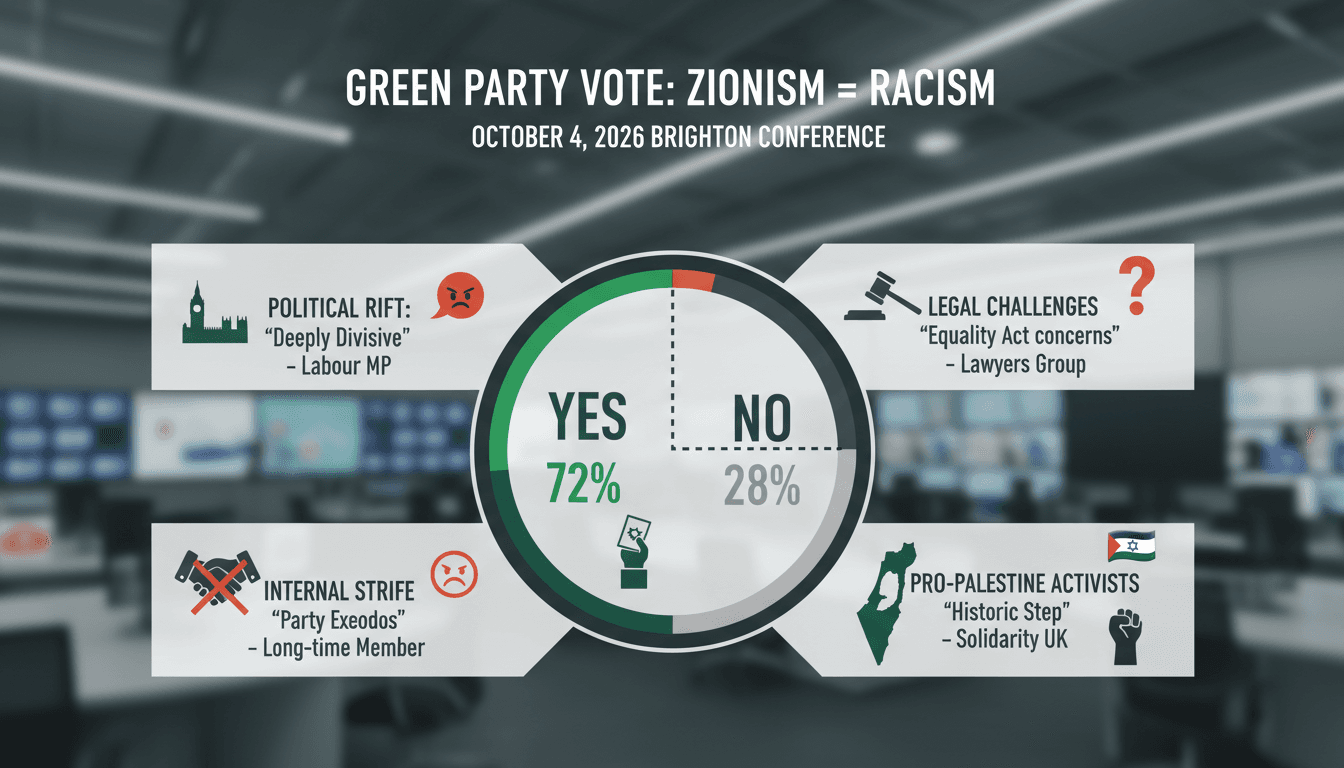
- On October 4, 2026, the Green Party of England and Wales voted to equate Zionism with racism, advocating for a single democratic Palestinian state.
- The motion passed with 1,022 votes in favor and 813 against, despite opposition from four of the party's five MPs.
- The resolution has drawn condemnation from Israeli authorities and UK Jewish organizations, raising concerns about potential legal challenges under UK equality laws.
The context you actually need
- The vote occurred amid a backdrop of increasing pro-Palestinian sentiment within the Green Party, fueled by a surge of new members.
- Previous Green policies emphasized self-determination for both Israelis and Palestinians without labeling Zionism as racism or endorsing a single-state solution.
- The internal dynamics of the party have shifted, with newer members pushing for more explicit pro-Palestinian positions, reflecting broader societal debates on the issue.
What's really happening
The Green Party's recent decision to equate Zionism with racism marks a pivotal moment in UK politics, particularly regarding the Israel-Palestine conflict. This policy shift is not merely a reflection of internal party dynamics but also a response to the evolving landscape of public opinion and activism surrounding the issue.
Historically, the Green Party has maintained a balanced stance, advocating for the rights of both Israelis and Palestinians. However, the influx of new members, many of whom are more radical in their pro-Palestinian views, has catalyzed a shift towards a more hardline position. The motion passed at the Brighton conference was driven by activist groups within the party, who argue that Zionism, as an ethno-nationalist ideology, inherently privileges one ethnic group over others, leading to systemic oppression.
This decision has significant implications. It aligns the Green Party with a growing global movement that critiques Zionism and advocates for Palestinian rights. However, it also risks alienating moderate members and Jewish constituents who may feel targeted by the new policy. The rejection of an amendment aimed at protecting Jewish members affiliated with Zionist institutions further underscores the internal divisions within the party.
The backlash has been swift. Israel's Foreign Ministry condemned the resolution as antisemitic, and UK Jewish organizations have expressed deep concern, framing the decision as an attack on the Jewish community. This reaction highlights the potential for increased tensions between the Green Party and Jewish organizations, which could lead to further polarization within UK politics.
Moreover, legal experts have raised alarms about potential challenges under the Equality Act 2010, suggesting that the party may face legal scrutiny for its new stance. This could lead to a protracted legal battle that distracts from the party's broader political agenda.
As the Green Party navigates this new terrain, it will need to balance its commitment to social justice with the realities of political alliances and public perception. The decision to adopt such a controversial policy could redefine the party's identity and influence its electoral prospects in the coming years.
Who feels it first (and how)
- Green Party members: Internal divisions may lead to resignations or shifts in membership.
- Jewish communities in the UK: Increased feelings of alienation and potential backlash against Jewish members within the party.
- Political analysts and commentators: Heightened scrutiny of party dynamics and implications for future elections.
- Activists and NGOs: Potentially emboldened by the party's stance, leading to increased activism around Palestinian rights.
What to watch next
- Legal challenges: Monitor any lawsuits or legal actions taken against the Green Party regarding the new policy, which could set precedents for political discourse.
- Public opinion shifts: Watch for changes in public sentiment towards the Green Party and its stance on Israel-Palestine, particularly among younger voters.
- Responses from other political parties: Observe how the Conservatives and Labour react to this policy shift, as it may influence their own platforms and strategies.
The Green Party has adopted a policy equating Zionism with racism.
The party will face internal and external backlash, including potential legal challenges.
The long-term impact on the party's electoral success and public perception remains uncertain.
Frequently Asked Questions
- Why it matters?
- This decision reflects a significant ideological shift within a major UK political party, potentially influencing broader public opinion and policy on the Israel-Palestine conflict.
- What happened (in 30 seconds)?
- On October 4, 2026, the Green Party of England and Wales voted to equate Zionism with racism, advocating for a single democratic Palestinian state. The motion passed with 1,022 votes in favor and 813 against, despite opposition from four of the party's five MPs. The resolution has drawn condemnation from Israeli authorities and UK Jewish organizations, raising concerns about potential legal challenges under UK equality laws.
- What's really happening?
- The Green Party's recent decision to equate Zionism with racism marks a pivotal moment in UK politics, particularly regarding the Israel-Palestine conflict. This policy shift is not merely a reflection of internal party dynamics but also a response to the evolving landscape of public opinion and activism surrounding the issue. Historically, the Green Party has maintained a balanced stance, advocating for the rights of both Israelis and Palestinians. However, the influx of new members, many of
- Who feels it first (and how)?
- Green Party members: Internal divisions may lead to resignations or shifts in membership. Jewish communities in the UK: Increased feelings of alienation and potential backlash against Jewish members within the party. Political analysts and commentators: Heightened scrutiny of party dynamics and implications for future elections. Activists and NGOs: Potentially emboldened by the party's stance, leading to increased activism around Palestinian rights.
- What to watch next?
- Legal challenges: Monitor any lawsuits or legal actions taken against the Green Party regarding the new policy, which could set precedents for political discourse. Public opinion shifts: Watch for changes in public sentiment towards the Green Party and its stance on Israel-Palestine, particularly among younger voters. Responses from other political parties: Observe how the Conservatives and Labour react to this policy shift, as it may influence their own platforms and strategies.
Arabic-language coverage of international news and geopolitics.
"RT Arabic is a Russian state-funded outlet often criticized for promoting Kremlin-aligned narratives."
— A47 Editor
حزب بريطاني يصوّت لمساواة الصهيونية بالعنصرية
The Green Party has voted to adopt a policy equating Zionism with racism and is advocating for a single Palestinian state, despite opposition from the majority of lawmakers. This decision was reported by Peter Walker in The Guardian.
Arabic-language reporting on global and regional news.
"BBC Arabic is part of the BBC, generally regarded for editorial standards and broad international coverage."
— A47 Editor
حزب الخضر البريطاني يتبنى مقترحاً يعتبر "الصهيونية عنصرية"
The British Green Party has adopted a proposal that classifies Zionism as a form of racism, with the motion passing by a majority of 1,022 votes to 813. This decision reflects a significant shift in the party's stance on issues related to Israel and ...
Algerian and regional news coverage.
"Echorouk is a major Algerian outlet with broad national reporting."
— A47 Editor
حزب الخضر البريطاني يتبنى سياسة تعتبر “الصهيونية” شكلا من أشكال “العنصرية”
The Green Party of the United Kingdom adopted a proposal on Sunday to classify Zionism as a form of racism, advocating for a single democratic state across historic Palestine. During the party's annual conference, 1,022 members voted in favor of the ...