
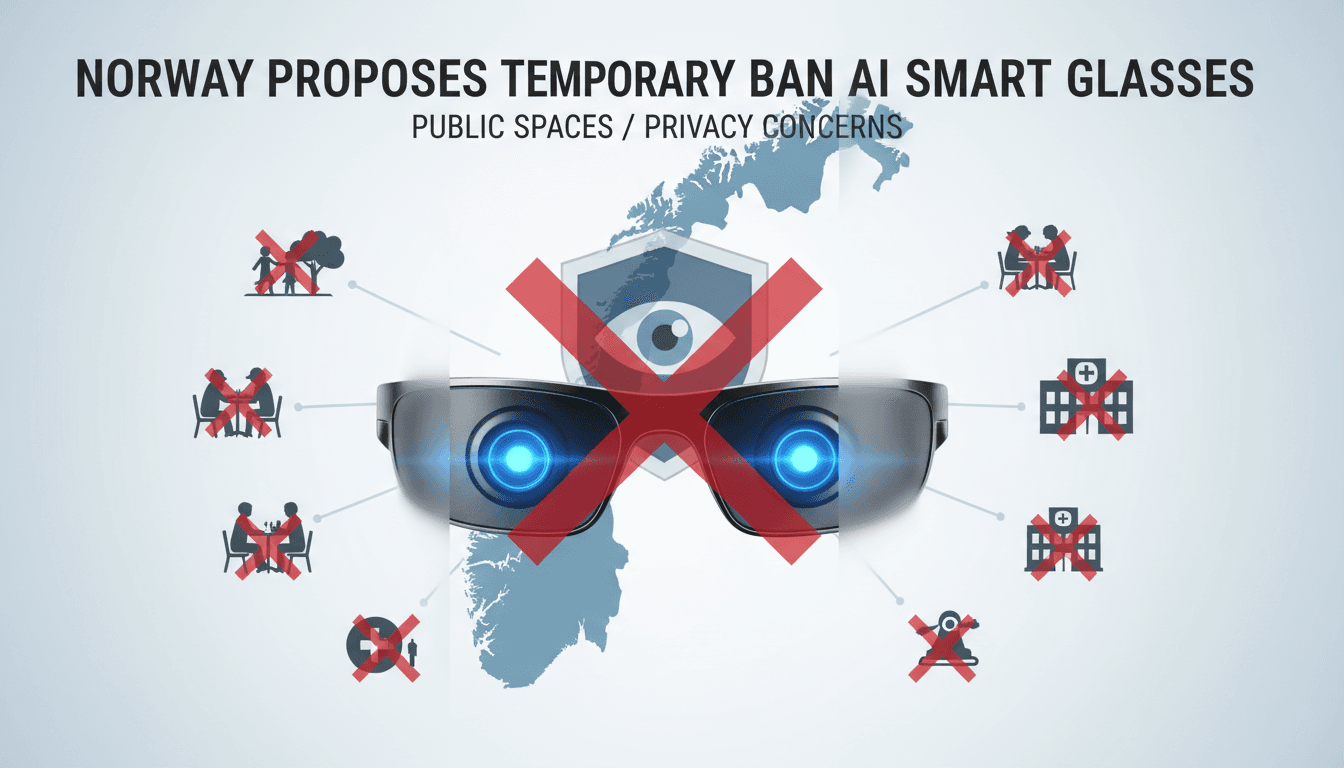
Norway proposes temporary ban on AI smart glasses in public spaces due to privacy concerns
Why it matters
This move reflects a growing trend of regulatory scrutiny over wearable technology, impacting consumer privacy and tech innovation.
What happened (in 30 seconds)
- On October 5, 2026, Norway's government announced a proposal for a temporary ban on AI-enabled smart glasses in specific public spaces.
- The ban targets areas with heightened privacy concerns, including parks, schools, and healthcare facilities, while allowing private use.
- An expert group will be formed to develop long-term regulations on body-worn devices, indicating a shift towards stricter oversight.
The context you actually need
- Norway's proposal follows earlier discussions about stricter rules on smart glasses, particularly regarding facial recognition technology.
- This aligns with global trends where countries are increasingly concerned about the implications of wearable cameras and covert surveillance.
- The proposal aims to balance innovation in technology with the need for privacy, reflecting a cautious approach to emerging tech.
What's really happening
On October 5, 2026, Norway's government took a significant step by proposing a temporary ban on AI-enabled smart glasses in select public spaces. This initiative is primarily driven by rising concerns over privacy violations associated with wearable technology capable of discreet recording. The targeted locations include parks, beaches, museums, shopping centers, schools, and healthcare facilities—areas where privacy is paramount, especially for children and vulnerable populations.
The Norwegian government, led by Digitalisation and Public Governance Minister Torgeir Micaelsen, emphasized that the ban would not extend to private use or situations where consent is obtained. This nuanced approach aims to address immediate privacy risks while still allowing for personal use of the technology. The proposal is not a blanket ban but rather a targeted measure that reflects a growing apprehension about the implications of AI and camera-equipped devices in public settings.
This move is part of a broader international trend where governments are grappling with the challenges posed by wearable technology. Countries around the world are increasingly scrutinizing the potential for covert surveillance and unauthorized data collection that these devices enable. Norway's proposal comes on the heels of earlier discussions about stricter regulations on smart glasses, particularly concerning facial recognition features, indicating a proactive stance on privacy issues.
The government plans to submit the bill to the Storting (Norwegian Parliament) imminently, alongside the formation of an expert group tasked with developing long-term regulations for body-worn devices. This expert panel will likely evaluate the specific technologies that should be regulated, including AI cameras and audio recording capabilities. The establishment of such a group signals a commitment to creating a comprehensive regulatory framework that balances technological innovation with the protection of individual privacy rights.
As the proposal moves through the legislative process, it could set a precedent for other countries considering similar measures. The emphasis on privacy in public spaces may resonate with citizens globally, prompting discussions about the ethical implications of wearable technology and its impact on daily life.
Who feels it first (and how)
- Consumers: Individuals using smart glasses for personal or professional purposes may face restrictions in public areas.
- Tech Manufacturers: Companies producing AI-enabled smart glasses, like Meta, may need to adapt their products to comply with new regulations.
- Privacy Advocates: Groups focused on civil liberties may see this as a victory for privacy rights, influencing future advocacy efforts.
What to watch next
- Parliamentary Vote: The timing and outcome of the parliamentary vote on the proposed ban will indicate the government's commitment to privacy regulations.
- Expert Group Recommendations: The findings and recommendations from the expert group will shape the future landscape of wearable technology regulations.
- Global Reactions: Watch for responses from tech companies and other countries, as Norway's actions may inspire similar proposals elsewhere.
The proposal targets specific public spaces for the temporary ban on AI smart glasses.
The establishment of an expert group will lead to more comprehensive regulations on wearable technology.
The long-term market impact on smart glasses and consumer behavior remains uncertain.
Frequently Asked Questions
- Why it matters?
- This move reflects a growing trend of regulatory scrutiny over wearable technology, impacting consumer privacy and tech innovation.
- What happened (in 30 seconds)?
- On October 5, 2026, Norway's government announced a proposal for a temporary ban on AI-enabled smart glasses in specific public spaces. The ban targets areas with heightened privacy concerns, including parks, schools, and healthcare facilities, while allowing private use. An expert group will be formed to develop long-term regulations on body-worn devices, indicating a shift towards stricter oversight.
- What's really happening?
- On October 5, 2026, Norway's government took a significant step by proposing a temporary ban on AI-enabled smart glasses in select public spaces. This initiative is primarily driven by rising concerns over privacy violations associated with wearable technology capable of discreet recording. The targeted locations include parks, beaches, museums, shopping centers, schools, and healthcare facilities—areas where privacy is paramount, especially for children and vulnerable populations. The Norwegia
- Who feels it first (and how)?
- Consumers: Individuals using smart glasses for personal or professional purposes may face restrictions in public areas. Tech Manufacturers: Companies producing AI-enabled smart glasses, like Meta, may need to adapt their products to comply with new regulations. Privacy Advocates: Groups focused on civil liberties may see this as a victory for privacy rights, influencing future advocacy efforts.
- What to watch next?
- Parliamentary Vote: The timing and outcome of the parliamentary vote on the proposed ban will indicate the government's commitment to privacy regulations. Expert Group Recommendations: The findings and recommendations from the expert group will shape the future landscape of wearable technology regulations. Global Reactions: Watch for responses from tech companies and other countries, as Norway's actions may inspire similar proposals elsewhere.
Arabic-language sports reporting covering UAE competitions and major international events.
"Emarat Al Youm sports coverage is mainstream and accessible, with strong emphasis on UAE and regional sport."
— A47 Editor
لحماية الخصوصية.. النرويج تعتزم حظر نظارات الذكاء الاصطناعي لحماية الخصوصية.. النرويج تعتزم حظر نظارات الذكاء الاصطناعي
The Norwegian government announced plans to propose a temporary ban on the use of artificial intelligence-equipped glasses in certain contexts, citing privacy concerns. This decision reflects growing apprehension regarding the implications of advance...
Business and tech news excluding paywalled content.
"High-volume business/tech outlet with frequent AI coverage."
— A47 Editor
Norway temporarily bans Meta glasses in public spaces
Norway has implemented a temporary ban on Meta's camera glasses in public spaces, including parks, schools, and beaches, due to rising privacy concerns. This decision reflects the government's commitment to addressing the implications of wearable tec...
UK and international business news, economics, and corporate coverage.
"The Guardian’s business section covers finance and markets with a progressive editorial tone."
— A47 Editor
Norway plans temporary ban on smart glasses in some public places
Norway is set to implement a temporary ban on the use of smart glasses equipped with cameras in various public spaces, including parks, museums, and schools, due to growing concerns over privacy and covert recording. The Oslo government is drafting a...
International coverage from The Guardian's global desks.
"The Guardian is known for its progressive editorial stance and in-depth analysis."
— A47 Editor
Norway plans temporary ban on smart glasses in some public places
Norway is set to implement a temporary ban on the use of smart glasses equipped with cameras in various public spaces, including parks, museums, and schools, due to growing concerns over privacy and covert recording. The Oslo government is drafting a...
In-depth coverage of hardware, software, science, and policy.
"Ars Technica provides expert technology news, hardware reviews, and analysis for a technically savvy audience."
— A47 Editor
AI glasses face their first major government crackdown
Norway has initiated a significant government crackdown on AI glasses capable of recording bystanders, seeking additional time to formulate permanent regulations governing their use. This move marks a critical step in addressing privacy concerns asso...
In-depth reporting on tech, policy, and science including AI.
"Respected analysis for technically savvy readers, including AI topics."
— A47 Editor
AI glasses face their first major government crackdown
Norway has initiated a significant government crackdown on AI glasses capable of recording bystanders, seeking additional time to formulate permanent regulations governing their use. This move marks a critical step in addressing privacy concerns asso...
Technology and innovation coverage, including consumer tech and digital transformation stories.
"Emirates 24|7 technology coverage often highlights practical tech developments with relevance to Gulf readers and businesses."
— A47 Editor
Norway proposes temporary ban on smart glasses over privacy concerns
Norway's government has proposed a temporary ban on smart glasses in specific locations due to rising privacy concerns associated with AI-powered wearable technology. This proposal aims to allow authorities to assess the implications of devices that ...