
Saudi Arabia Initiates Regularization for Irregular Yemeni Nationals
Why it matters
This initiative reflects Saudi Arabia's ongoing commitment to humanitarian support amid regional instability, potentially influencing labor markets across the Gulf.
What happened (in 30 seconds)
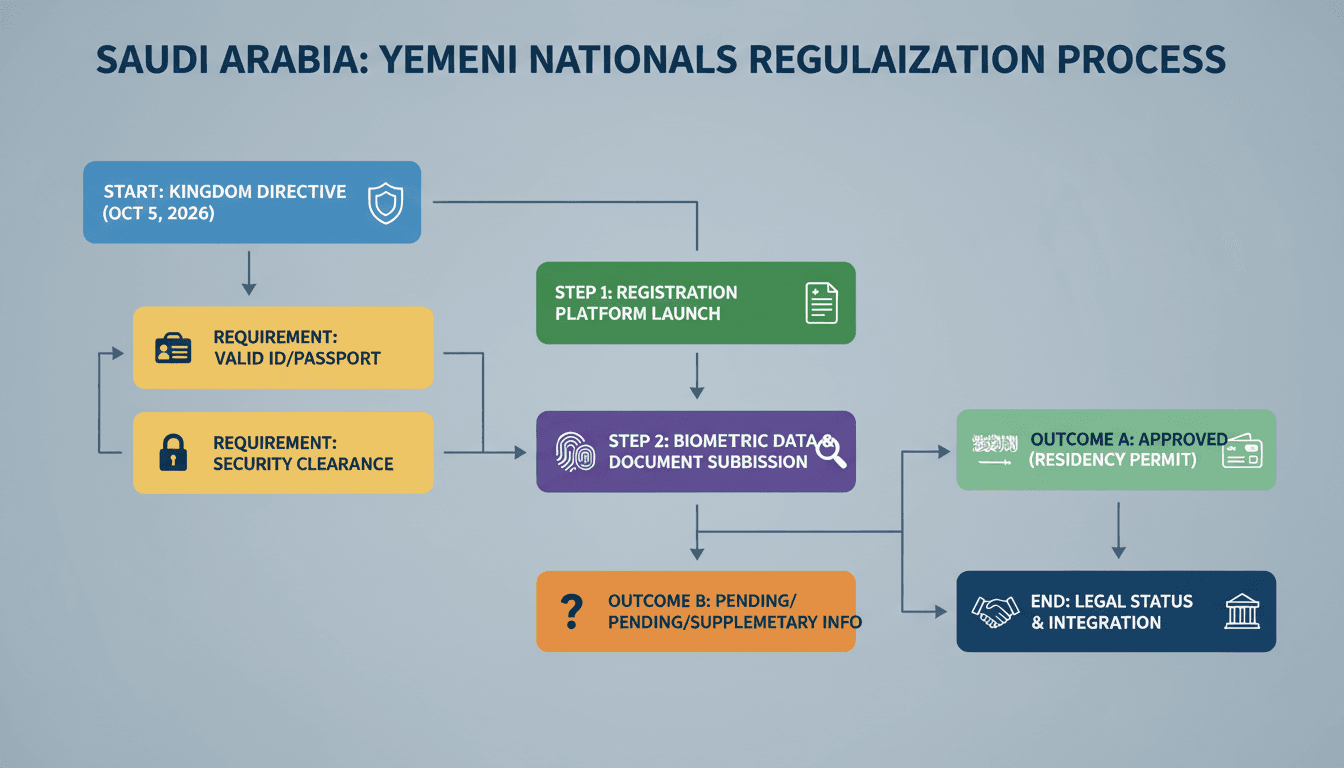
- On October 5, 2026, the Saudi Ministry of Interior announced procedures to regularize the status of irregular Yemeni nationals in the Kingdom.
- Eligibility requires a valid Yemeni passport, with further details to be released through official channels.
- The initiative is part of Saudi Arabia's broader humanitarian efforts in response to the Yemeni crisis, which has led to significant displacement.
The context you actually need
- The Yemeni crisis, ongoing since 2014-2015, has resulted in large-scale displacement, with many seeking refuge in Saudi Arabia.
- Saudi Arabia has historically provided humanitarian and economic support to Yemen, facilitating the integration of Yemeni nationals.
- This regularization effort aligns with requests from Yemeni leadership, aiming to create legal pathways for those affected by the crisis.
What's really happening
The Saudi Ministry of Interior's announcement on October 5, 2026, marks a significant step in addressing the status of irregular Yemeni nationals residing in the Kingdom. This initiative is not merely a bureaucratic adjustment; it is a response to the protracted humanitarian crisis in Yemen, which has seen millions displaced due to conflict and instability. By initiating regularization procedures, Saudi Arabia aims to provide a structured pathway for these individuals to gain legal status, thereby enhancing their ability to work and contribute to the economy.
The program requires eligible individuals to possess a valid Yemeni passport, which serves as a critical identification document. This stipulation underscores the importance of formal documentation in navigating legal frameworks within the Kingdom. The Ministry of Interior has indicated that detailed operational guidelines, including specific start dates and compliance requirements, will be communicated through official channels, particularly the General Directorate of Passports. This approach aims to ensure clarity and prevent misinformation, which can often accompany such significant policy changes.
The broader implications of this initiative extend beyond the immediate legal status of Yemeni nationals. By regularizing their status, Saudi Arabia is likely to enhance economic productivity by allowing these individuals to enter the formal labor market. This could lead to increased remittances sent back to Yemen, which is crucial for the country's economy, especially given the ongoing humanitarian needs. Furthermore, this policy may foster a more stable environment for Yemeni nationals, reducing the risks associated with living in irregular status, such as exploitation and lack of access to essential services.
Moreover, this move can be seen as part of Saudi Arabia's strategic positioning within the Gulf Cooperation Council (GCC) and its efforts to maintain regional stability. By addressing the needs of Yemeni nationals, the Kingdom reinforces its role as a leader in humanitarian efforts in the region, potentially influencing other GCC countries to adopt similar measures. This could lead to a ripple effect, encouraging more cohesive regional policies regarding migration and labor mobility.
In summary, the regularization of Yemeni nationals in Saudi Arabia is a multifaceted initiative that addresses humanitarian needs while also aiming to bolster economic contributions from this population. The success of this program will depend on effective implementation and the ability to navigate the complexities of legal status and labor integration.
Who feels it first (and how)
- Yemeni nationals: Those currently living in Saudi Arabia without legal status will be directly impacted by the regularization process.
- Saudi employers: Businesses may benefit from a more stable and legally recognized workforce, enhancing productivity.
- Humanitarian organizations: NGOs working in the region may see shifts in their operational focus as legal pathways for Yemeni nationals are established.
What to watch next
- Implementation timeline: Keep an eye on the official announcements regarding the start dates and compliance rules, as these will dictate the pace of regularization.
- Economic impact: Monitor changes in labor market dynamics in Saudi Arabia, particularly in sectors heavily reliant on Yemeni labor.
- Regional responses: Watch for potential policy shifts in other GCC countries regarding their own irregular migrant populations, influenced by Saudi Arabia's actions.
The announcement has been made, and procedures for regularization are initiated.
Increased economic activity and remittances from regularized Yemeni nationals.
The exact number of individuals affected and the timeline for full implementation of the regularization process.
Frequently Asked Questions
- Why it matters?
- This initiative reflects Saudi Arabia's ongoing commitment to humanitarian support amid regional instability, potentially influencing labor markets across the Gulf.
- What happened (in 30 seconds)?
- On October 5, 2026, the Saudi Ministry of Interior announced procedures to regularize the status of irregular Yemeni nationals in the Kingdom. Eligibility requires a valid Yemeni passport, with further details to be released through official channels. The initiative is part of Saudi Arabia's broader humanitarian efforts in response to the Yemeni crisis, which has led to significant displacement.
- What's really happening?
- The Saudi Ministry of Interior's announcement on October 5, 2026, marks a significant step in addressing the status of irregular Yemeni nationals residing in the Kingdom. This initiative is not merely a bureaucratic adjustment; it is a response to the protracted humanitarian crisis in Yemen, which has seen millions displaced due to conflict and instability. By initiating regularization procedures, Saudi Arabia aims to provide a structured pathway for these individuals to gain legal status, there
- Who feels it first (and how)?
- Yemeni nationals: Those currently living in Saudi Arabia without legal status will be directly impacted by the regularization process. Saudi employers: Businesses may benefit from a more stable and legally recognized workforce, enhancing productivity. Humanitarian organizations: NGOs working in the region may see shifts in their operational focus as legal pathways for Yemeni nationals are established.
- What to watch next?
- Implementation timeline: Keep an eye on the official announcements regarding the start dates and compliance rules, as these will dictate the pace of regularization. Economic impact: Monitor changes in labor market dynamics in Saudi Arabia, particularly in sectors heavily reliant on Yemeni labor. Regional responses: Watch for potential policy shifts in other GCC countries regarding their own irregular migrant populations, influenced by Saudi Arabia's actions.
Arabic-language local and national news coverage from Saudi Arabia.
"Al-Jazirah is a major Saudi daily with strong emphasis on domestic reporting and official developments."
— A47 Editor
وزارة الداخلية تعلن بدء تصحيح أوضاع جميع الموجودين في المملكة بطرق غير نظامية من الجنسية اليمنية
The Ministry of Interior has announced the initiation of a process to regularize the status of all Yemeni nationals in the Kingdom who are currently residing unlawfully. This decision follows the directive of King Salman bin Abdulaziz Al Saud in resp...
English-language reporting on Saudi politics, policy, and society.
"Saudi Gazette reflects mainstream Saudi institutional perspectives."
— A47 Editor
Saudi Arabia to regularize residency status of illegal Yemeni nationals
The Saudi Ministry of Interior has announced the regularization of residency status for all Yemeni nationals living illegally in the Kingdom, following directives from King Salman and a request from Dr. Rashad Al-Alimi, Chairman of the Yemeni Preside...
English-language reporting focused on Saudi Arabia and regional affairs.
"Saudi Gazette provides English-language coverage that often aligns with mainstream Saudi news priorities."
— A47 Editor
Saudi Arabia to regularize residency status of illegal Yemeni nationals
The Saudi Ministry of Interior has announced the regularization of residency status for all Yemeni nationals living illegally in the Kingdom, following directives from King Salman and a request from Dr. Rashad Al-Alimi, Chairman of the Yemeni Preside...
Arabic-language reporting focused on domestic developments in Saudi Arabia.
"Okaz is a mainstream Saudi newspaper that often reflects domestic priorities and official-facing coverage."
— A47 Editor
بتوجيه خادم الحرمين.. السعودية تبدأ تصحيح أوضاع اليمنيين المخالفين لأنظمة الإقامة
Following the directives of King Salman bin Abdulaziz, Saudi Arabia has initiated procedures to regularize the status of Yemeni nationals residing in the kingdom without proper documentation. This decision comes in response to a request from Dr. Rash...